2000 Grafts Hair Transplant: What It Actually Takes
A 2000 graft hair transplant is a mid-range procedure that rebuilds receding hairlines, fills temporal peaks, or reconstructs a full beard. Using modern extraction methods, this volume produces roughly 4,000-5,000 individual hairs, enough for meaningful coverage in patients with early-to-moderate androgenetic alopecia.
Clinic insight: At Hair Upload Clinic in Istanbul, owner-surgeon Dr. Erkam meticulously plans each 2000-graft procedure, focusing on natural hairline design and optimal density for lasting results.
A 2000 graft hair transplant is a mid-range procedure that rebuilds receding hairlines, fills temporal peaks, or reconstructs a full beard. Using modern extraction methods, this volume produces roughly 4,000-5,000 individual hairs, enough for meaningful coverage in patients with early-to-moderate androgenetic alopecia.
- Total hairs yielded: Approximately 4,000-5,000 individual follicles
- Ideal Norwood stage: 2 to 3 (mild to moderate recession)
- Surgical time: 5-7 hours, depending on technique
- Beard coverage: Sufficient for full beard reconstruction (cheeks, mustache, goatee)
- Expected graft survival: 90-95% under strict clinical protocols
What Does a 2000 Graft Procedure Actually Involve?
A 2000 graft transplant means extracting two thousand follicular units from your donor zone (the back and sides of your head) and placing them where you’re thinning or bald. It’s considered a moderate session, enough to address visible loss without over-taxing the donor area.
Here’s a point most patients miss: a graft isn’t a single hair. It’s a follicular unit, a naturally occurring cluster of one to four terminal hairs, along with its sebaceous gland, arrector pili muscle, and dermal papilla. So when we say “2000 grafts, ” we’re actually talking about a much higher hair count.
On a healthy Caucasian or Middle Eastern scalp, each follicular unit averages about 2.2 hairs. That means 2000 grafts translates to 4,000-5,000 individual hair shafts. This multiplier is why a seemingly modest graft count produces significant density. For a closer look at this math, see our breakdown of how many hairs are in a single graft.
Distribution is where artistry meets anatomy. Under stereomicroscopes, the team sorts extracted grafts by size. Single-hair grafts go to the very front of the hairline, they’re what makes the edge look natural, not pluggy. Double and triple-hair grafts sit behind that first row, building structural volume and opacity. This sorting is what separates a modern result from the harsh look of 1990s-era work.
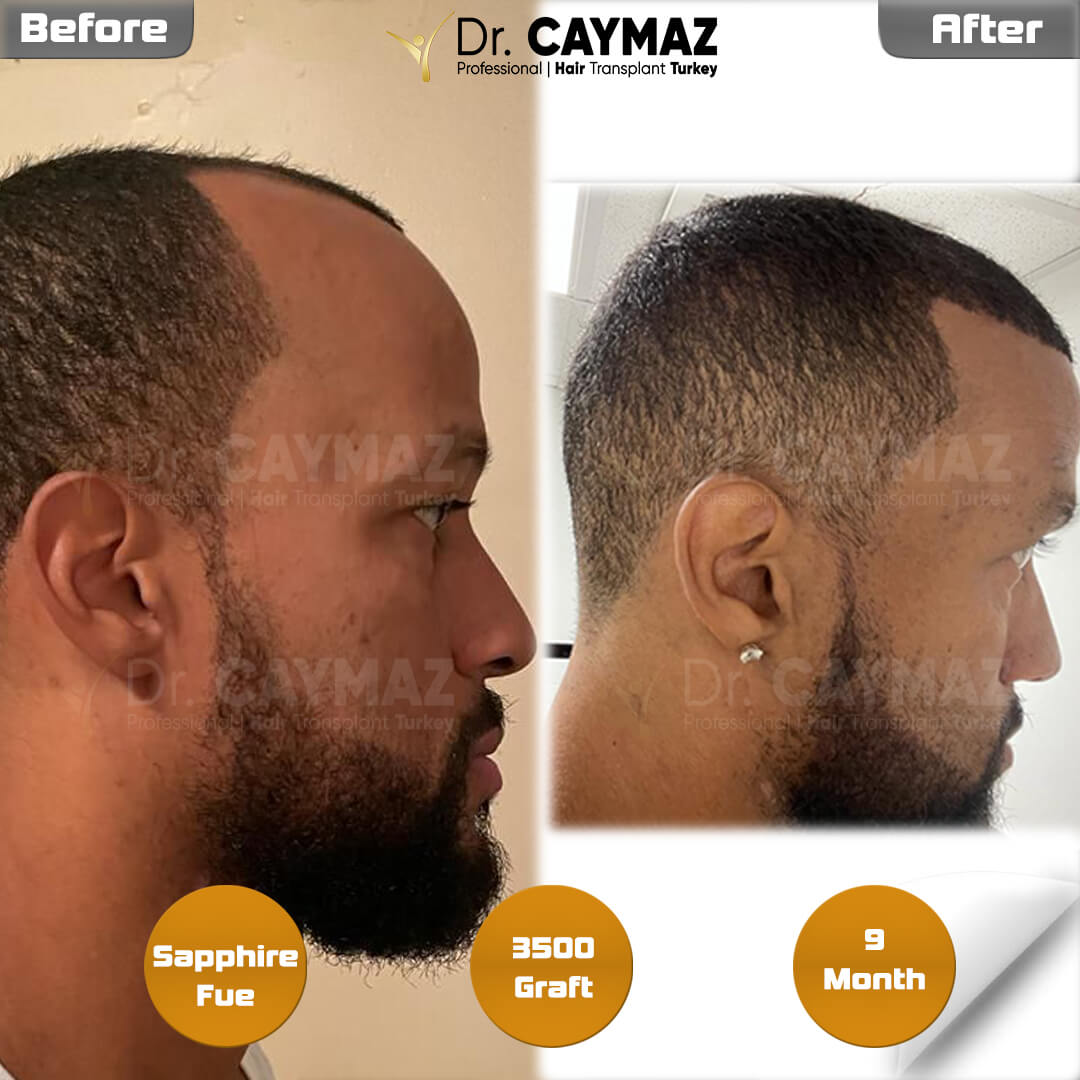
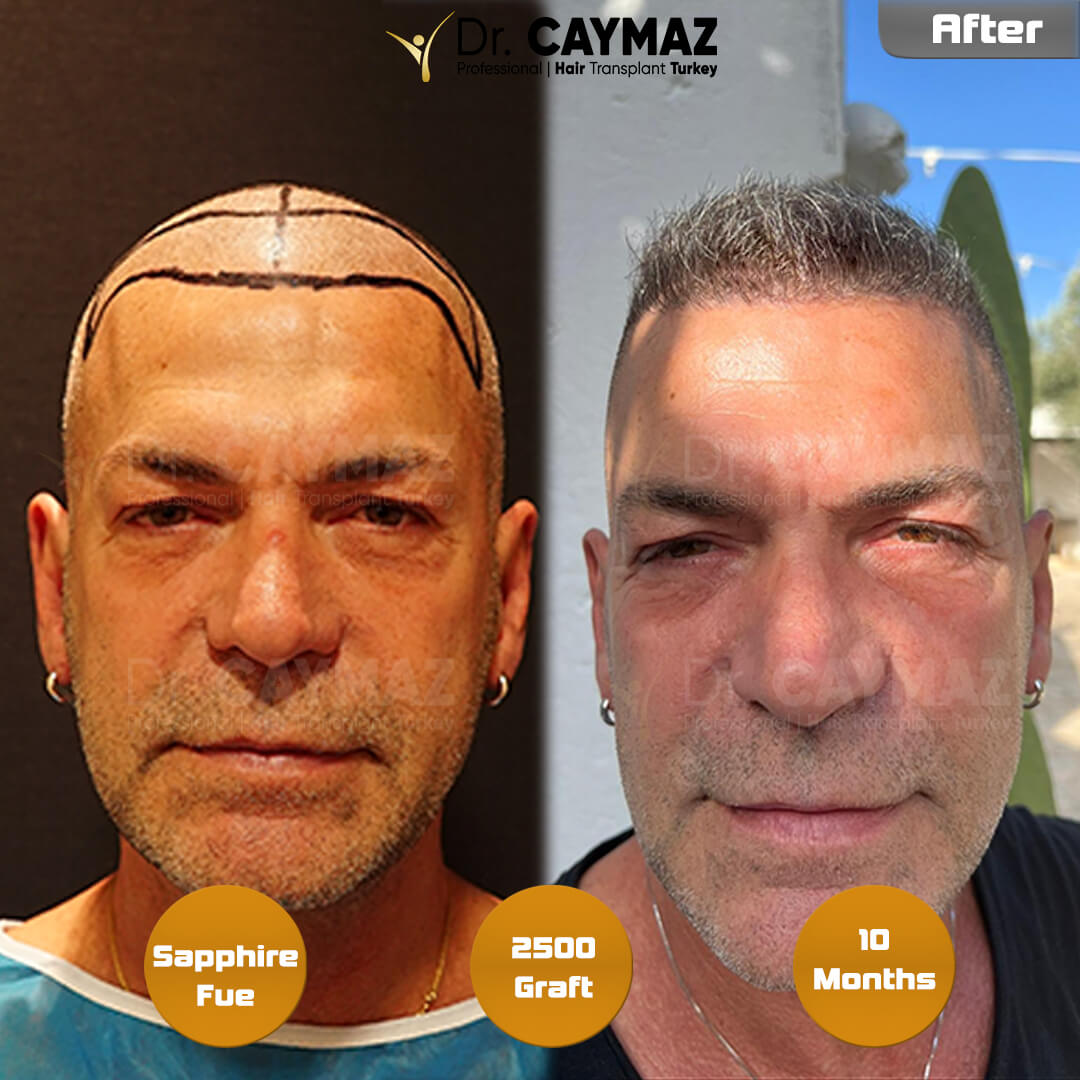
For frontal reconstruction, 2000 grafts can rebuild eroded temporal peaks and lower a receding hairline by a few centimetres. The goal isn’t just “more hair”, it’s framing the face in a way that looks like it belongs there.
Who’s a Good Candidate for 2000 Grafts?
The best candidates are typically men between Norwood Stage 2 and 3, or patients seeking targeted density in areas like the beard. But not everyone who’s shedding is ready for surgery.
Patient selection determines outcome more than any other variable. A proper medical assessment is mandatory, we cover what this looks like in our post on evaluating candidacy for transplant. The ideal patient has stabilised hair loss, meaning the recession isn’t in a rapid shedding phase. Most surgeons recommend stabilising native hair with medication (finasteride, minoxidil) for at least six months before operating.
Donor capacity is non-negotiable. The occipital and parietal zones are genetically DHT-resistant, that’s why we harvest from there. But you need at least 60-80 follicular units per cm² in that zone to safely yield 2000 grafts without visible thinning or moth-eaten scarring.
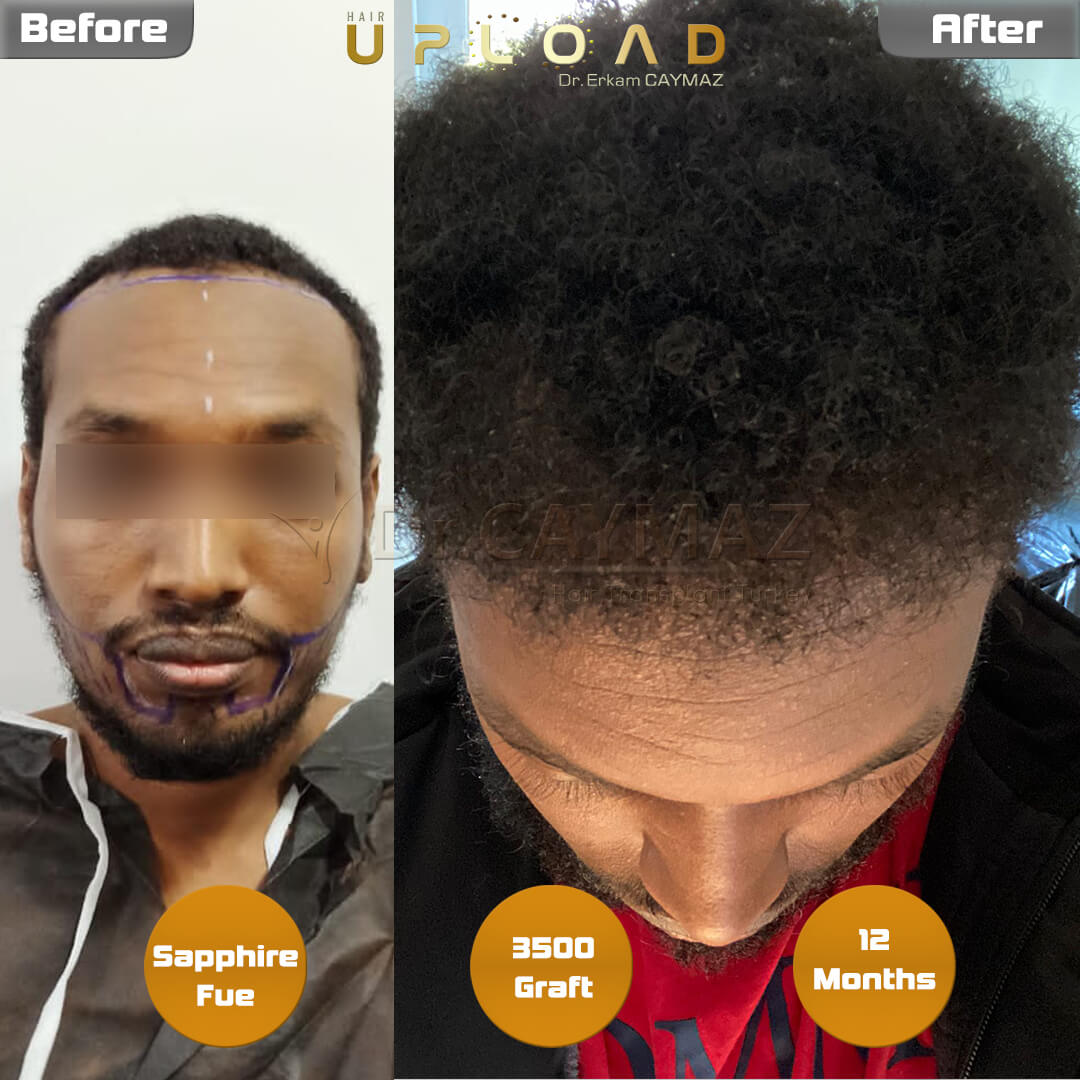
Hair calibre matters too. Patients with thick, coarse, or curly hair get more visual coverage per graft than those with fine, straight, light hair. The contrast between your hair colour and scalp colour also affects perception, low contrast (blonde on fair skin) looks fuller than high contrast (black on pale skin).
Beyond scalp work, 2000 grafts is the standard volume for facial hair restoration. Men with genetic sparse growth, scarring, or post-trauma gaps are strong candidates. Facial skin is highly vascular, which supports excellent graft take rates in beard transplants.
Can 2000 Grafts Build a Full Beard?
Yes. Two thousand grafts is the standard volume for a complete high-density beard reconstruction covering cheeks, mustache, goatee, and sideburns.
Facial hair grows differently from scalp hair. Beard follicles are almost exclusively single-hair units, while scalp grafts come in clusters of two, three, or four. That means the surgical team has to dissect larger follicular units into singles under the microscope. If you plant multi-hair grafts into the cheek or upper lip, you’ll get an unnatural cobblestone texture that’s immediately obvious.
A typical allocation for full beard work:
- Mustache: 300-400 grafts. Highest density needed for a thick look.
- Goatee and chin: 400-500 grafts. The chin anchors the beard, needs high-calibre hairs.
- Cheeks: 800-1,000 grafts (400-500 per side). Lines should complement your jawline.
- Sideburns: 200-300 grafts. These connect temporal scalp hair to facial hair.
Angulation is the hardest part of beard transplantation. Scalp hair exits at roughly 45 degrees. Facial hair lies almost flat, exiting at 10-15 degrees. If the channels are too perpendicular, the beard sticks straight out. Getting this coronal angulation right is what separates experienced operators from the rest.
Healing on the face is faster than the scalp due to the rich blood supply. Grafts establish new vascular connections (angiogenesis) quickly. You’ll still see the transplanted hairs shed within the first month, normal telogen effluvium, before permanent growth starts around month three.
How Does Sapphire FUE Improve a 2000 Graft Procedure?
The Sapphire FUE technique uses blades made from synthetic sapphire to open recipient channels. These blades produce less tissue trauma, enable tighter packing, and heal faster than standard steel instruments.
Steel blades dull during surgery. When they dull, they crush tissue instead of cutting it cleanly, that causes bleeding, swelling, and a higher necrosis risk. Sapphire blades hold their edge for the full procedure. They’re V-shaped rather than U-shaped, and that geometry matches the natural shape of a follicular unit.
The practical advantages for a 2000 graft session:
- Less tissue damage: The sapphire edge parts tissue at the cellular level without crushing blood vessels. Intact microcirculation is mandatory for graft survival.
- Denser packing: Because the incisions are smaller and cause less collateral damage, channels can be placed closer together. Densities of 50-60 grafts per cm² are achievable, approaching native density.
- Precise angle control: Sapphire’s rigidity prevents blade deflection against the tough dermal layer, letting the surgeon dictate exactly where each hair will exit.
- Faster healing: Smaller, cleaner cuts mean fewer scabs. Sapphire patients typically see the recipient area clear within 7-10 days, versus 14 days with steel.
This is particularly useful for the frontal hairline, the most visible area. With the smallest sapphire blades (0.8-1.0mm), the surgeon creates delicate sites for single-hair grafts, producing a soft, undetectable transition.
The Surgical Protocol: Step by Step
A 2000 graft session is a full-day outpatient procedure, typically 5-7 hours. Here’s what actually happens. To understand the factors behind a strong outcome, see our post on hair transplant success rates.
Phase 1: Design and Planning
The morning starts with anatomical mapping. The surgeon marks the recipient zones and donor boundaries with a surgical marker. Hairline design is both mathematical and artistic, measuring from the glabella (between the eyebrows) to the proposed line, factoring in age, facial symmetry, and projected future loss. A hairline set too low on a young patient will look wrong as they age.
Phase 2: Anaesthesia
The donor zone is sterilised and injected with tumescent solution, a mix of lidocaine, bupivacaine, epinephrine, and saline. Epinephrine constricts blood vessels, reducing bleeding and extending the anaesthetic effect. Many clinics now use needle-free dermojet devices for the initial numbing, which reduces discomfort significantly.
Phase 3: Extraction
The patient lies prone. A motorised micro-punch (0.7-0.9mm diameter) isolates each follicular unit. The punch must align precisely with the hair shaft’s exit angle, misalignment transects the follicle, killing it beneath the skin.
A 2024 study in the Journal of Cosmetic Dermatology found that oscillatory punch methods yielded a higher survival rate (90.5%) compared to traditional rotary methods (88.3%), particularly in patients with softer scalps. This shows why advanced, multiphasic motorised devices matter.
Phase 4: Graft Preservation and Sorting
Extracted grafts are immediately vulnerable to dehydration and oxygen deprivation. Technicians inspect them under microscopes, then submerge them in a chilled biological holding solution, HypoThermosol or ATP-enriched fluid. Keeping grafts between 2°C and 8°C slows cellular metabolism, preserving viability while they’re outside the body.
Phase 5: Channel Opening
The patient sits up. The surgeon creates 2000 microscopic incisions in the thinning areas using sapphire blades or specialised needles. This step determines everything, density, angle, depth, and direction of future hair growth are all locked in here.
Phase 6: Implantation
Technicians slide preserved grafts into the channels using micro-forceps or dull-needle implanters. They handle each graft by its surrounding fatty tissue only, never the dermal papilla. Crush injury to the root means permanent graft failure.
Maximising Graft Survival
The difference between a 70% take and a 95% take comes down to perioperative discipline. Graft mortality is driven by three things: physical trauma, desiccation (drying), and prolonged ischemia (oxygen starvation).
A 2025 publication, “Enhancing Graft Survival Rates in Follicular Unit Excision: A Chinese Expert Consensus on Perioperative Procedures”, systematically reviewed what high-performing teams do differently:
- Time management: Grafts shouldn’t remain outside the body for more than 4-6 hours. Beyond that, toxic free radicals accumulate. When oxygenated blood suddenly returns post-implantation, it can trigger ischemia-reperfusion injury, essentially programmed cell death. Good clinics split a 2000 graft session into extraction/implantation phases so no graft sits idle too long.
- Advanced storage solutions: Normal saline is outdated. HypoThermosol and liposomal ATP are the standard at top clinics. ATP acts as direct cellular fuel, without it, the follicle’s sodium-potassium pumps fail, cells swell, and they die.
- Hydration protocols: A dry graft is a dead graft. Even a few minutes of exposure to ambient air can cause irreversible damage to the root sheath. Grafts must stay moist at all times during sorting.
- Atraumatic handling: Forceps grip only the upper part of the graft, never the bulb. Implanter pens (as in DHI) offer an alternative that avoids forceps contact entirely. Crushing the dermal papilla destroys the follicle’s generative engine.
How the Donor Site Heals
Extracting 2000 grafts leaves 2000 microscopic circular wounds in the occipital scalp. How they heal determines whether you’ll see pinpoint scarring, persistent redness, or donor depletion.
A 2025 systematic review (“Donor site healing in follicular unit extraction hair transplantation: current evidence, cellular mechanisms, and future research directions”) outlined the cellular cascade:
Inflammatory phase: Immediately post-extraction, blood vessels constrict and platelets form fibrin clots. Strategic use of diluted corticosteroids can reduce vascular permeability, cutting down swelling and itching in the first week.
Proliferative phase: Within 48 hours, fibroblasts migrate to wound edges and lay down new collagen. New capillaries form. Aggressive wound care with antimicrobial washes prevents folliculitis (infected follicles).
Remodelling phase: Over months, disorganised collagen is replaced by stronger type I collagen. Because FUE punches are under 1.0mm, the wounds contract into microscopic hypopigmented dots, invisible when surrounding hair is grade 1 or longer.
The same 2025 review discussed applying Platelet-Rich Plasma (PRP) and Hair Follicle-Derived Microtissue (HFMT) directly to the donor area after surgery. These autologous therapies flood micro-wounds with growth factors, speeding closure and reducing visible scarring.
Why Turkey Dominates This Market
Turkey’s position isn’t accidental, it’s the product of decades of healthcare investment and accumulated surgical volume. When considering a 2000 graft procedure, where you go matters as much as what technique is used.
Volume breeds precision. Turkish surgeons perform thousands of FUE procedures annually. A surgeon in Istanbul may perform more 2000 graft cases in a month than a counterpart in London does in a year. That repetition translates to faster extraction, lower transection rates, and more refined hairline design.
Early technology adoption. Top Turkish clinics are typically first to standardise sapphire blades, hyperbaric oxygen therapy for healing, and advanced oscillatory punches.
Economics. The cost of a hair transplant in Turkey is significantly lower than in Western countries, not because quality is lower, but because of favourable exchange rates, lower domestic labour costs, and government subsidies for medical tourism.
All-inclusive packages typically cover:
- VIP airport transfers
- 3-4 nights in a 4- or 5-star hotel
- Pre-operative blood panels and ECGs
- The full surgical procedure (Sapphire FUE or DHI)
- Multilingual medical translator
- Post-operative medications, shampoos, and lotions
- Follow-up consultations and long-term online support
A critical warning: the ISHRS frequently flags “black market” clinics that use unlicensed technicians instead of doctors. This can lead to necrosis, overharvesting, and permanent scarring. Verify credentials. Confirm the surgeon is doctor-led and carries verifiable ISHRS or ABHRS membership.
The 12-Month Recovery Timeline
Hair growth after transplant isn’t immediate. It follows a predictable biological cycle that takes patience to trust.
Days 1-3: The attachment window. Grafts are held in place by coagulated blood and fibrin, they haven’t integrated into the vascular network yet. Sleep at 45 degrees. Don’t touch, scratch, or bump the recipient area. The donor zone will feel tight and may ooze slightly. That’s normal.
Days 4-10: Scabbing and washing. Tiny crusts form around each incision. Starting day 3 or 4, you’ll follow a specific washing protocol, softening lotion (usually Panthenol-based) followed by gentle foam shampoo. By day 10, all scabs should be gone through gentle circular massage. Leaving scabs past day 10 can suffocate grafts.
Weeks 3-8: Shock loss. This is the hardest part psychologically. Surgical trauma forces follicles into a resting state. The hair shafts disconnect and fall out. You’ll look like you did before surgery. But the roots are still anchored beneath the skin, gathering energy to produce new growth.
Months 3-5: New growth begins. Dormant follicles enter the anagen (growth) phase. New hairs break through the surface, initially fine, thin, possibly lacking pigment. They may grow at slightly erratic angles. This is temporary.
Months 6-8: Visible density. About 50-60% of grafts have sprouted. Hair shafts thicken dramatically. The density becomes clearly visible. Colour and texture normalise.
Months 12-18: Final result. All surviving grafts are in. Shafts have reached maximum thickness. For crown transplants, maturation can stretch to 18 months due to lower blood supply in the vertex region.
Post-Operative Care That Actually Matters
Surgery is half the equation. How you care for grafts in the weeks and months after determines whether they thrive or die.
Washing: For the first month, ditch commercial shampoos with sulfates and parabens. Use the clinic-provided medical shampoo (often containing ketoconazole, saw palmetto, or biotin). Keep water pressure very low for two weeks. Lukewarm only.
Medication: A transplant doesn’t cure androgenetic alopecia. The 2000 transplanted grafts are DHT-immune, but your native hair behind them isn’t. Without medical support, the native hair keeps receding and you end up with an “island effect.”
- Finasteride (1mg oral): Blocks conversion of testosterone into DHT, slowing native hair loss.
- Minoxidil (topical or oral): Vasodilator that increases blood flow to the dermal papilla, extending the growth phase of both native and transplanted hairs.
Nutrition and biological support: Healing demands cellular energy. Prioritise protein, iron, zinc, and vitamins A, C, E. Many clinics offer PRP therapy one month post-surgery, concentrated platelets deliver Vascular Endothelial Growth Factor (VEGF) directly to the scalp, stimulating angiogenesis and thickening new hairs.
Environmental restrictions:
- Sun: UV degrades collagen and can hyperpigment healing scars. Wear a loose hat for at least 3 months.
- Exercise: No heavy lifting, HIIT, or anything that spikes blood pressure for 3-4 weeks. Excessive sweating risks bacterial infection or graft popping.
- Swimming: Pools (chlorine) and oceans (bacteria) are off-limits for one month.
Risks You Should Know About
No surgery is risk-free. But because 2000 grafts is a moderate session (not a 5000+ megasession), the physiological strain is relatively low.
Medical complications:
- Folliculitis (infection): The most common minor issue. If the scalp isn’t kept clean, bacteria (typically Staph aureus) infect the channels. Managed easily with antibiotics.
- Necrosis: Rare but serious. If grafts are packed too densely in one area or too much epinephrine is used, local blood supply gets choked off. Tissue dies and leaves a permanent bald scar. Sapphire blades and safe density limits mitigate this substantially.
- Altered sensation: Heightened sensitivity or numbness in the donor/recipient areas from severed nerve endings. Normal feeling typically returns within 3-6 months as nerves regenerate.
Aesthetic complications:
- Overharvesting: An unskilled operator extracts too many grafts from a concentrated area instead of distributing evenly, leaving visible patchy thinning on the back of the head.
- Wrong angulation: Grafts implanted at incorrect angles produce hair that grows in chaotic directions, impossible to style and obviously surgical.
- Multi-hair grafts in the hairline: Placing double or triple units in the front row creates a harsh “doll-hair” look that requires complex revision surgery.
Verify your surgeon’s credentials. Membership in the ISHRS or ABHRS isn’t a marketing badge, it’s a baseline indicator of legitimate training.
Frequently Asked Questions
How long does a 2000 graft surgery take?
Typically 5-7 hours. That includes design, anaesthesia, extraction, sorting, and implantation. It’s outpatient, you’ll return to your hotel or home the same day.
Is 2000 grafts enough to cover a bald crown?
If the crown thinning is moderate (roughly baseball-sized), 2000 grafts can produce solid coverage. The crown’s swirling implantation pattern is graft-intensive, though. For extensive vertex baldness, more grafts or a second session may be needed.
Does extracting 2000 grafts leave visible scars?
Modern FUE uses micro-punches (0.7-0.9mm). When extraction is distributed evenly across the donor zone, the resulting dot scars are virtually invisible at grade 1 or 2 hair length. It doesn’t leave the linear scar of older FUT (strip) methods.
Can I wear a hat after surgery?
Not for the first 10-14 days. Friction from tight headwear can dislodge new grafts. Once scabs have fallen off and grafts are anchored, you can wear a loose, adjustable cap.
When can I return to the gym?
Light walking after 14 days. Heavy lifting, HIIT, and anything causing excessive sweating or blood pressure spikes must wait 3-4 weeks minimum to avoid bleeding or graft popping.
Will I need a second transplant later?
It’s possible. The transplanted grafts are permanent, but native hair can continue thinning over time. Many patients undergo a second procedure 5-10 years later to address new recession, unless they maintain preventative medication like finasteride.
Is the procedure painful?
The surgery itself isn’t painful once the local anaesthetic takes effect. The only discomfort is the initial numbing injections at the start, many clinics use needle-free pressure devices to reduce even that. Post-operative soreness is managed with over-the-counter pain relief.
How much does a 2000 graft transplant cost?
Costs vary by location. In the US or UK, expect $6,000-$10,000. In Turkey, reputable doctor-led clinics offer all-inclusive packages for $2,500-$4,000, covering accommodation, transfers, and aftercare products.
Can body hair be used for a 2000 graft procedure?
If your scalp donor area is depleted, body hair transplantation (BHT) can pull grafts from the beard or chest. Body hair has different growth cycles and calibres, so it’s typically used for filler density behind the hairline, never in the front rows.
When will I see final results?
The transplanted hair sheds in month one. Noticeable new growth starts around month 3-4. Significant improvement by month 6. The absolute final result, maximum density and shaft thickness, is assessed at 12-14 months.
Conclusion
A 2000 graft hair transplant is a well-calibrated procedure for patients with early-to-moderate loss who want meaningful density without exhausting their donor reserves. It works for frontal hairlines, thinning crowns, and full beard builds. The outcome depends on three things: the surgeon’s skill during channel creation, adherence to strict preservation protocols while grafts are outside the body, and the patient’s discipline during recovery.
Turkey remains the highest-volume market for this work, and that volume directly supports the technical refinement you’d want behind your procedure. But wherever you go, insist on doctor-led surgery and verified credentials.
References
Dr. Erkam: “The magic of a 2000 graft procedure isn’t the number, it’s the distribution. Using microscopic sapphire blades to create ultra-dense, precisely angled channels in the transition zones, we can create an optical illusion of fullness that’s hard to detect. The key is respecting the biological limits of out-of-body time and treating every follicle as irreplaceable.”
Medical Disclaimer: This content is educational and doesn’t constitute medical advice, diagnosis, or treatment. Individual results vary based on genetics, post-operative care, and underlying health. Always consult a qualified healthcare provider before making decisions about surgical procedures.
Recovery & planning guides:
- Shock loss timeline: what’s normal
- Donor area safety
- DHI vs Sapphire FUE
- Choosing a clinic in Istanbul
Medical disclaimer: This page is for education only and does not replace a consultation with Dr. Erkam at Hair Upload Clinic (HUC). Individual assessment is required.
Your 2000-Graft Transplant at Hair Upload Clinic
At Hair Upload Clinic in Istanbul, a 2000-graft hair transplant is approached with meticulous care, reflecting our commitment to quality over quantity. Owner-surgeon Dr. Erkam personally oversees your hairline design and performs all channel openings, ensuring precision and a natural outcome. Our expert technicians then carefully extract and implant each graft under his direct supervision, providing a VIP experience tailored to your unique needs.
Written by : Marcus Holloway