African American Hair Type
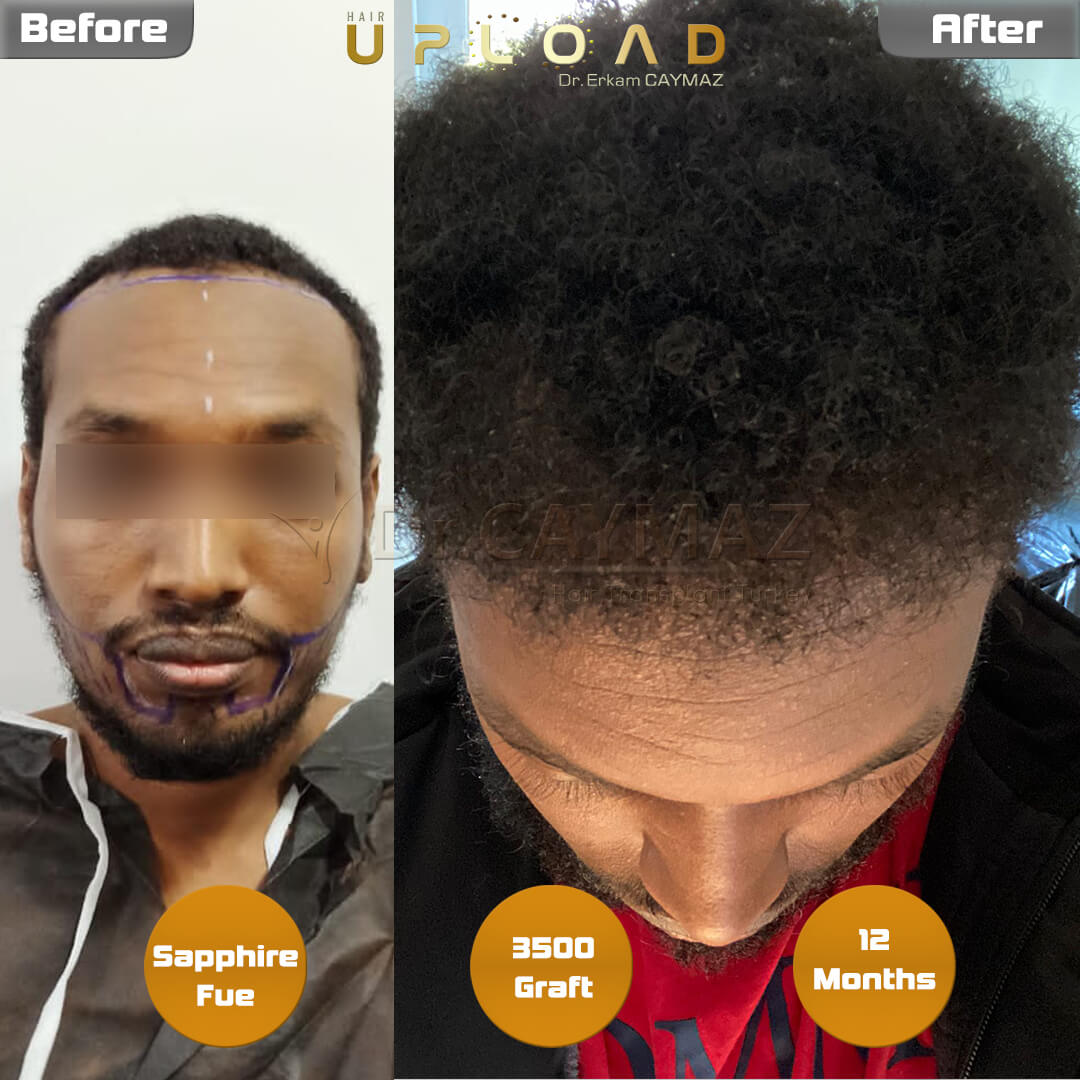
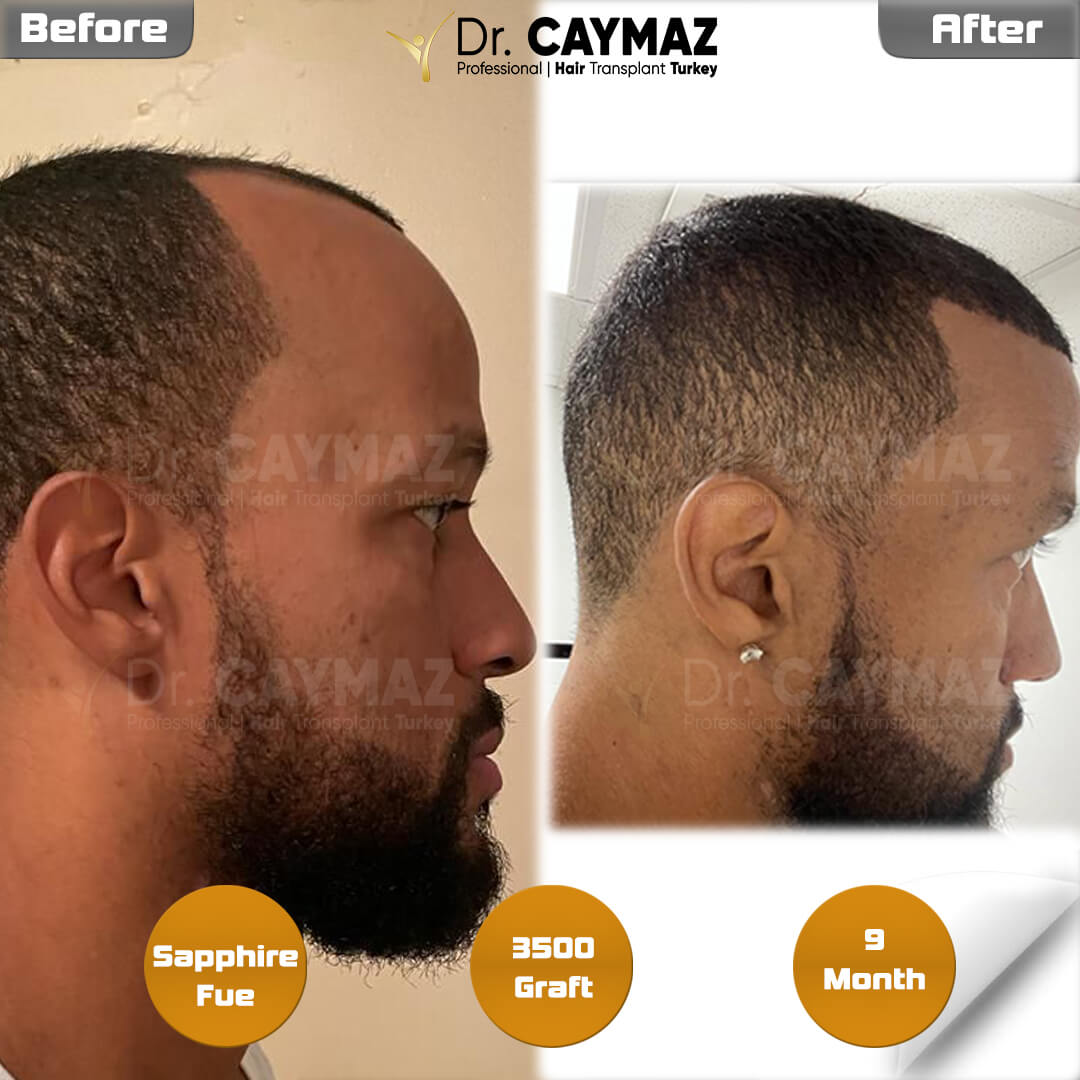
Yes, African American patients can have excellent hair transplant results with FUE, but curly follicles demand special harvesting and angle planning to avoid transection and keloid risk. At Hair Upload in Istanbul, Dr. Erkam assesses hair calibre, curl pattern and donor density before recommending Sapphire FUE or DHI for each case.
Clinic insight: At HU Clinic in Istanbul, Dr. Erkam personally plans every curly-hair case, using larger punch sizing and curved graft placement to protect curled follicles that sit deeper in the scalp.
African American Hair Transplantation, Problems such as hair loss and baldness may apply to any individual. Many factors such as genetic reasons, age-related reasons, and various diseases can cause hair loss. Such problems, which can be seen in female or male individuals, are solved by using appropriate methods in case of different racial characteristics. For African American Hair Type, hair transplantation can be done with methods suitable for this hair type.

With the African American hair type, the hairline must be adjusted correctly. Problems such as the selection of grafts to be taken from the donor area and the problem of overharvesting become important during such surgical operations. If an overharvest problem occurs, the problem is will be permanent for donor areas. So it’s most important for our team.
In African American hair types, the curly structure of the hair is taken into account as well as the roots. The root area of this type of hair is also curly. In addition, the expertise of doctor is needed in case the hairline may be short or long.

African American Hair Transplant
It is very important that the hair looks natural during the transplantation process and that the direction of the roots is adjusted correctly. Baldness problems in male individuals usually appear as androgenic hair loss. This condition, also known as male pattern baldness, starts from the crown area. African American Hair Transplantation can be applied to everyone, regardless of male or female individuals.
Women with the African American hair type may have problems with hair loss or baldness, usually caused by a condition called traction alopecia. The factors that cause traction alopecia are usually chemical straighteners or tight braiding.
Expertise is required for transplantation procedures in African American hair types. While you’ll need to set the angles correctly while placing the grafts, pre-sowing procedures should also be done meticulously. A good analysis of the hair type is a prerequisite.
The donor area should be adjusted and the areas suitable for patient needs should be determined. You’ll need to consider the depth of the grafts in the fixation processes. To avoid extraction, the grafts should not be damaged. If the grafts are damaged, it becomes difficult to obtain a natural appearance.
An appropriate approach must be followed in the care processes after the surgical procedures are performed, considering the racial characteristics. In addition, the equipment to be used during the operations and the expertise of the surgeon are among the issues to be considered.

While Afro-type hair has the same biological characteristics as other hair types, it makes a difference with its curly and thick-wire structures. In addition, the skin types of individuals with this type of hair are also different. While hair transplantation methods are preferred during the application, the patient and the specialist physician decide together according to personal characteristics.
When transplanting using the FUE method with Sapphire incision, it becomes easier to obtain a natural appearance with low risk. Grafts are easily placed in the opened channels and these procedures can be done quickly under the control of a specialist surgeon. Although Afro-type hair seems to grow more slowly due to its curly nature, there is not much difference in the average length of growth. Desired results can be achieved by performing successful hair transplant operations for this type of hair.
Related guides from Hair Upload Clinic:
- Top hair transplant clinics worldwide
- Hairline design for men and women
- Best donor areas for hair transplant
- Shock loss after transplant: what is normal
Frequently Asked Questions
Can African American patients get a hair transplant?
Yes. Curly Afro-textured hair often transplants very well because each curled graft covers more scalp surface. The key is a surgeon experienced with curl-angle harvesting to minimise follicle transection.
Is FUE or FUT better for Afro-textured hair?
FUE is usually preferred at Hair Upload Clinic because it avoids the linear scar that can risk keloid formation in darker skin tones. Dr. Erkam selects the punch size and technique after examining your curl pattern.
What is the keloid risk for Black patients?
Keloid risk is higher in African American skin, so Dr. Erkam reviews your scarring history and uses small, well-spaced FUE sites. If you have known keloids, tell your surgeon during consultation.
How many grafts will I need?
Most patients need 2,000 to 4,000 grafts depending on the size of the thinning area and the density of the curly donor zone, which is often excellent at the back of the scalp.
When will I see results after surgery?
Transplanted hairs shed in the first 2 to 6 weeks (shock loss), then regrow from month 3. Visible density builds between months 6 and 12, with final results around 12 to 18 months.
Does a hair transplant hurt for textured hair?
The procedure is done under local anaesthesia and is generally comfortable. You’ll feel mild soreness and tightness for a few days, managed with standard pain relief and careful aftercare.
Sources: ISHRS patient resources.
Medical disclaimer: This page is for education only and does not replace a consultation with Dr. Erkam at Hair Upload Clinic (HUC). Individual assessment is required.
Why curly follicles change the surgical plan
Afro-textured hair curves beneath the skin, not just above it, so the follicle bends away from the visible hair shaft. That means a standard straight punch entry can cut through the graft. At Hair Upload Clinic, Dr. Erkam opens all recipient channels himself and adjusts punch depth and angle for each patient, while the technician team handles extraction and placement under his supervision. Curly grafts also need gentle separation under the microscope because they hold their spiral shape.
Candidacy and risk comparison
| Factor | Typical finding in African American hair | What it means for surgery |
|---|---|---|
| Donor density | Often high at the back and sides | Good graft availability, sometimes 2,000-4,000 grafts |
| Curl pattern | Follicle curves under the skin | Curved punch technique reduces transection risk |
| Skin tone | Higher keloid and pigmentation risk | FUE preferred; small, spaced sites; scarring history reviewed |
| Technique | Sapphire FUE default | DHI reserved for unshaven or density-specific cases |
| Results timeline | 12-18 months to final look | Shock loss at 2-6 weeks is normal, then regrowth |
Overall success rates of 90-95% and graft survival of up to 98% are realistic expectations when planning matches your hair characteristics. No surgeon can guarantee 100% outcomes, so an honest consultation matters more than promises.
Written by : Amara Okafor