Afro-textured hair requires specialised FUE planning because curved follicles run at steep angles beneath the skin, raising transection risk if standard punches are used. At Hair Upload Clinic in Istanbul, Dr. Erkam adapts punch selection and trajectory for each patient to protect graft viability and achieve natural curvature matching.
Afro-textured hair presents distinct anatomical challenges that standard follicular unit extraction techniques were not originally designed to address. The defining feature is the curl geometry: each follicle follows a curved, sometimes serpentine path underground, unlike the relatively straight follicular anatomy seen in Caucasian or East Asian hair. This curvature means that a punch tool inserted at the surface angle can easily slice across the follicle rather than following it down, a problem called transection. Understanding how curl angles affect graft survival is essential for anyone considering a hair transplant, and it changes how the planning consultation, punch selection, and extraction approach must be tailored to each individual. If you are comparing options, African American hairline causes and treatment is a useful next read.
Why Afro Hair Anatomy Demands Specialised Planning
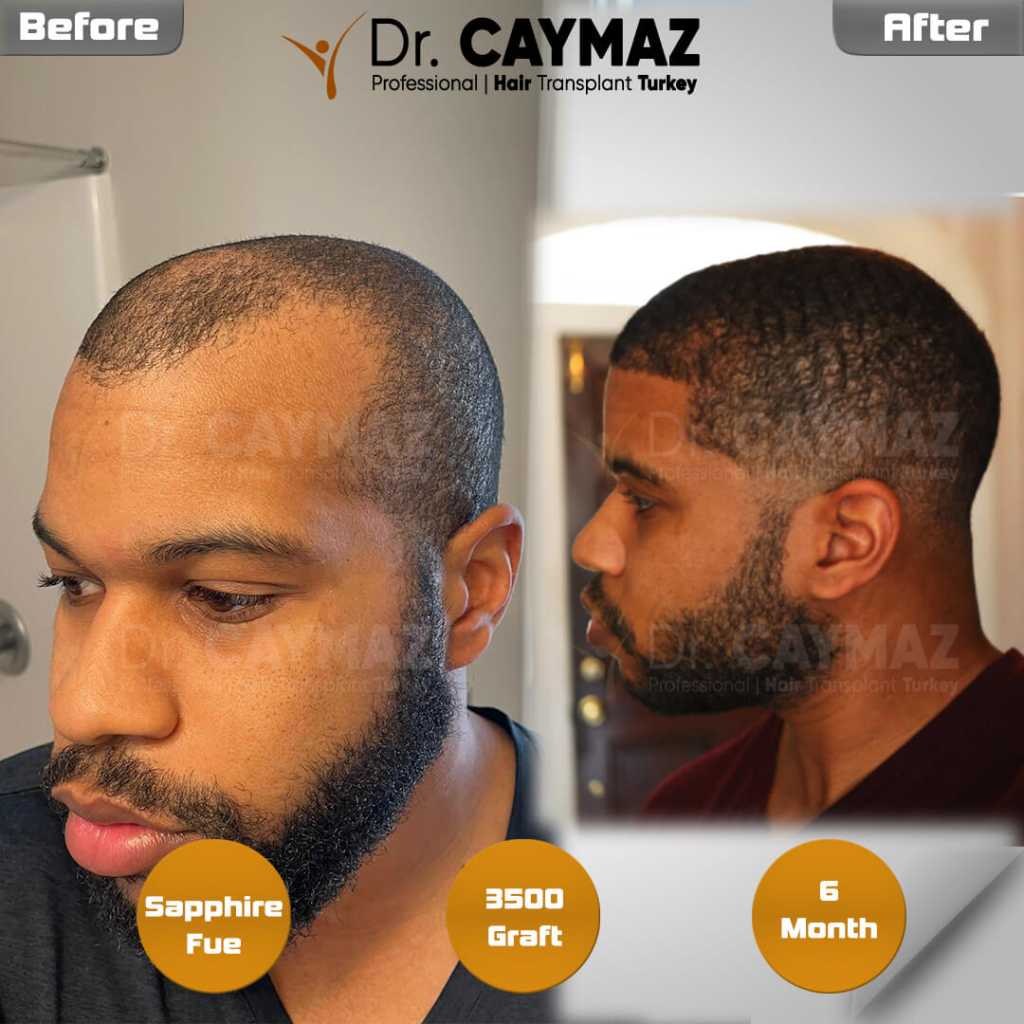
The hair follicle in Afro-textured scalp is not a simple straight cylinder. Below the surface, the follicle may curve anywhere from 30 to 90 degrees from its emerging direction. Surface angle alone is misleading: the visible hair strand points one way, while the follicle bulb sits displaced laterally or even in the opposite direction. This creates what surgeons call a mismatch between surface trajectory and subsurface anatomy. Many international patients review Afro-textured before and after gallery while planning their trip.
During follicular unit extraction, a hollow punch rotates around the follicle to free it from surrounding tissue. If the punch follows the surface angle without accounting for the subsurface curve, it will intersect the follicular wall somewhere below the bulge area, severing the germinal matrix or damaging the dermal papilla. A transected graft cannot produce new hair growth, regardless of how carefully it is implanted. This is why standard punch sizes and entry angles that work reliably on straight hair require modification for Afro-textured donor areas. For clinic-specific context, see Afro hair transplant in Turkey.
The curvature also affects the angle at which grafts must be implanted in the recipient area. Hair emerging from a curly follicle follows a corkscrew path through the epidermis, so the exit point at the skin surface may not align with the underlying follicular angle. Placing a graft perpendicular to the scalp surface can produce a straight, unnatural appearance because the hair will eventually curl outward as it exits. Proper planning means anticipating this exit angle to achieve a naturally curly, age-appropriate hairline.
Who Is a Candidate for Afro Hair Transplant
Candidacy for Afro-textured hair transplant depends on several factors beyond simple Norwood classification. The donor area: typically the posterior scalp: must have sufficient follicular density despite the anatomical complexity. Because transection risk is higher, some patients with very tight curl patterns may require more donor follicles extracted to achieve the same usable graft count as a patient with looser curl geometry.
Ideal candidates have stable donor density above approximately 60 follicular units per square centimetre, realistic expectations about density versus coverage, and a clear understanding that graft placement angle must account for curl exit mechanics. Patients with significant scalp laxity issues or scarring alopecia in the donor zone require individual assessment, as these conditions further complicate extraction technique.
Age considerations for Afro hair transplant lean toward older patients when possible. Younger patients may still be experiencing androgenetic progression, and transplanting into an evolving pattern can produce inconsistent long-term results. However, the specific indication matters: some patients seek transplant for traction alopecia at the temple points, which may be stable in younger age groups, while others present with vertex thinning that requires more conservative planning.
FUE Technique Modifications for Afro Curl Geometry
The extraction phase requires the most significant adaptation. Dr. Erkam at HU Clinic typically begins with a thorough donor area mapping using magnification, categorising follicular units by their surface emergence angle and estimating their subsurface trajectory from tactile feedback during the initial test extraction. This mapping phase is non-negotiable: it determines the entire surgical approach for that patient.
Punch selection changes substantially. Smaller punch diameters: typically 0.7 to 0.85 millimetres for Afro hair: reduce the risk of intersecting the follicular wall, but they also require more precise alignment. The punch must follow the follicle as it curves, not the angle at which the hair strand exits the skin. In practice, this means the surgeon’s hand position and entry trajectory may look counterintuitive, angled away from the visible hair direction to match the actual follicular path.
Some surgeons prefer blunt-tip punches for Afro FUE to push tissue aside rather than cut it, reducing the chance of slicing through a curved follicle. Others use sharp punches with careful directional control. At Hair Upload Clinic Istanbul, Dr. Erkam selects punch type based on individual curl density and skin thickness, and will often use both in different donor zones within the same patient.
The extraction speed also changes. Steeper curl angles and deeper curve paths mean each extraction takes longer to perform safely. Attempting to rush extraction in Afro hair significantly increases transection rates, which is why high-volume clinic models that process multiple patients per day are particularly poorly suited to this hair type. Boutique surgical settings that allow one to two VIP operations per day can dedicate the time each extraction requires.
Key Planning Differences: Afro Hair vs. Other Textures
| Factor | Afro-Textured Hair | Straight / Wavy Hair |
|---|---|---|
| Typical surface-to-subsurface angle difference | 30–90 degrees deviation common | Minimal deviation (0–15 degrees) |
| Recommended punch size | 0.7–0.85 mm (smaller diameter) | 0.8–1.0 mm |
| Transection risk without modification | Significantly elevated | Lower baseline risk |
| Graft survival with experience | Up to 98% with adapted technique | Up to 98% with standard technique |
| Implantation angle adjustment needed | Yes: accounts for curl exit path | Minimal adjustment |
| Ideal clinical volume model | Boutique / low daily volume | Flexible |
As the table illustrates, the technical requirements for Afro hair transplant are not inherently superior or inferior: they are simply different. With the right modifications, survival rates comparable to straight-hair outcomes are achievable. The critical variable is whether the surgical team has specific experience with Afro curl geometry and whether the clinic’s volume model allows adequate time per extraction.
Risks, Limits, and the Aftercare Timeline
The primary risk in Afro hair transplant is elevated transection during extraction, which reduces the usable graft yield and may necessitate a second donor harvesting session. Beyond transection, the risks are similar to FUE in other hair types: postoperative folliculitis, temporary shock loss in the recipient zone, and the possibility of cyst formation around implanted follicles if graft placement is too superficial.
Shock loss deserves particular mention for Afro-textured patients. The recipient area hair that is not transplanted may be at risk of temporary shedding due to the trauma of channel creation and local anaesthetic infiltration. This typically resolves within three to four months as the follicles re-enter the anagen phase. Dr. Erkam discusses shock loss risk openly during consultation so patients understand the timeline beforejudging outcomes.
The aftercare timeline follows a familiar progression: the first 48 hours involve keeping the recipient area protected from friction and avoiding any pressure that could dislodge freshly placed grafts. By day three, patients may begin gentle irrigation as directed. Sutures or staples are not required with FUE extraction. By week two, any crusting resolves and patients can resume normal hair washing routines. By month three, early regrowth becomes visible in the transplanted follicles, with full cosmetic density typically achieved between months nine and twelve.
Afro hair regrowth sometimes appears to be slower to reach visible length because the hair must complete its corkscrew exit path through the epidermis before it begins to hang straight. This does not indicate graft failure: it reflects the normal mechanics of curly hair emergence.
What International Patients Should Know Before Travelling to Istanbul
Hair Upload Clinic Istanbul receives a significant proportion of its Afro-textured hair transplant patients from North America and Western Europe. For international patients, the planning process begins with a remote consultation: photographs and, where possible, a brief video call allow Dr. Erkam to assess donor density and curl complexity before travel is arranged.
The procedure itself is performed under local anaesthesia only. Patients remain awake throughout, though the anterior scalp is anaesthetised completely. The surgery typically runs four to eight hours depending on graft count, with scheduled breaks and light nutrition provided. Patients should plan for a minimum of three days in Istanbul: the preoperative day, the surgical day, and a first postoperative review before discharge to travel.
Postoperative care instructions are provided in printed and digital format, with direct contact details for the clinical team. Because Afro hair often requires specific moisturising and styling care during the regrowth phase, patients receive guidance on compatible products and practices that will not disrupt graft sites while the hair is establishing.
For those comparing cost structures, graft pricing at Hair Upload Clinic Istanbul typically ranges from two to four euros per graft depending on the complexity of the case and technique selected. Sapphire FUE is the default approach, with DHI considered for specific indications such as very tight curl patterns where channel and placement alignment require maximum control. The total cost depends on graft count, which Dr. Erkam determines during individual assessment.
Ultimately, the decision to pursue Afro hair transplant requires selecting a surgical team that understands the anatomical specificity of curl geometry, operates at a volume that allows adequate attention per case, and can articulate clearly why their technique differs from standard FUE. Those criteria, rather than marketing language, should guide the consultation choice.
This article provides general patient-education information. Individual assessment is required to determine suitability for any procedure. Consult a qualified surgeon before making treatment decisions.
Clinic insight: At Hair Upload Clinic Istanbul, Dr. Erkam conducts individual curl-angle mapping during every Afro hair transplant consultation, using the findings to select punch size and trajectory for that patient’s specific geometry rather than applying a standard protocol.
Frequently Asked Questions
Why is Afro hair transplant more complex than straight hair transplant?
Afro-textured follicles follow curved, serpentine paths underground that do not align with their surface emergence angle. Standard FUE punches risk transecting these curved follicles. Planning must account for subsurface trajectory, not just the angle at which hair exits the scalp.
What punch size is used for Afro hair FUE?
Surgeons experienced with Afro hair typically use smaller punches, around 0.7 to 0.85 millimetres, to reduce the chance of intersecting the follicular wall during extraction. Punch selection is individualised during donor area assessment.
What is the graft survival rate for Afro hair transplant?
With an adapted technique and experienced surgical team, graft survival for Afro hair transplant can reach up to 98%, comparable to other hair textures when appropriate modifications are applied.
Will my transplanted Afro hair grow in curly?
The curl pattern is determined by the follicle itself. Transplanting follicular units from your own donor area transfers their intrinsic curl geometry. However, the hair must first complete its corkscrew emergence through the skin surface, which can make early regrowth appear straighter before the natural curl pattern establishes.
How soon after Afro hair transplant can I style or cut my hair?
The first two weeks focus on graft protection. Normal washing resumes around week two. Styling with heat or chemical treatments should wait until at least month three, and any haircut is typically safe after month four once regrowth is established.
Is shock loss more likely with Afro hair transplant?
Shock loss risk is not inherently higher for Afro hair, but the postoperative timeline can feel longer because curly hair regrowth takes time to complete its exit path through the epidermis. Most shock loss is temporary, with regrowth visible by month three to four.
Can I have Afro hair transplant if I have traction alopecia?
Traction alopecia at the temple points or along the hairline margins is a common indication for Afro hair transplant, provided the donor area has sufficient density and the traction pattern is stable. Individual assessment determines whether the donor zone is appropriate.
Why does Hair Upload Clinic perform only 1-2 operations per day?
Boutique surgical volume allows Dr. Erkam to dedicate the time each extraction requires, particularly important for Afro curl geometry where rushed extraction significantly elevates transection risk. Low daily volume is a deliberate quality model, not a capacity constraint.
Sources: ISHRS: International Society of Hair Restoration Surgery; American Academy of Dermatology; Ac争悍A et al., Follicular unit extraction in patients with Afro-textured hair, Hair Transplant Forum International (2019); Rose et al., Transection rates in curly versus straight hair: a retrospective analysis, Dermatologic Surgery (2018)
Medical disclaimer: This page is for education only and does not replace a consultation with Dr. Erkam at Hair Upload Clinic (HUC). Individual assessment is required.
Written by : Marcus Holloway