An eyebrow transplant at Hair Upload Clinic in Istanbul is a precise surgical procedure designed to restore or enhance eyebrow hair, focusing on achieving natural density, direction, and shape. Using advanced FUE techniques, HUC ensures a seamless integration with your existing facial features.
Understanding Eyebrow Transplants: A Clinical Overview
Eyebrow transplantation is a specialised form of hair restoration surgery, meticulously designed to rebuild or enhance the density and shape of eyebrows. Unlike scalp hair transplantation, eyebrow procedures demand an even greater degree of precision and artistic skill due to the unique growth patterns, angles, and density requirements of eyebrow hairs. At Hair Upload Clinic in Istanbul, we approach each eyebrow transplant as a bespoke facial hair restoration, ensuring the outcome is not just dense, and perfectly aligned with your natural facial aesthetics.
The core principle involves harvesting individual hair follicles, typically from the back of the scalp, and meticulously implanting them into the eyebrow area. The goal is to mimic the natural growth direction and angle of existing eyebrow hairs, creating a soft, natural, and lasting result. This procedure can address thinning, gaps, complete loss, or simply enhance the shape and fullness of the brows, providing a significant boost to facial symmetry and expression.
Indications and Candidacy for Eyebrow Restoration
Eyebrow hair loss can stem from various causes, affecting both men and women. Understanding the underlying reason is crucial for determining candidacy and predicting the potential success of a transplant. Common indications for an eyebrow transplant include:
- Genetic Factors: Some individuals naturally have sparse or thin eyebrows due to their genetic predisposition.
- Over-Plucking/Waxing: Excessive grooming over time can damage hair follicles, leading to permanent hair loss in the eyebrow area.
- Trauma or Injury: Scars from burns, cuts, or other injuries can prevent hair growth, creating noticeable gaps.
- Medical Conditions: Certain dermatological conditions (e.g., alopecia areata, frontal fibrosing alopecia) or systemic diseases (e.g., thyroid disorders) can cause eyebrow thinning or loss. While some conditions may contraindicate transplantation, others, once stable, can make a patient a suitable candidate.
- Trichotillomania: A compulsive disorder involving pulling out one’s own hair. Patients must have the condition under control before considering surgery.
- Chemotherapy/Radiation: Hair loss from cancer treatments can sometimes be permanent, making transplantation an option once recovery is complete.
Ideal candidates for eyebrow transplantation are generally healthy individuals with realistic expectations, sufficient donor hair, and stable eyebrow hair loss. During your consultation at HU Clinic, Dr. Erkam will thoroughly assess your medical history, current eyebrow condition, and donor area availability to determine if an eyebrow transplant is the right solution for you.
The Eyebrow Transplant Procedure: Precision and Artistry
An eyebrow transplant at Hair Upload Clinic is a highly detailed procedure, typically performed under local anaesthesia. The process involves several key stages, each demanding meticulous attention to detail to ensure natural-looking results.
1. Consultation and Design
This is arguably the most critical step. Dr. Erkam, our owner-surgeon, personally conducts the initial consultation. He works closely with you to understand your aesthetic goals, taking into account your facial structure, existing eyebrow hair, and desired density and shape. Using a fine-tipped pen, Dr. Erkam will meticulously draw and refine the new eyebrow outline, ensuring it complements your unique features. This collaborative design phase is crucial for achieving a symmetrical and aesthetically pleasing outcome.
2. Donor Hair Harvesting (FUE Technique)
For eyebrow transplants, individual hair follicles are typically extracted from the back of the scalp, usually behind the ears. This area provides hairs that are generally finer and more suitable for mimicking natural eyebrow texture. We primarily utilise the Follicular Unit Extraction (FUE) method for its precision and minimal invasiveness. With FUE, individual follicular units (containing 1-2 hairs) are carefully removed using a micro-punch tool. This technique leaves no linear scar, allowing for quicker healing in the donor area.
For those interested in understanding the broader applications and differences between techniques, our detailed guide on FUE vs DHI technique comparison offers further insights into hair transplant methodologies.
3. Graft Preparation
Once harvested, the follicular units are carefully prepared under a microscope by our expert surgical technicians. They ensure the grafts are healthy and ready for implantation, removing any excess tissue without damaging the delicate follicles. This preparation is vital for maximising graft survival.
4. Recipient Site Creation and Implantation
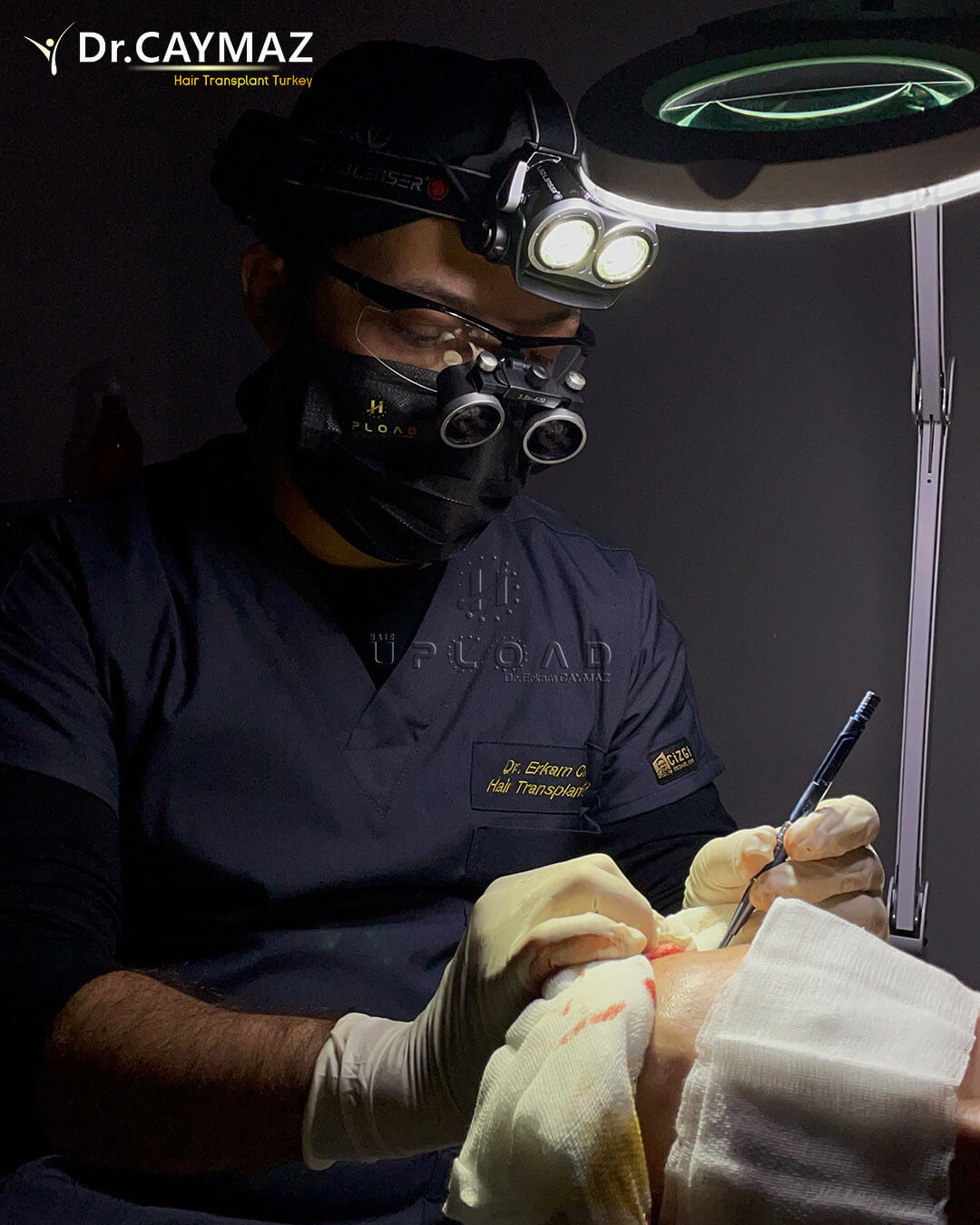
This stage requires immense artistic skill and surgical precision. Dr. Erkam personally creates the recipient sites (tiny incisions) within the designed eyebrow outline. He uses specialized sapphire blades to control the angle, direction, and depth of each incision. This is paramount for ensuring the transplanted hairs grow in a natural direction, mimicking existing eyebrow hair patterns, which can vary significantly across different parts of the brow (e.g., upward near the nose, horizontal in the middle, downward at the tail).
Following site creation, our expert surgical technicians, under Dr. Erkam’s direct supervision, meticulously implant each prepared graft into the recipient sites. Each hair follicle is placed one by one, ensuring the correct angle and density are maintained throughout the procedure. This division of labour ensures both the artistic vision and technical execution are of the highest standard.
Key Comparison: Eyebrow vs. Scalp Hair Transplant
While both eyebrow and scalp hair transplants rely on similar FUE principles, there are crucial distinctions that highlight the specialised nature of eyebrow restoration. These differences primarily relate to the unique characteristics of eyebrow hair and the aesthetic demands of facial hair.
| Feature | Eyebrow Transplant | Scalp Hair Transplant |
|---|---|---|
| Graft Type | Predominantly single-hair grafts, sometimes two-hair for density | 1-4 hair follicular units, depending on area |
| Hair Growth Angle | Very acute (10-20 degrees), varying across the brow | Obtuse (30-45 degrees), generally consistent |
| Hair Growth Direction | Complex, fan-like pattern (upward, horizontal, downward) | Generally forward or outward, consistent patterns |
| Density | Lower density, but appears fuller due to fine hair | Higher density, aiming for significant coverage |
| Donor Site | Typically fine hairs from behind ears/nape | Denser hairs from mid-occipital scalp |
| Procedure Time | Shorter (2-4 hours) due to fewer grafts | Longer (6-8+ hours) for higher graft counts |
Risks, Limits, and Aftercare Timeline
Like any surgical procedure, eyebrow transplantation carries certain risks, though they are generally minimal and manageable. Understanding the aftercare protocol is also vital for optimal healing and results.
Potential Risks and Considerations:
- Swelling and Bruising: Common but temporary, usually subsiding within a few days.
- Infection: Rare, managed with proper sterile technique and post-operative care.
- Folliculitis: Inflammation of hair follicles, can be treated with topical solutions.
- Numbness: Temporary numbness in the treated areas is possible.
- Unnatural Growth: If grafts are not placed at the correct angle, hairs can grow unnaturally. This is why Dr. Erkam’s expertise in incision creation is so critical.
- Scarring (Donor Area): FUE minimises scarring to tiny, unnoticeable dots.
- Shock Loss: Temporary shedding of existing eyebrow hairs or newly transplanted hairs (telogen effluvium) can occur, but these usually grow back.
- Hair Characteristics: Transplanted scalp hairs will retain their growth characteristics, meaning they will grow longer and thicker than natural eyebrow hairs and will require regular trimming.
It is important to have realistic expectations. While eyebrow transplants can significantly enhance your appearance, they aim for improvement, not perfection. Individual results may vary, and a comprehensive consultation will help set appropriate expectations.
Aftercare Timeline: What to Expect
Proper post-operative care is crucial for the success of your eyebrow transplant. We provide detailed instructions, but here’s a general timeline:
- Days 1-3: Mild swelling and redness in the eyebrow area are normal. Small scabs will form around each transplanted graft. Avoid touching or rubbing the brows. Gentle saline sprays may be advised to keep the area moist.
- Days 4-7: Swelling begins to subside. The scabs will start to dry and flake off naturally. It’s crucial not to pick at them. Continue with prescribed medications and gentle cleaning.
- Weeks 1-2: Most scabs will have fallen off. The transplanted hairs may start to shed – this is a normal part of the process (shock loss) and indicates new growth is on its way.
- Months 1-3: The eyebrow area may appear sparse as hairs shed. New, fine hairs will begin to emerge.
- Months 3-6: Significant new hair growth becomes visible. The hairs will gradually thicken and mature.
- Months 6-12: Final results start to become apparent. The transplanted hairs will continue to grow, requiring regular trimming (typically once every 1-2 weeks) to maintain the desired length and shape.
- Beyond 12 Months: The results are generally considered permanent. Continued good care, including regular trimming, will help maintain the aesthetic outcome.
We provide comprehensive aftercare support, including follow-up appointments and clear instructions, to ensure your healing process is as smooth as possible. For more general aftercare advice, we also have resources on hair transplant aftercare that can be helpful.
Practical Clinic Notes for International Patients at HU Clinic
At Hair Upload Clinic in Istanbul, we pride ourselves on offering a VIP, boutique experience for our international patients seeking eyebrow restoration. We understand that travelling for a medical procedure requires careful planning, and we strive to make your journey as seamless and comfortable as possible.
Our Approach to Eyebrow Transplants:
Surgeon-Led Planning & Incisions: Unlike high-volume hair mills, Dr. Erkam, our founder and lead surgeon with over 15 years of experience, personally oversees every crucial step of your eyebrow transplant. He conducts your initial consultation, meticulously designs your new eyebrow shape, and performs all the critical channel openings (incisions) with sapphire blades. This hands-on involvement ensures the precise angle, direction, and depth needed for natural-looking eyebrow growth.
Expert Team & Limited Daily Volume: While Dr. Erkam performs the planning and incisions, our highly skilled surgical technicians handle the delicate graft extraction and implantation under his direct supervision. This division of labour maximises efficiency and ensures the highest quality at each stage. We limit our daily operations to just 1–2 VIP procedures, guaranteeing each patient receives undivided attention and personalised care.
Advanced FUE Techniques: We primarily utilise Sapphire FUE for eyebrow transplants, allowing for finer, more precise recipient site creation, which is essential for the delicate nature of eyebrow hair. DHI (Direct Hair Implantation) may be considered for specific cases requiring ultra-high density in a small area or for unshaven procedures, but Sapphire FUE is generally preferred for its versatility and natural outcomes.
Comprehensive Care Package: For our international patients, we offer all-inclusive packages that typically cover accommodation, airport transfers, and post-operative medications, simplifying your travel arrangements. Our patient coordinators are on hand to assist with all logistics, from initial inquiry to your departure.
Choosing Hair Upload Clinic for your eyebrow transplant means opting for a clinic where precision, artistry, and patient-centred care are paramount. We are dedicated to delivering results that enhance your natural beauty and confidence, providing detailed guidance every step of the way.
For those considering facial hair restoration beyond eyebrows, such as beard transplants, we also offer specialised beard transplant procedures designed to achieve natural density and shape.
Clinic insight: At HU Clinic in Istanbul, owner-surgeon Dr. Erkam’s expertise in facial aesthetics is paramount for eyebrow transplants, where precise angle and direction of each implanted graft are critical for a truly natural and symmetrical outcome.
Frequently Asked Questions
How long does an eyebrow transplant procedure take?
An eyebrow transplant typically takes between 2 to 4 hours, depending on the number of grafts required and the complexity of the design. This includes the consultation, donor hair extraction, and precise implantation.
Will the transplanted eyebrow hairs grow like scalp hair?
Yes, the transplanted hairs, originating from your scalp, will retain their original growth characteristics. This means they will grow longer and thicker than natural eyebrow hairs and will require regular trimming, usually every 1-2 weeks, to maintain the desired length and shape.
Is an eyebrow transplant painful?
The procedure is performed under local anaesthesia, meaning you will be comfortable and pain-free during the transplant itself. You might feel some mild pressure or discomfort during the anaesthesia injections. Post-procedure discomfort is generally minimal and can be managed with over-the-counter pain relievers.
When will I see the final results of my eyebrow transplant?
New hair growth typically begins around 3 months after the procedure. Significant growth will be visible between 6 to 8 months, with the final, mature results usually becoming apparent around 12 months. Patience during the healing and growth phases is key.
Can I choose the shape and density of my new eyebrows?
Absolutely. The design phase is highly collaborative. Dr. Erkam will work closely with you to create an eyebrow shape and density that aligns with your aesthetic goals and complements your facial features. Your input is crucial in achieving a natural and satisfying outcome.
What is the success rate of eyebrow transplants at HU Clinic?
At Hair Upload Clinic, we achieve an overall success rate of 90–95% for eyebrow transplants, with graft survival rates up to 98%. These rates reflect our meticulous technique and dedicated aftercare, leading to high patient satisfaction.
Sources: ISHRS – Eyebrow Transplants: A Growing Trend; American Academy of Dermatology Association – Hair Loss Causes; PubMed – Eyebrow Transplantation: Review of the Literature; PubMed – Follicular Unit Extraction for Eyebrow Reconstruction
Medical disclaimer: This page is for education only and does not replace a consultation with Dr. Erkam at Hair Upload Clinic (HUC). Individual assessment is required.
Written by : Priya Sharma