Choosing the right hair transplant technique is crucial for optimal results. While both Follicular Unit Extraction (FUE) and Direct Hair Implantation (DHI) deliver excellent outcomes, their methodologies and ideal applications differ. At Hair Upload Clinic in Istanbul, we help you understand these nuances to select the technique best suited for your unique hair loss pattern and aesthetic goals. If you are comparing options, best hair transplant clinics guide is a useful next read.
Understanding Hair Transplant Basics: The Foundation of Restoration
Before diving into the specifics of FUE and DHI, it’s helpful to grasp the fundamental principle behind modern hair transplantation. The core idea is simple yet revolutionary: relocate healthy, permanent hair follicles from one area of your scalp to another where hair is thinning or absent. This process relies on a concept called ‘donor dominance,’ meaning hair follicles harvested from areas resistant to balding (typically the back and sides of the head) will retain this resistance even when moved to a new location. Many international patients review Dr. Erkam: lead surgeon profile while planning their trip.
We define the **donor area** as the region of your scalp, usually the back and sides, from which healthy hair follicles are harvested. These follicles are genetically programmed to resist the effects of dihydrotestosterone (DHT), the hormone largely responsible for male and female pattern baldness. The **recipient area**, on the other hand, is the balding or thinning region where these harvested grafts will be implanted to restore hair density and recreate a natural hairline. For clinic-specific context, see hair transplant FAQ.
The goal, regardless of the technique, is always to achieve a natural-looking, permanent result that seamlessly blends with your existing hair. The artistry and precision involved in this process are just as important as the technique itself.
Follicular Unit Extraction (FUE): A Closer Look at the Gold Standard
Follicular Unit Extraction, or **FUE**, has become a widely popular and highly effective hair transplant method. It’s renowned for its minimally invasive nature and the natural results it delivers. At its heart, FUE involves individually extracting follicular units – naturally occurring groupings of 1-4 hairs – directly from the donor area, typically the back and sides of the head. You can also read Norwood scale and treatment stages for how HU Clinic structures consultation and aftercare.
Here’s how the FUE process generally unfolds:
- Donor Area Preparation: The donor area is usually shaved to allow for precise extraction. Local anaesthesia is administered to ensure you’re comfortable and pain-free throughout the procedure.
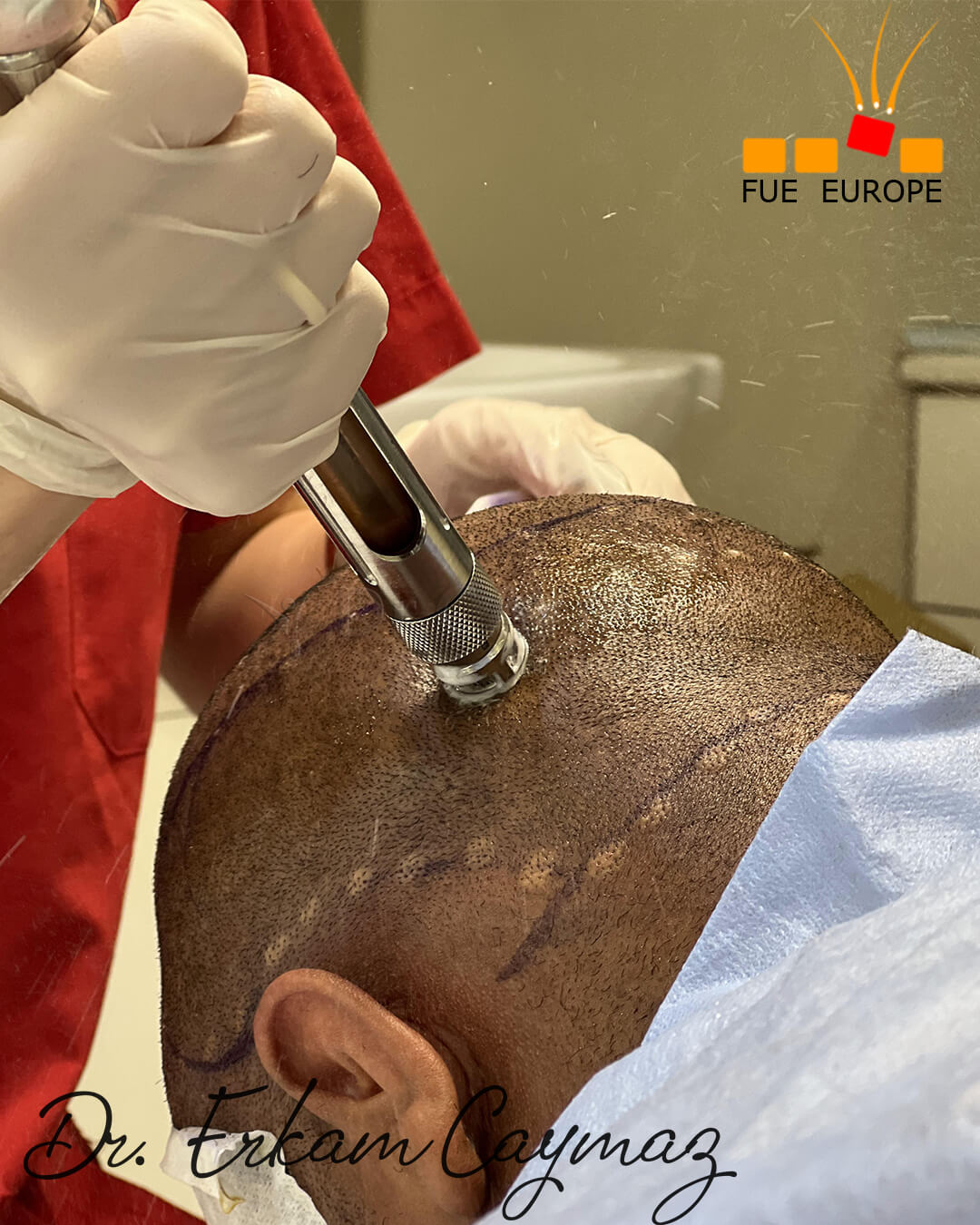
- Graft Extraction: Using a specialised micro-punch tool, usually between 0.7mm and 1.0mm in diameter, individual follicular units are carefully extracted. The surgeon or trained technicians delicately remove each graft, leaving behind tiny, punctate scars that are virtually undetectable once the surrounding hair grows back.
- Graft Preparation: Once extracted, the grafts are meticulously inspected and prepared under high-magnification microscopes. This ensures only the healthiest grafts are selected for implantation.
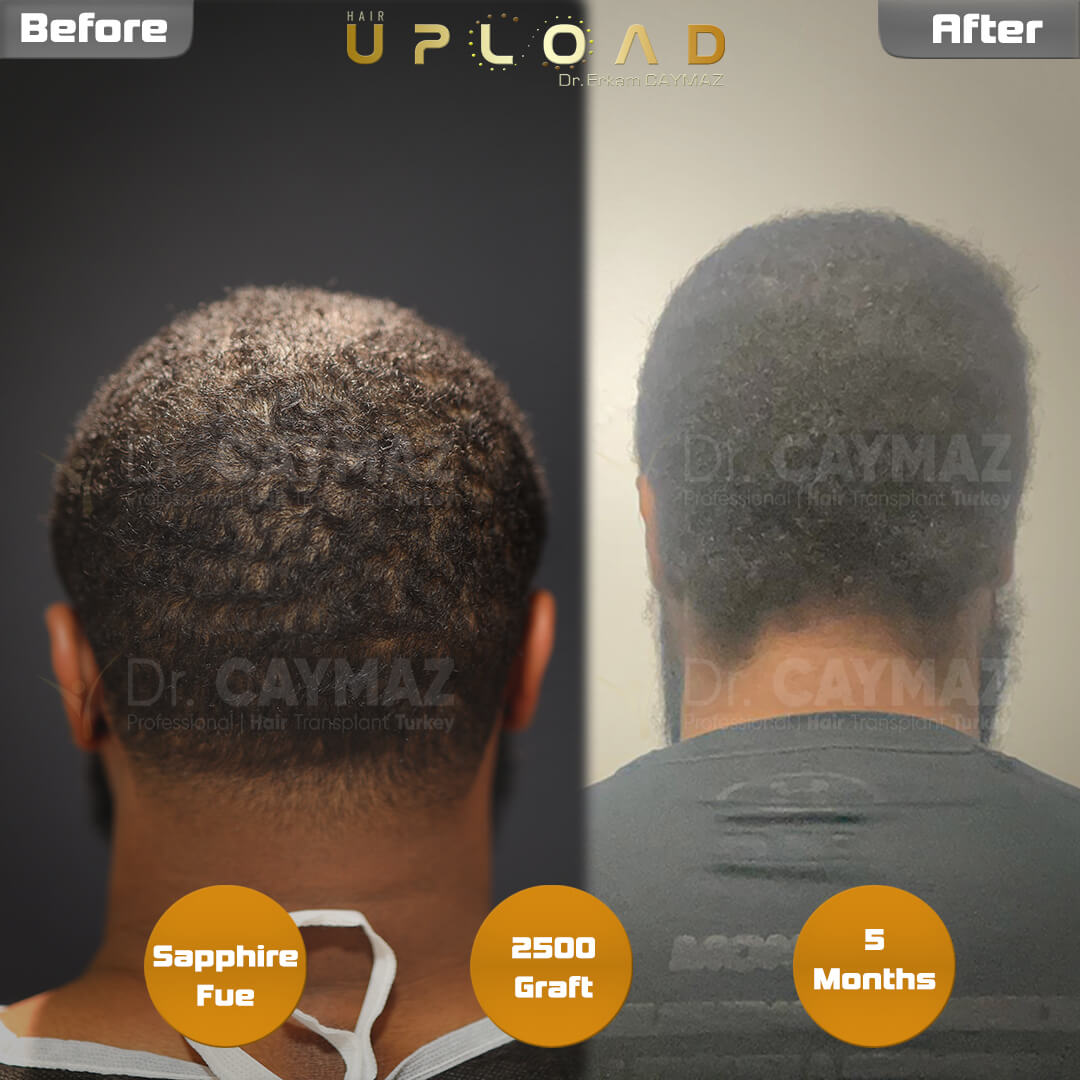
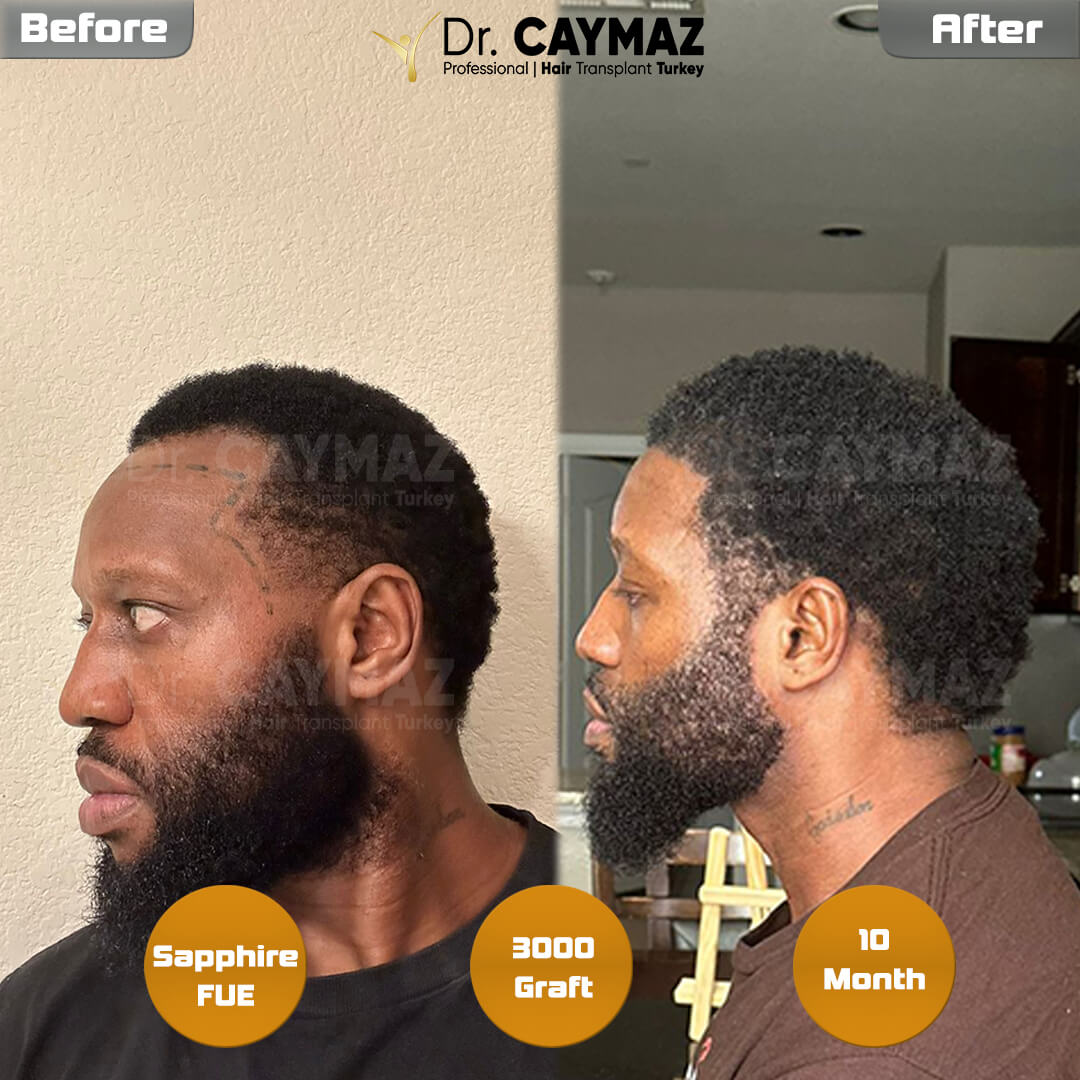
- Recipient Site Creation: This is a critical step, especially at a clinic like Hair Upload. Owner-surgeon Dr. Erkam personally designs your hairline and creates the recipient sites (tiny incisions) in the balding or thinning areas. For Sapphire FUE, which is our default technique, Dr. Erkam uses fine sapphire blades to create these channels. These blades allow for incredibly precise, micro-incisions that match the natural angle and direction of your existing hair, promoting optimal density and a natural growth pattern.
- Graft Implantation: Expert surgical technicians, working under Dr. Erkam’s direct supervision, carefully place each individual graft into the pre-made recipient sites. This step requires immense skill and patience to ensure each graft is correctly oriented for a natural outcome.
The primary advantage of FUE is its ability to produce a very natural look with minimal scarring in the donor area, making it an excellent choice for many patients. The use of sapphire blades in Sapphire FUE further enhances precision and reduces tissue trauma compared to traditional steel blades, often leading to faster healing and improved graft survival rates.
Direct Hair Implantation (DHI): Precision and Unshaven Potential
Direct Hair Implantation, or **DHI**, is a refined variant of the FUE technique, distinguished by its unique implantation method. While the graft extraction process is similar to FUE, DHI streamlines the channel opening and implantation into a single, direct step. This technique is often favoured for its ability to achieve high density and for patients who prefer an unshaven procedure.
Here’s a breakdown of the DHI process:
- Donor Area Preparation: Similar to FUE, the donor area is numbed with local anaesthesia. While a full shave of the donor area is common, DHI offers options for partially shaved or even fully unshaven procedures in specific cases, making it attractive to those who want to maintain their current hair length.
- Graft Extraction: Individual follicular units are carefully extracted one by one from the donor area using a micro-punch, just as in traditional FUE.
- Direct Implantation with Choi Pen: This is where DHI truly differentiates itself. Instead of creating separate incisions for each graft, the extracted follicles are loaded into a specialised instrument called a Choi Implanter Pen. This pen allows the surgeon to create the recipient site and implant the graft simultaneously. The Choi pen features a hollow needle that can make a micro-incision and then directly insert the graft into the scalp at the precise depth, angle, and direction.
The key benefits of DHI include its capacity for higher density due to the precise control offered by the Choi pen, and the potential for an unshaven procedure, which minimises the visible signs of a transplant immediately after surgery. This direct implantation method also means the grafts spend less time outside the body, which some believe can contribute to better graft survival.
While DHI is an excellent technique for certain situations, it typically works best for smaller to medium-sized areas requiring density enhancement or hairline refinement. It’s also the skill of the medical team in handling the Choi pen is paramount for successful outcomes.
FUE vs DHI: A Head-to-Head Comparison
To help you visualise the core differences between these two leading hair transplant techniques, here’s a comparison table highlighting their key aspects:
| Feature | Follicular Unit Extraction (FUE) | Direct Hair Implantation (DHI) |
|---|---|---|
| Extraction Method | Individual follicular units extracted using micro-punches. | Individual follicular units extracted using micro-punches. |
| Recipient Site Creation | Channels (incisions) are created by the surgeon (e.g., with sapphire blades) *before* graft implantation. | Graft is loaded into a Choi Implanter Pen, which creates the channel and implants the graft *simultaneously*. |
| Tools Used | Micro-punches for extraction, sapphire blades (Sapphire FUE) or steel blades for channel opening. | Micro-punches for extraction, Choi Implanter Pen for implantation. |
| Shaving Requirement | Typically requires shaving the entire donor area; recipient area often shaved for large cases. | Donor area usually shaved, but can accommodate partially shaved or fully unshaven options for specific cases. Recipient area typically not shaved. |
| Density Potential | Excellent density, especially for large areas. | Can achieve very high density, particularly good for small areas requiring precision. |
| Scarring | Minimally invasive, tiny punctate scars in donor area, virtually undetectable. | Minimally invasive, tiny punctate scars in donor area, virtually undetectable. |
| Healing Time | Generally quick, with full recovery within 7-10 days. | Similar to FUE, often slightly faster initial recovery in recipient area due to less trauma. |
| Ideal For | Large areas of baldness, significant hairline reconstruction, patients who don’t mind shaving. | Smaller areas, density improvement, unshaven procedures, eyebrow/beard transplants, patients seeking maximum precision. |
| Graft Handling | Grafts are extracted, then placed into prepared channels. Short out-of-body time. | Grafts are extracted and directly implanted, potentially reducing out-of-body time. |
| Surgeon’s Role | Dr. Erkam designs hairline and performs channel opening (Sapphire FUE). Technicians extract and implant. | Dr. Erkam designs hairline. Technicians extract and implant using Choi Pen under supervision. |
Key Factors in Choosing Your Hair Transplant Technique
Deciding between FUE and DHI isn’t about one being inherently ‘better’ than the other; it’s about finding the technique that aligns perfectly with your individual needs, hair characteristics, and aesthetic goals. Here are the crucial factors we consider during your consultation at Hair Upload Clinic:
Hair Loss Pattern and Extent
The severity and pattern of your hair loss play a significant role. For extensive baldness, particularly across large areas of the scalp (e.g., higher Norwood scale), FUE is often the more efficient and effective choice. It allows for the transplantation of a larger number of grafts in a single session. DHI, with its focus on precision, can be excellent for smaller, more targeted areas, such as refining a receding hairline, adding density to a thinning crown, or addressing specific patches.
Hair Type and Characteristics
Your natural hair characteristics – its texture, colour, curl, and thickness – can influence which technique might yield the best results. For example, individuals with very curly hair may require a slightly different approach to extraction to minimise damage to the follicular unit. During your consultation, Dr. Erkam will meticulously assess your hair quality to recommend the most suitable method.
Donor Area Quality and Quantity
The health and density of your donor area are paramount. A robust donor area with a good supply of healthy, multi-hair follicular units is essential for any successful transplant. We evaluate the elasticity of your scalp, the density of your hair in the donor region, and its overall health to ensure we can harvest enough grafts without compromising the aesthetic of the donor site itself. The quantity of available grafts will also dictate the achievable density in the recipient area.
Desired Density and Hairline Design
Both FUE and DHI can deliver excellent density, but DHI often allows for slightly higher graft density in very specific, small areas due to the precise control of the Choi pen. If your primary goal is to achieve maximum density in a particular zone or to create an incredibly detailed, natural-looking hairline, DHI might be considered. However, FUE with sapphire blades also offers exceptional precision for hairline design and density across broader areas.
Shaving Preference
One of the most common reasons patients lean towards DHI is the option for an unshaven or partially shaved procedure. If you’re concerned about the visible signs of a hair transplant and wish to return to your daily life with minimal detection, DHI’s unshaven capability can be a significant advantage. FUE typically requires shaving the donor area, and often the recipient area for larger transplants, though smaller FUE procedures can sometimes be done with partial shaving.
Budget Considerations
While both techniques offer excellent value for money, DHI can sometimes be slightly more expensive per graft due to the specialised tools and the intense, precise nature of the implantation process. However, at Hair Upload Clinic in Istanbul, we focus on providing transparent pricing and exceptional results, ensuring you understand all costs upfront. In Istanbul, the cost of a hair transplant typically ranges from €2-4 per graft, depending on the complexity and technique chosen.
The Role of the Surgeon: Dr. Erkam’s Approach at Hair Upload Clinic
Regardless of whether you choose FUE or DHI, the expertise and experience of your surgeon are the most critical factors in achieving a successful outcome. At Hair Upload Clinic, we firmly believe that a hair transplant is both a medical procedure and an art form, requiring meticulous planning and skilled execution.
Owner-surgeon **Dr. Erkam** brings over 15 years of experience and has personally overseen more than 10,000 procedures for over 9,000 patients. His involvement is central to every step of your journey:
- Personalised Consultation: Dr. Erkam personally conducts every patient consultation, thoroughly assessing your hair loss, discussing your expectations, and recommending the most suitable technique for your unique case.
- Hairline Design and Planning: The hairline is the frame of your face. Dr. Erkam meticulously designs your new hairline, considering your facial structure, age, and natural hair growth patterns to ensure a result that is both aesthetically pleasing and natural-looking.
- Channel Opening/Incisions (Sapphire FUE): For patients undergoing Sapphire FUE, Dr. Erkam personally performs the crucial step of opening the recipient channels using advanced sapphire blades. This ensures precision in angle, depth, and direction, which are vital for natural-looking growth and optimal graft survival.
- Supervision of Graft Extraction and Implantation: While expert surgical technicians perform the graft extraction and implantation, they do so under Dr. Erkam’s direct and vigilant supervision. This ensures adherence to the highest clinical standards and consistent quality throughout the procedure.
At Hair Upload Clinic in Istanbul, we operate on a boutique model, conducting only 1-2 VIP-private operations per day. This low daily volume allows Dr. Erkam and his dedicated team to provide undivided attention to each patient, ensuring the highest level of care and precision. We generally prefer Sapphire FUE for its versatility and excellent outcomes, while DHI is offered for selected cases where its specific advantages, such as an unshaven procedure or targeted high density, are most beneficial.
We use only local anaesthesia (lidocaine ± epinephrine), often supplemented with a needle-free jet injector and topical cream for maximum comfort. We do not offer sedation, as Dr. Erkam prioritises patient safety and the ability to communicate throughout the procedure.
Recovery and Aftercare: What to Expect Post-Procedure
After your FUE or DHI procedure at Hair Upload Clinic, proper aftercare is essential for ensuring optimal healing and the best possible results. While both techniques are minimally invasive, you can expect a similar recovery process:
- Immediate Post-Op: You’ll likely experience some redness, swelling, and scabbing in both the donor and recipient areas. This is a normal part of the healing process. We’ll provide detailed instructions on how to care for your scalp, including how to gently wash your hair and apply any necessary topical treatments.
- First Few Days: Swelling typically subsides within 3-5 days. The tiny scabs will begin to form and usually fall off within 7-10 days. It’s crucial to avoid touching or picking at the scabs to protect the newly implanted grafts.
- Shock Loss: Around 2-4 weeks post-procedure, many patients experience what’s known as **shock loss**. This is a temporary shedding of some of the newly transplanted hairs, and sometimes even existing hairs. It’s a completely normal part of the process, making way for new, permanent hair growth.
- New Growth: New hair growth typically begins around 3-4 months after the transplant. Initially, the hairs may be fine and thin, gradually becoming thicker and stronger over time.
- Full Results: The full, mature results of your hair transplant usually become visible between 12-18 months post-procedure.
With our meticulous approach, we aim for an overall success rate of 90–95%, and graft survival rates of up to 98%. We provide comprehensive aftercare instructions and are always available to answer your questions during your recovery journey. Your commitment to following these guidelines will significantly contribute to the success of your transplant.
Making an Informed Decision: Your Path to Hair Restoration
Choosing between FUE and DHI is a significant decision, but it’s one you don’t have to make alone. Both techniques, when performed by an experienced surgeon and skilled team, can deliver life-changing results, restoring not just your hair and your confidence.
The key takeaway is that the ‘best’ technique is always the one that is individually tailored to *your* specific needs. That’s why a personal consultation with a qualified and experienced hair transplant surgeon is absolutely essential. During this consultation, factors such as your hair loss pattern, donor hair quality, desired outcome, and lifestyle considerations will all be thoroughly evaluated.
At Hair Upload Clinic in Istanbul, our commitment is to provide transparent, expert guidance and exceptional care. We invite you to schedule a consultation with Dr. Erkam to discuss your hair restoration goals. Together, we’ll determine whether Sapphire FUE or DHI is the ideal path for you, ensuring a natural, lasting result you’ll be delighted with.
Medical Disclaimer: The information provided in this article is for general educational purposes only and does not constitute medical advice. Individual results may vary. Always consult with a qualified healthcare professional before making any decisions related to your health or treatment.
Clinic insight: At Hair Upload Clinic in Istanbul, owner-surgeon Dr. Erkam carefully assesses each patient’s unique hair loss pattern and aesthetic goals to recommend the most suitable technique, whether it’s our preferred Sapphire FUE or DHI for specific indications.
Frequently Asked Questions
Is FUE or DHI better for my hair transplant?
Neither FUE nor DHI is universally ‘better.’ The best technique depends on your individual hair loss pattern, donor area quality, desired density, and whether you prefer a shaved or unshaven procedure. A personalised consultation with an experienced surgeon like Dr. Erkam at Hair Upload Clinic will determine the most suitable option for you.
Can I get a hair transplant without shaving my head?
Yes, DHI (Direct Hair Implantation) offers the option for partially shaved or even fully unshaven procedures for suitable candidates. While FUE typically requires shaving the donor area, some smaller FUE cases can also be performed with partial shaving. This is a key consideration discussed during your consultation.
How long does it take to see results from FUE or DHI?
New hair growth typically begins around 3-4 months after an FUE or DHI transplant. The transplanted hairs will gradually thicken and mature, with full, final results usually visible between 12-18 months post-procedure.
What is ‘shock loss’ after a hair transplant?
Shock loss is a temporary shedding of some newly transplanted hairs, and sometimes existing hairs, that can occur 2-4 weeks after a hair transplant. It’s a normal part of the healing process and makes way for permanent new hair growth.
Who performs the surgery at Hair Upload Clinic?
At Hair Upload Clinic, owner-surgeon Dr. Erkam personally conducts your consultation, designs your hairline, and performs the crucial channel opening (incisions) for Sapphire FUE. Expert surgical technicians, under Dr. Erkam’s direct supervision, handle the graft extraction and implantation.
Sources: International Society of Hair Restoration Surgery (ISHRS) – Hair Transplant Methods, American Academy of Dermatology Association (AAD) – Hair Transplant, PubMed – Follicular unit extraction (FUE) hair transplant, PubMed – Direct hair implantation (DHI): a modified FUE technique
Medical disclaimer: This page is for education only and does not replace a consultation with Dr. Erkam at Hair Upload Clinic (HUC). Individual assessment is required.
Quick Comparison: FUE vs DHI at a Glance
| Factor | Sapphire FUE | DHI (Choi Pen) |
|---|---|---|
| Best for | Large sessions, 3,000–5,000 grafts | Unshaven cases, refined density zones |
| Shaving required | Usually full or partial shave | Often none (unshaven possible) |
| Procedure time | 6–8 hours | 6–10 hours (slower placement) |
| Channel opening | Sapphire blade, by Dr. Erkam | Choi pen implanter, combined step |
| Recovery to desk work | 2–3 days | 1–2 days |
| Cost per graft (Istanbul) | 2–4 Euro | Slightly higher, 2–4 Euro range |
One correction worth making: you may see the term “sapphire-blade DHI” marketed as a single technique. It isn’t. Sapphire FUE and DHI are separate methods; the sapphire blade relates to how recipient channels are cut, while DHI refers to direct implantation with a Choi pen. At HU Clinic, Dr. Erkam plans each case individually, generally preferring Sapphire FUE and selecting DHI by indication, such as unshven transplants or specific density requirements. Extraction and implantation are performed by expert surgical technicians under his direct supervision.
Written by : Elena Vasquez