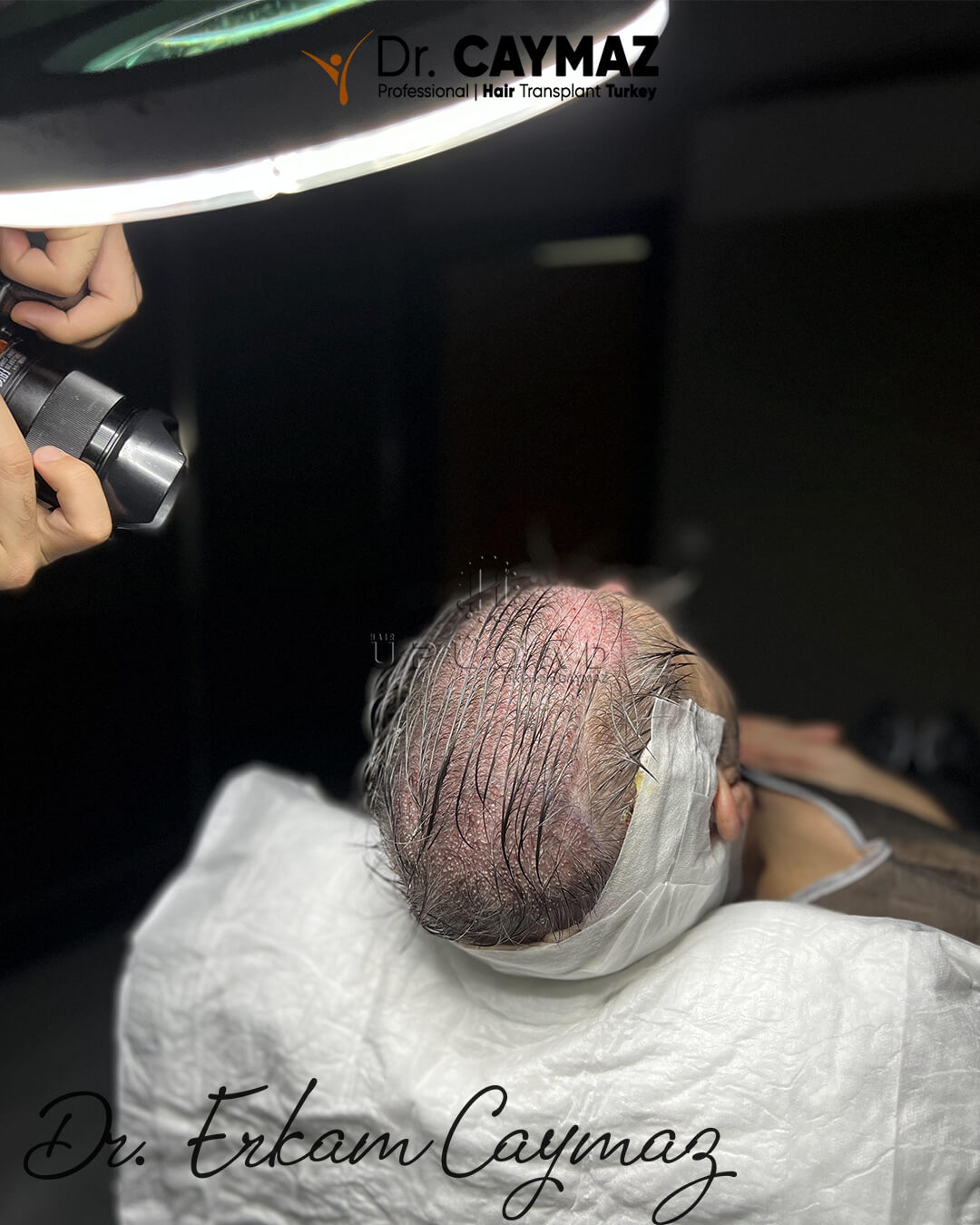
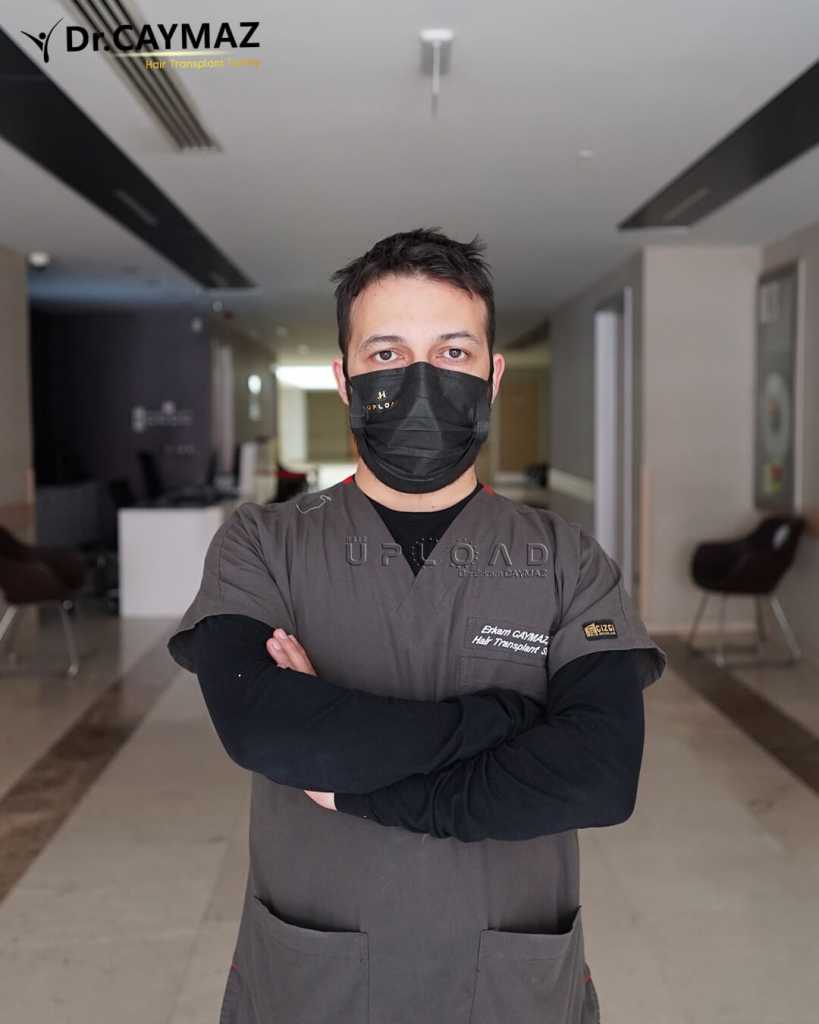
Determining the exact number of grafts for a receding hairline and temple restoration is highly individual, typically ranging from 1,000 to 3,000 grafts depending on the extent of recession, desired density, and donor hair quality. At Hair Upload Clinic in Istanbul, Dr. Erkam personally designs each hairline to ensure optimal, natural-looking results.
Understanding Graft Counts for a Receding Hairline
A receding hairline is one of the most common signs of male pattern baldness, and for many, it’s the first area they notice thinning. Restoring a natural-looking hairline requires careful planning, and a key part of that process is determining the right number of grafts. While there’s no single answer, most receding hairlines, including the critical hairline design guide and temple points, typically require between 1,000 to 3,000 grafts. This range accounts for varying degrees of recession, the patient’s desired density, and the characteristics of their donor hair.
At Hair Upload Clinic in Istanbul, owner-surgeon Dr. Erkam emphasises that graft estimation is an art as much as a science. It involves a detailed assessment of your unique hair loss pattern, the quality and quantity of your donor hair, and your aesthetic goals. The aim isn’t just to add hair, but to create a hairline that frames your face naturally and looks age-appropriate both now and in the future.
Who Is a Candidate for Hairline and Temple Restoration?
Hair transplant surgery for a receding hairline and temple points is a highly effective solution for many individuals experiencing hair loss. However, not everyone is an ideal candidate. Understanding the indications and candidacy criteria is crucial for achieving successful and lasting results.
Key Candidacy Factors:
- Stable Hair Loss: The most important factor is that your hair loss should be relatively stable. While hair transplants can restore existing bald areas, they don’t stop future hair loss in untreated regions. Patients with progressive hair loss might require future procedures or medical management to maintain their results.
- Sufficient Donor Hair: The success of a hair transplant relies entirely on the availability of healthy donor hair, usually from the back and sides of the scalp. This hair must be dense enough to provide the required number of grafts without compromising the donor area’s appearance.
- Good General Health: Patients should be in good overall health, free from conditions that could complicate surgery or healing. A thorough medical history review is part of the initial consultation.
- Realistic Expectations: While hair transplants offer remarkable improvements, it’s vital to have realistic expectations about the outcome. The goal is a natural enhancement, not necessarily a return to teenage density. Dr. Erkam works closely with patients to ensure their goals align with what is surgically achievable.
- Age: While there’s no strict age limit, younger patients (under 25) with rapidly progressing hair loss may be advised to consider medical treatments first to stabilise their condition before surgery. This helps in planning a more sustainable hairline.
Understanding Receding Hairline Patterns:
- M-Shaped Recession: This is the classic pattern where the hairline recedes at the temples, leaving a central tuft of hair. Restoring this often involves filling in the temple areas and lowering the frontal hairline.
- Diffuse Thinning Hairline: Some individuals experience a more generalised thinning along the entire frontal hairline, rather than distinct recession points. This requires careful density planning across the entire frontal zone.
- Temple Point Recession: Often accompanying an M-shaped pattern, recession at the temple points can significantly age the face. Restoring these areas is key to a youthful and natural hairline frame.
During your consultation at HU Clinic, Dr. Erkam will meticulously assess your specific pattern of hair loss, your donor area, and discuss your desired aesthetic to determine if you are a suitable candidate and what approach will yield the best results.
The Hairline Restoration Process: From Consultation to Graft Placement
The journey to restoring a receding hairline and temple points at Hair Upload Clinic is a carefully orchestrated process, prioritising precision and natural aesthetics. It begins long before the actual surgery, with a comprehensive planning phase.
1. The Initial Consultation and Planning with Dr. Erkam
This is arguably the most critical step. During your in-depth consultation, Dr. Erkam will:
- Assess Your Hair Loss: He will examine your scalp, evaluate the extent of your hairline recession (often using the Norwood scale for men), and assess the quality and density of your existing hair.
- Evaluate Your Donor Area: The back and sides of your scalp are the primary donor areas. Dr. Erkam will determine the density of grafts available and ensure that harvesting won’t compromise the aesthetic integrity of this area.
- Design Your Hairline: This is where Dr. Erkam’s expertise truly shines. He will meticulously draw a proposed new hairline, taking into account your facial structure, age, and natural hair growth patterns. The goal is a natural, soft, and age-appropriate hairline that seamlessly blends with your existing hair. Special attention is given to the M-shaped hairline and temple points, which are crucial for framing the face.
- Determine Graft Count: Based on the hairline design, the size of the recipient area, and the desired density, Dr. Erkam will provide an estimated graft count. This count is a precise calculation, not a random guess, ensuring adequate coverage and density.
- Discuss Technique: While Sapphire FUE is the default and often preferred technique for hairline restoration due to its precision in creating recipient channels, DHI (Choi) may be recommended for specific cases, such as adding density to existing hair or for unshaven procedures. Dr. Erkam will explain which technique is best suited for your individual needs.
2. The Surgical Day: Precision and Care
On the day of your procedure, the focus is on executing the carefully laid plans with the utmost precision and patient comfort.
- Local Anesthesia: The entire procedure is performed under local anesthesia, ensuring you are comfortable and pain-free throughout, without the need for general sedation.
- Graft Extraction: Expert surgical technicians, working under Dr. Erkam’s direct supervision, will carefully extract individual follicular units from the donor area. This meticulous process ensures the viability of each graft.
- Channel Opening (Incisions): This is a critical step performed personally by Dr. Erkam for Sapphire FUE procedures. Using fine sapphire blades, he creates the recipient channels at precise angles, depths, and directions. This attention to detail is paramount for achieving a natural growth pattern and avoiding a ‘pluggy’ look.
- Graft Implantation: The extracted grafts are then carefully implanted into the opened channels by the expert surgical technicians, again under Dr. Erkam’s close supervision. Each graft is placed to match the natural direction and density determined during the planning phase.
At HU Clinic, we limit our daily operations to 1-2 VIP-private cases. This boutique approach allows Dr. Erkam and his team to dedicate their full attention to each patient, ensuring the highest standards of care and precision, a stark contrast to high-volume hair mills.
Key Factors Influencing Graft Count for Hairline and Temples
The number of grafts needed for a receding hairline and temple points is not arbitrary. It’s a precise calculation based on several interconnected factors. Understanding these helps set realistic expectations for your hair transplant journey.
| Factor | Impact on Graft Count | Typical Graft Range for Hairline/Temples |
|---|---|---|
| Extent of Recession | More significant recession (e.g., deeper M-shape, higher frontal line) requires more grafts to cover the larger area. | Minimal: 800-1200 grafts Moderate: 1500-2200 grafts Significant: 2500-3000+ grafts |
| Desired Density | A higher desired density in the transplanted area will naturally require more grafts per square centimetre. | Lower density: ~30 grafts/cm² Medium density: ~40 grafts/cm² High density: ~50+ grafts/cm² |
| Hair Characteristics | Thicker, coarser hair gives the illusion of more density with fewer grafts. Fine hair or lighter hair may require more grafts for the same visual effect. | Coarse hair: Fewer grafts needed Fine hair: More grafts needed |
| Donor Hair Quality | The density and health of the donor area dictate how many grafts can be safely harvested without over-harvesting. | Good donor: Allows for higher graft counts Limited donor: Requires conservative planning |
| Facial Structure & Age | The natural curve and position of the hairline must complement the patient’s facial features and age, influencing the area to be covered. | Individualised planning, varies greatly. |
It’s important to remember that these are general guidelines. Your personal consultation with Dr. Erkam will provide a precise estimate tailored to your unique situation. The goal is always to achieve a natural-looking result that enhances your appearance without looking artificial.
Risks, Limits, and Aftercare for Hairline Transplants
Like any surgical procedure, a hair transplant for a receding hairline comes with potential risks and limitations. Understanding these, along with proper aftercare, is essential for a smooth recovery and optimal results.
Potential Risks and Side Effects:
- Swelling: Mild to moderate swelling in the forehead and around the eyes is common for a few days post-procedure.
- Redness and Scabbing: The recipient area will appear red with tiny scabs around each graft. These typically fall off within 7-10 days.
- Itching: A common sensation during the healing phase, which can be managed with prescribed sprays or gentle washing.
- Shock Loss: This is a temporary shedding of existing native hairs around the transplanted area, or even some newly transplanted hairs, usually occurring 2-4 weeks after surgery. It’s a normal part of the process and the hair typically regrows.
- Numbness: Temporary numbness in the donor or recipient areas is possible, usually resolving within a few weeks to months.
- Infection: Rare, but possible. Following post-operative care instructions diligently minimises this risk.
Limitations and Realistic Expectations:
- Donor Supply is Finite: The number of grafts available from your donor area is limited. This means there’s a ceiling to how much density can be achieved or how low a hairline can be brought.
- Not a Cure for Hair Loss: A hair transplant redistributes existing hair; it doesn’t prevent future hair loss in areas not treated. Ongoing medical treatments may be recommended to preserve existing hair.
- Maturation Time: The final results of a hair transplant are not immediately visible. It takes 12-18 months for the transplanted hair to fully grow, thicken, and mature. Patience is key.
Aftercare Timeline for Hairline Restoration:
Following Dr. Erkam’s aftercare instructions is crucial for the survival of your grafts and the quality of your results.
- Day 1-3: Keep the transplanted area dry. Avoid touching or rubbing. Sleep with your head elevated.
- Day 4-10: Begin gentle washing as instructed, usually with a special shampoo and lotion provided by HU Clinic. This helps to soften and remove scabs.
- Week 2-4: Scabs should have fallen off. Shock loss may begin. You can typically resume light activities.
- Month 3-4: New hair growth typically begins. The texture may be fine initially.
- Month 6-8: Noticeable growth and thickening. You’ll start to see the shape of your new hairline.
- Month 12-18: Final results are visible. Hair will be fully grown and matured.
At Hair Upload Clinic, we provide detailed aftercare instructions and are available for support throughout your recovery. Our goal is an overall success rate of 90-95%, with graft survival rates up to 98% when proper aftercare is followed.
Practical Clinic Notes for International Patients at Hair Upload Clinic
For international patients considering hair transplant surgery for a receding hairline and temple points, Hair Upload Clinic in Istanbul offers a premium, tailored experience designed to make your journey smooth and successful.
Our Boutique Approach:
Unlike high-volume clinics, HU Clinic operates on a boutique model, performing only 1-2 VIP-private operations per day. This ensures that Dr. Erkam and his dedicated team can provide undivided attention to each patient, from the initial consultation and hairline design to the critical channel opening phase (performed by Dr. Erkam himself for Sapphire FUE) and post-operative care guidance. This personalised approach is fundamental to achieving the natural, high-density results our patients expect.
Dr. Erkam’s Expertise:
With over 15 years of experience and more than 10,000 procedures performed, Dr. Erkam is a recognised leader in hair restoration. His direct involvement in the most critical stages of your procedure, especially hairline design and incision creation, is a cornerstone of the HUC experience. He understands the nuances of facial aesthetics and natural hair growth patterns, which are vital for a seamlessly restored hairline and temple points.
Why Istanbul?
Istanbul has become a global hub for hair transplant surgery, known for its advanced techniques and experienced surgeons. Hair Upload Clinic stands out by combining this expertise with a commitment to patient-centric care and a luxurious, comfortable environment. Patients travel from around the world to benefit from our high standards and competitive pricing, which typically ranges from 2-4 Euro per graft for our premium services, offering exceptional value compared to many Western clinics.
Your Journey with HU Clinic:
We understand that travelling for surgery can be daunting. Our team is dedicated to assisting international patients with every step, from initial virtual consultations to travel arrangements and accommodation recommendations. We ensure clear communication and comprehensive support throughout your entire experience.
Restoring a receding hairline is a significant decision, and choosing the right clinic is paramount. At Hair Upload Clinic, we are committed to delivering not just a procedure, but a transformative experience with results that speak for themselves. We invite you to explore our website for more information on hair transplant techniques and patient testimonials.
Medical Disclaimer: The information provided in this article is for general educational purposes only and does not constitute medical advice. Individual results may vary. Always consult with a qualified healthcare professional for personalised advice regarding your specific condition and treatment options.
Clinic insight: At Hair Upload (HU), Dr. Erkam reviews donor reserve, hair calibre, and long-term hair-loss pattern before recommending FUE or DHI: the goal is a natural hairline, not maximum graft count in one session.
Frequently Asked Questions
How long is recovery for this topic: How many grafts do you need for a receding hairline??
Most patients return to desk work within a few days, but graft protection rules apply for the first 10–14 days.
Is local anaesthesia used at Hair Upload Clinic?
Yes. Procedures are performed under local anaesthesia; sedation is not promoted for routine hair transplant surgery.
Can Dr. Erkam assess my case before I travel?
Yes. International patients can share photos and medical history for a preliminary graft estimate before booking Istanbul dates.
What affects graft survival after surgery?
Donor quality, implant technique, aftercare, smoking, and following the clinic wash protocol all influence early graft retention.
Sources: ISHRS patient resources; AAD: hair loss overview.
Medical disclaimer: This page is for education only and does not replace a consultation with Dr. Erkam at Hair Upload Clinic (HUC). Individual assessment is required.
Written by : Amara Okafor