What can be done to the donor area after the hair transplant operation?
In particular, we would like to list the procedures to be performed on the donor area after hair transplantation.
- 1 PRP can be done every month.
- Finasteride and minoxidil can be used.
- Vitamins can be used.
- Mesotherapy can be applied.
What is your transaction rate?
A transection is the unintentional cutting or harming of the hair bulb during Follicular Unit Extraction (FUE) hair transplants. Although it might appear unimportant, hair growth originates from hair bulbs. In other words, the success of the transplant is decreased by the number of hair follicles that are damaged or removed. If 2-3 grafts can’t be extracted in 100 roots, this is a very good thing, but if around 10-20 grafts can’t be extracted, they may be damaged, cut, etc., and this is a bad thing.
Elements such as punch diameter, entered angle, experience, etc. used in the extraction process are important. We use a 0.8-0.9 mm diameter punch.
Our transmission rate varies between 1 and 3%.
Why is the term “Maximum Graft” wrong?
It would not be wrong to say that this is a completely false statement. It would also be right to say that it was launched as an advertising campaign. Because a certain number of hair follicles must remain in the donor area so that the extracted hair follicles can be covered.
Important points that are not taken into account in Maximum Graft:
- The more grafts are extracted, the more trauma occurs. Traumas can increase shock spills. It can prolong the healing process.
- The length of time spent on the outside is naturally extended. And the less time an organ stays out in organ transplantation, the longer the chance of survival will be. Known general medical knowledge is a maximum of 6 hours. It is necessary to try to keep it cold with ice.
- It can create permanent openings in the donor area. Grafts taken from the donor area will never come back. In other words, it is the hair follicles that are left behind that completely close the opening in the donor area.
It might make sense in a pinch if they went by the term “maximum graft without overharvesting.” Because no matter what is done, the first ethical rule of medicine is not to harm yourself first and then the patient. If an effort is made to extract excess grafts and the donor area is damaged, unfortunately, there will be no return. And irreversible harm will be done to the patient. While they want to perform a good surgical procedure and get good results, unfortunately, the donor area will be damaged. This is something we don’t want and don’t do ethically. Most clinics don’t care about this situation, especially in Istanbul.
Is normal hair transplantation more difficult than afro transplantation? Can you perform non-afro hair transplantation?
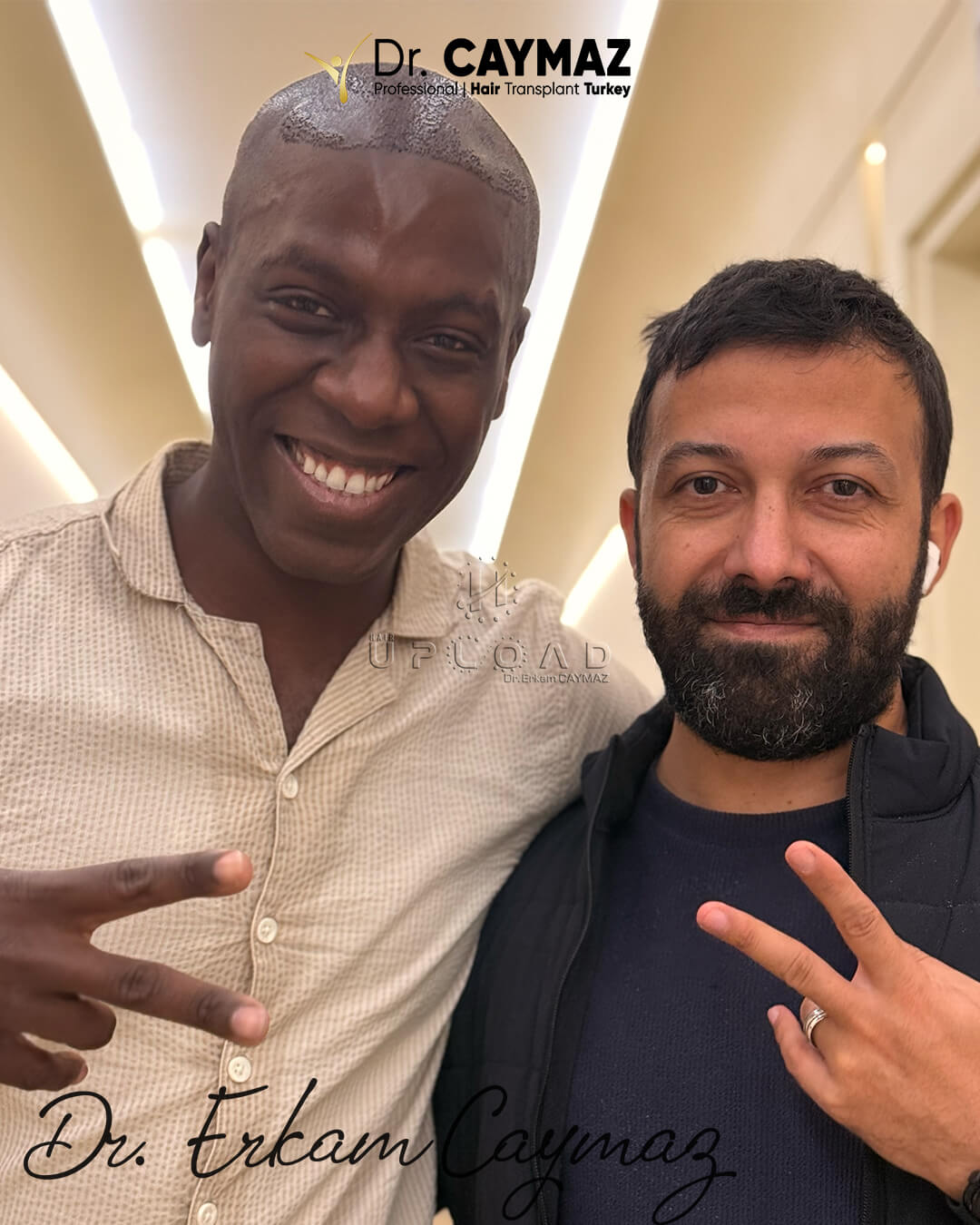
It would be very correct to say that the important thing here is to be able to transplant afro hair. Because afro hair transplantation is much more difficult. A clinic that can even do Afro hair transplantation can do non-afro hair transplantation in a much better way. So, as a result, we’re doing non-afro hair transplants very successfully.
Unfortunately, not everyone can do African American hair transplantation successfully because it requires serious experience.
Related guides from Hair Upload Clinic:
Written by : Priya Sharma