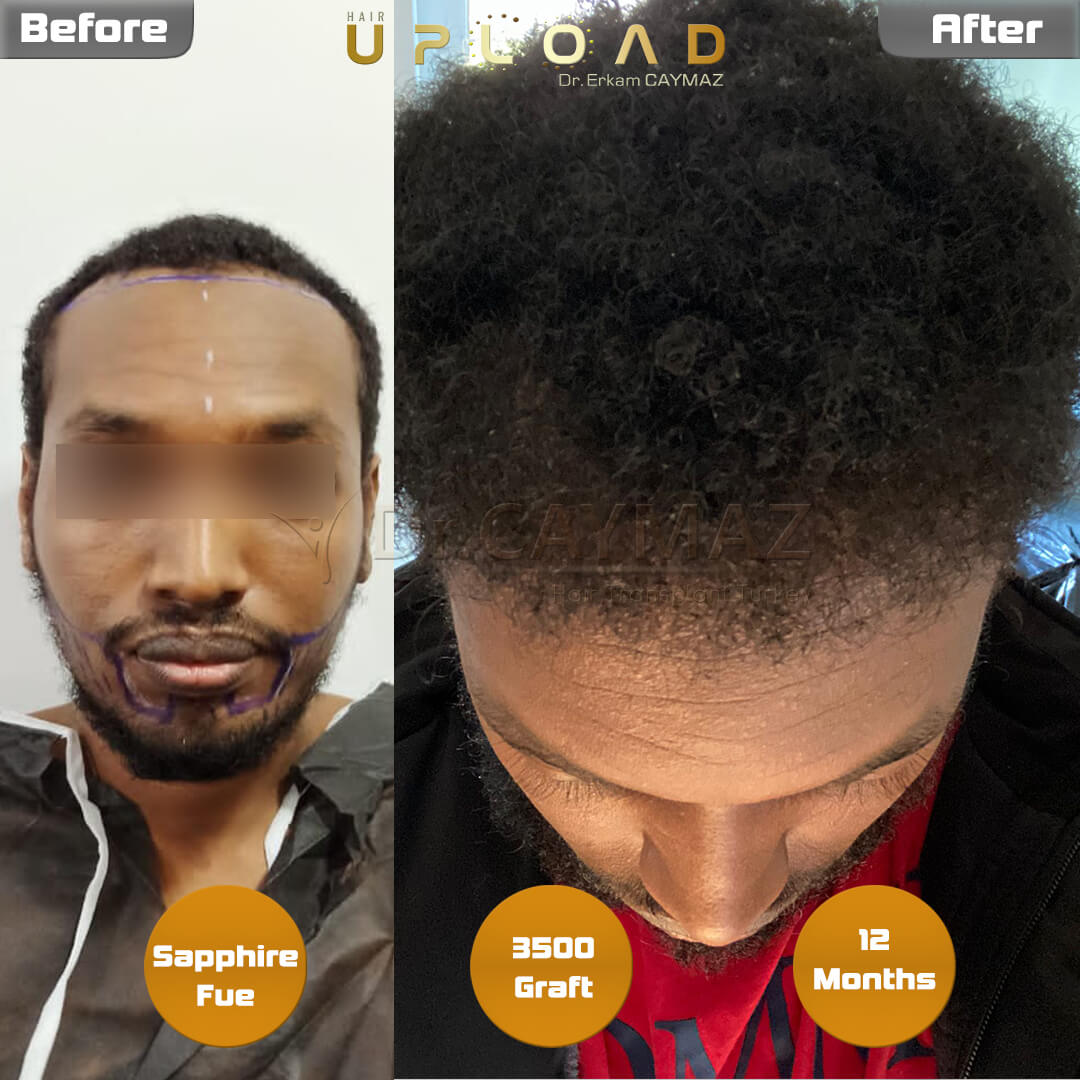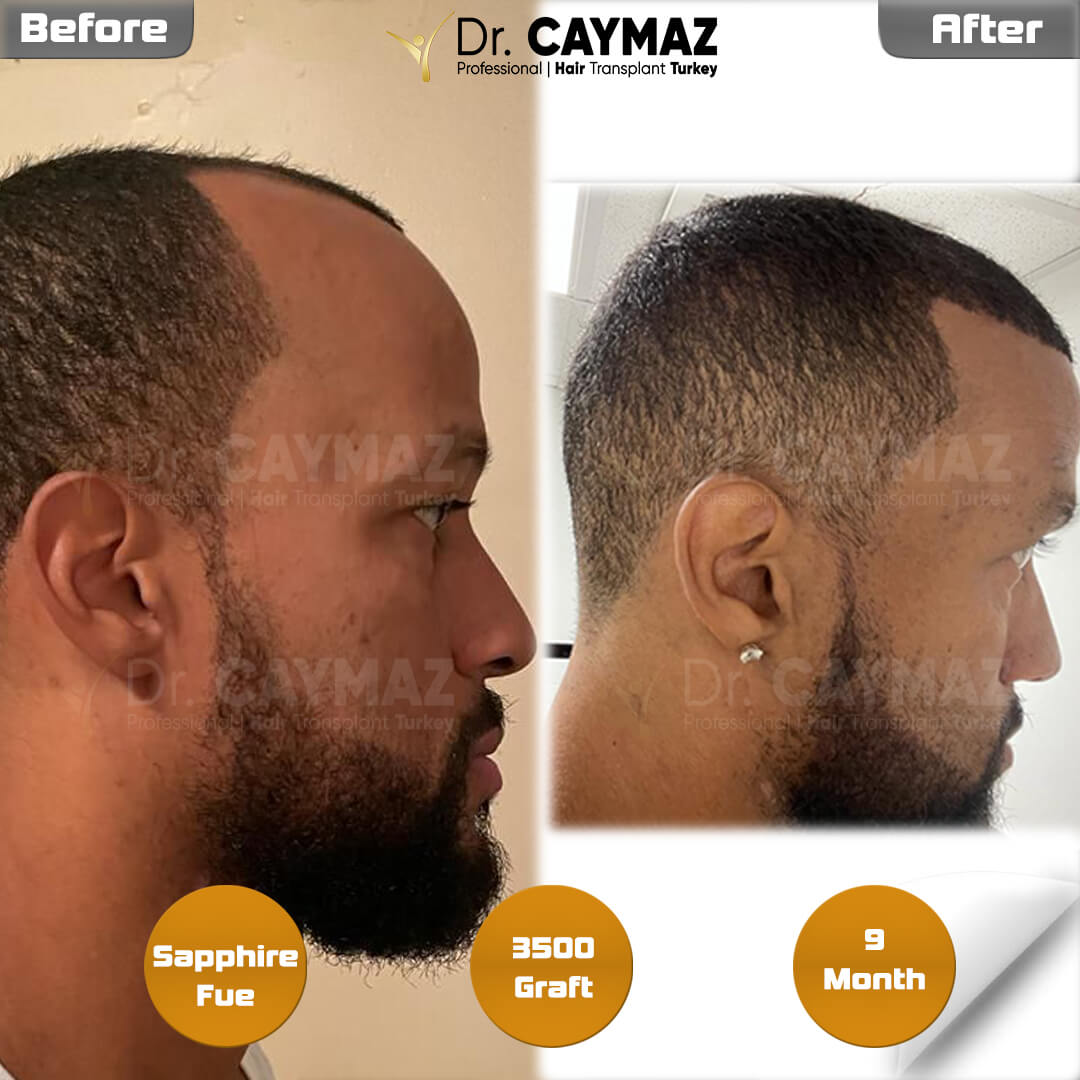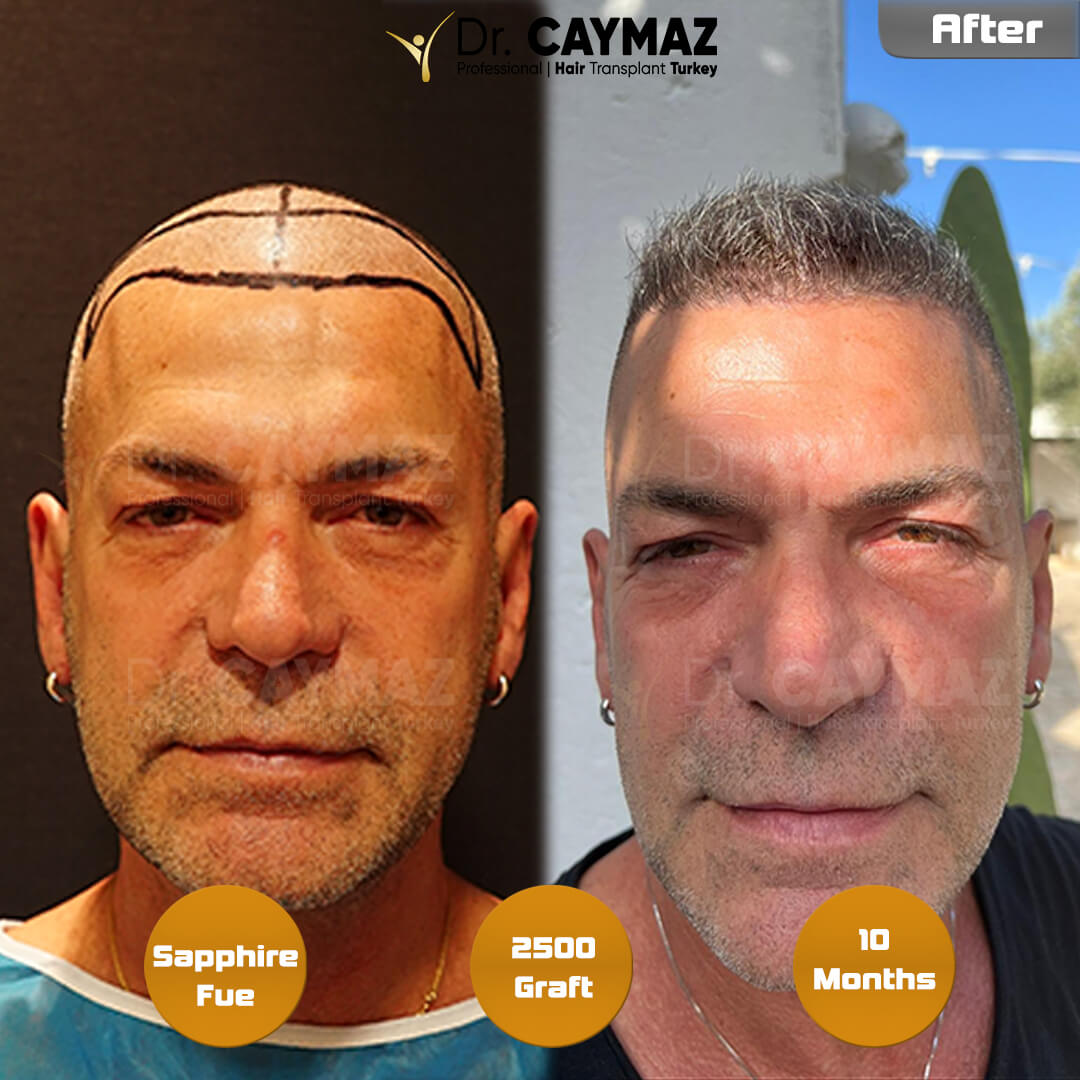
Temple hair transplantation is different from other ones.
Temple hair transplantation can be considered as a part of hair transplantation. It is common to see temple shedding in the later stages of hair loss. If you don’t have Norwood 4-5 and above hair loss, we can think that you’re generally at a level that can be transplanted. In the first place, according to the excess hair coming out of your donor area, transplantation is made to your head area where you have more hair loss. If enough grafts have been extracted, temple transplantation can also be performed.

How Much Degree And Which Technique Is Used By Temple Hair Transplantation?
The temple is transplanted with the sapphire fue technique and your hair channels are opened at an angle of 30-45 degrees with the direction of your hair facing down.
9-10 days after the temple transplantation, after the scabs are shed, start to massage your temples downward. (We’ll recommend that you do the same art of massage after the beard transplant. As you think about it downwards, you can do this massage 4-5 times a day. We’ll recommend doing this for about 5-6 months.)
The purpose of this massage is to open up the hair growing in a more downward direction. Because no channel opening tool can be given a 5-10 degree angle. Temple planting is very important in hair channels that are opened 30-45 degrees downwards. Then don’t neglect the massage and downward massage.
In addition, after hair, beard, temple transplantation, fill an empty bottle of normal water and squeeze water 6-10 times a day. Keep the transplanted area moist.
It will provide early shedding of hair scabs.
In addition, an important point is that there is not too dense planting in temple transplantation. If a very dense planting is done, it will attract a lot of attention/not good seeing.
Temple Hair Transplantation
At Hair Upload Clinic, we do the temple transplantation as part of the operation in the company of Dr. Erkam. It is especially useful to inform our doctor about temple transplantation. If you have a suitable donor area, temple transplantation will be done.
Is it a Tempel Hair Transplantation Possible? How and Which Techniques Are Used?
The temple areas are the areas where hair transplant Turkey is frequently requested by patients. Many people suffering from hair loss throughout hair transplant Turkey apply to Istanbul specialist doctors for hair transplantation to the temple area. Hair transplantation to the temples is an operation that people apply when they can’t find a response from drug-based treatments for hair loss problem that starts at certain ages.
If the hair follicles are pulled back on the front hairline of the individuals and baldness problem occurs, they say that you have hair-based problems in your temples.
How is hair transplantation done to the temples?
In general, before the hair transplantation, the square centimeter of the area to be transplanted is calculated. Then, the number of hair follicles to be transplanted is determined over an average of 30 grafts per centimeter. Transplantation is performed using either DHI or FUE techniques, which allow hair follicles to be taken and transplanted one by one. If a hair transplant procedure of about 500 grafts in a gap between 4 and 2 cm may be sufficient. This number varies according to the size of the thinning or baldness in the temples.
Which techniques are suitable for hair transplantation to the temples?
With the Follicular Unit Extraction (FUE) and Direct Hair Transplantation technique, it is possible to successfully fill the gaps in the temple areas. With local anesthesia, the problem of hair loss in the temporal area can be treated within a few hours. In these techniques, no incision is made. In this way, there is no scar on the scalp. Since a small number of grafts are collected and transplanted, the duration, cost, and healing process of hair transplantation become much shorter.
You can get support from Hair Upload Clinic experts to get more detailed information about hair transplantation to the temples.
Related guides from Hair Upload Clinic:
Written by : Marcus Holloway