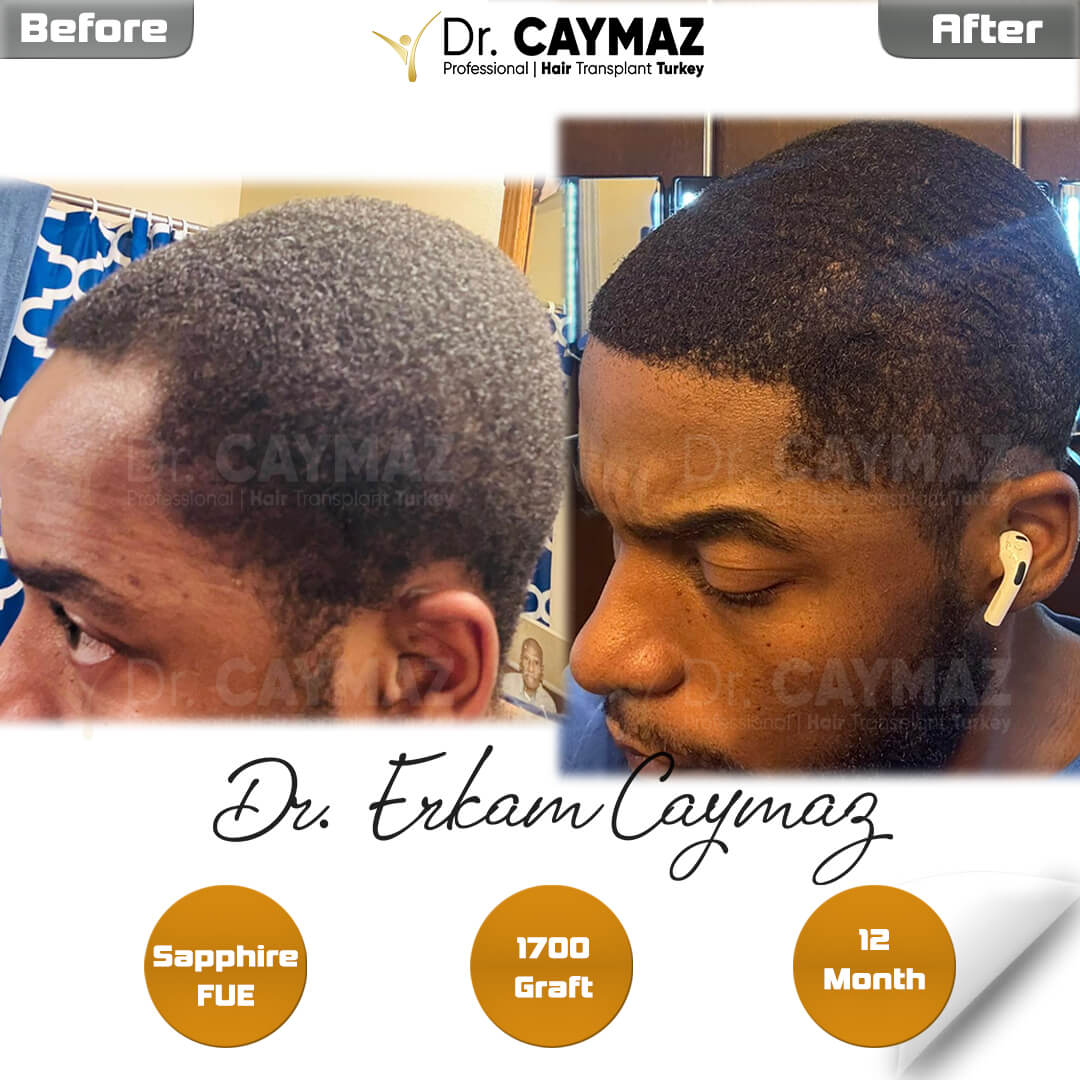
Will the grafts collected from the donor area come out again?
4 Facts About The Donor Area
In FUE hair transplantation, the hair is taken from the nape of the neck, which we call the donor area, and transplanted to the desired places. It is very important to remove the hair from this area regularly because the hair doesn’t grow back in the donor area. However, if it is taken in a smooth, thin line, it won’t be obvious because it will be camouflaged by other hair. While this part can be arranged with a hairstyle in men, the hair that grows in women camouflages this part.
What is Overharvesting?
If the doctor who performs hair transplantation is inexperienced, he may make the mistake of extracting a large number of hair follicles from the donor area called overharvesting. In this case, that area remains unshapely open and the possibility of covering it with a hairstyle or other hair becomes difficult. An unpleasant appearance occurs in that area. The doctor who performs hair transplantation should take the hair follicles from the donor area, in a very patient and conscious manner.
How long takes the healing of the donor area?
The donor area where the hair follicles are taken begins to heal within 5-7 days. Over time, there will be no scar appearance. When taken as a neat strip, it is covered by other hair.
In the beginning, a crust is formed in that area. The rash continues for a while after the crusts have fallen off. Then it will be healed completely. Pain and itching can be seen in the first weeks. Swelling due to anesthesia passes over time. This area should not be touched as much as possible and should be washed very lightly while washing.

Are there any complications in the donor area?
There are almost no complications with the FUE method in the donor area. But in some rare cases may occur these complications:
- Necrosis
- Numbness
- Spill
- Pigment Change
- Cyst
Necrosis
Washing with adrenaline or hot water in the anesthesia, using tight bandages can cause necrosis. However, this is very rare.
Numbness
It usually occurs due to anesthesia, but it is temporary.
Spill
Hair loss is also a temporary complication. After a while, it stops and the hair starts to grow again in the spilled parts.
Pigment Change
Pigment change in the donor area occurs when the recipient is exposed to sunlight.
Cyst
If the hair follicle can’t be completely removed from the donor area, cysts may occur in that area. This issue depends entirely on the expertise and practice of the doctor.
As can be seen, most of the complications that may occur in the donor area are related to not following the care recommendations after hair transplantation. If you follow all the recommendations of your doctor, there will be no complications. Of course, the second big reason is that your doctor is an expert in his job.
Today, different areas other than the head can also be used as donor areas. This depends on the density of the hair in those areas. Regions used as donors:
- Beard
- Chest and Abdomen
- Leg-Arm-Shoulder
- Pubic
But we can use Beard and Chest donor area.
Research source: https://www.ncbi.nlm.nih.gov/pmc/articles/PMC6371733/
Recovery & planning guides:
Written by : Hair Upload - Hair Transplant Turkey - HU Clinic