What are dental implants?
Dental implants are artificial tooth roots that are permanently inserted into the patient’s jawbone. A distinction is made between titanium, ceramic and mini implants.
Implantation – How does the procedure work?
The insertion of dental implants is usually done under local anesthesia and is carried out on an outpatient basis. If the patient needs several implants, they can also be inserted in one session
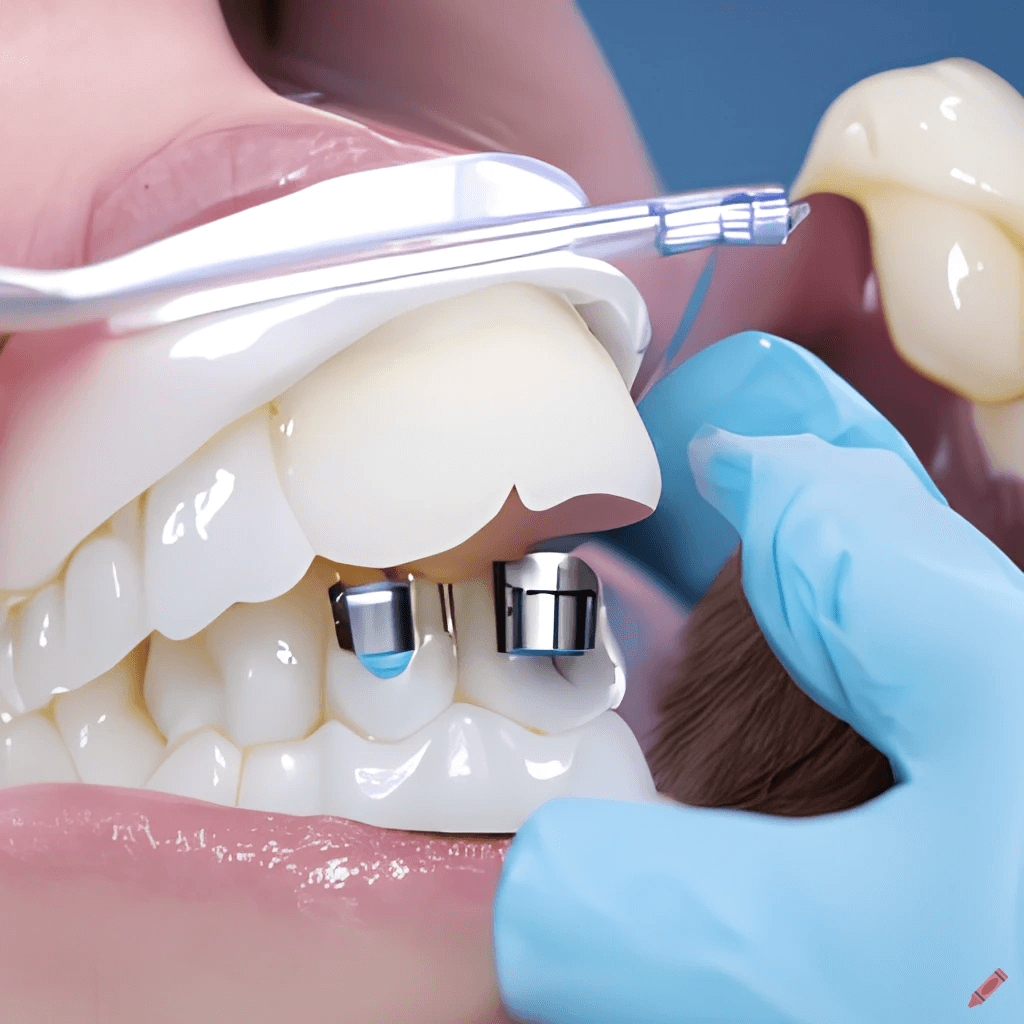
ADVICE AND DEVELOPMENT OF THE TREATMENT PLAN
For the perfect planning of the implantation, a detailed consultation with the attending physician is advisable. In this conversation, the patient can talk about all wishes and concerns about the fixed denture. The dentist explains the various options to the patient in detail. Based on the first finding, a very personal treatment plan can be drawn up.
PREOPERATIVE PLANNING
A repertoire of highly developed technical devices is used in modern dental practices and maxillofacial surgery clinics to optimally determine the patient’s initial situation. For example, the entire jaw can be scanned using a three-dimensional X-ray device. This so-called dental volume tomograph includes a 3D recording mode as well as a special navigation system with which absolute security can be guaranteed when planning the individual treatment steps.
Further advantages are obvious: thanks to the volume tomography, the risk of damage to nerve tracts in the jawbone can be drastically reduced, as all structures can be mapped in detail. In addition, the volume tomograph has 90 percent less radiation exposure than conventional X-ray machines. Based on the three-dimensional images of the teeth and jaw, the attending physician can plan the exact positioning of the implants and prepare a template for precise insertion.
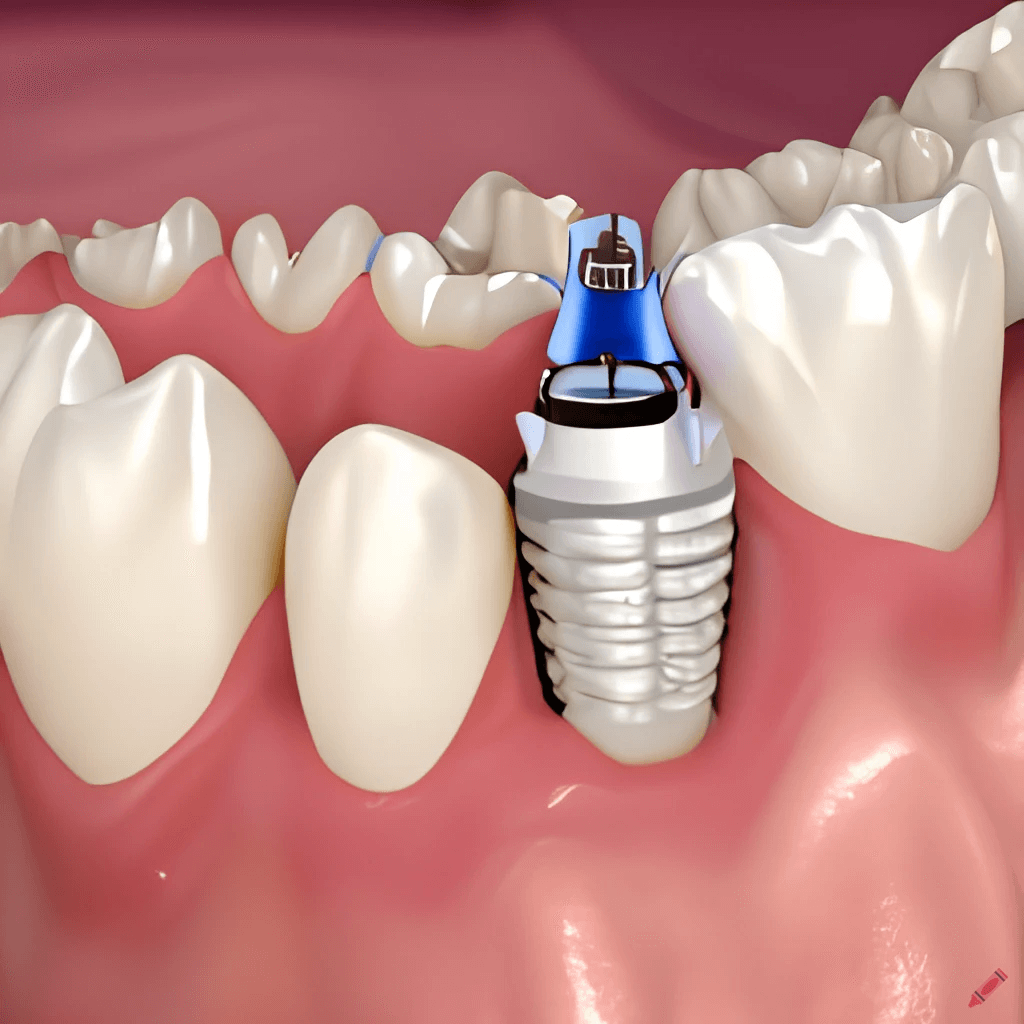
IMPLANTATION
the planning and the implantation itself is done with the help of computer navigation. The dentist first gains access to the jawbone with a small incision in the gum (minimally invasive). In the second step, he carefully drills a small, precisely fitting opening in the jaw, into which the titanium or ceramic screw is now inserted. After inserting the implant, the opening in the gum above the screw is closed with a few stitches. The healing phase now begins. This process is usually painless.
HEALING PHASE
Once the implant has been placed in the upper jaw, the healing phase can take 3 to 6 months. With an implant in the somewhat more stable lower jaw, this process only takes 2 to 4 months. During this time, the implant grows together completely with the jawbone and forms a unit with it (osseointegration). Until the final replacement of the dental prosthesis, the patient wears an intermediate restoration, which nowadays is also fixed and aesthetically very appealing. Concerns about having to make do with an inadequate temporary restoration during the healing phase are therefore completely unfounded today.
USE OF THE DEFINITIVE TOOTH REPLACEMENT
Once the healing process is complete, the gums are prepared for future dentures. It should enclose him like a real tooth. For this purpose, the gums are opened again and the implant receives a kind of small post, the gum former. An impression is then taken, which the dental technician can use to manufacture the dental prosthesis. After about 14 days, this “placeholder” is removed and the actual denture is firmly anchored on the implant. For the patient, there is no noticeable difference to real teeth in daily use.
FOLLOW-UP
Even if the intermediate restoration used is extremely stable, patients’ll ideally be careful, especially in the first few days after the procedure, not to put too much strain on the region and to use a soft brush for dental care. Swelling and slight pain may occur in the first few days, but these can be treated well with medication and adequate cooling. An antiseptic mouthwash during the first week after the procedure will help prevent inflammation.
The healing phase itself takes 2 to 3 months, depending on whether the implant was placed in the upper or lower jaw. Only when the jawbone has completely attached to the implant can the patient have the actual dentures attached.
Search: https://www.infomedizin.de/behandlungsgrundlagen/zahnimplantate/
Related guides from Hair Upload Clinic:
Written by : Hair Upload - Hair Transplant Turkey - HU Clinic