At Hair Upload Clinic in Istanbul, understanding hair transplant scar visibility is crucial for patients considering surgery. FUE (Follicular Unit Extraction) typically leaves tiny, scattered dot scars, often imperceptible, while older FUT (Follicular Unit Transplantation) results in a linear strip scar. This difference significantly impacts post-operative appearance and styling options.
Understanding Hair Transplant Scars: FUE vs. FUT
When you are considering a hair transplant, one of the most common concerns is the potential for scarring. While modern techniques have significantly reduced scar visibility, understanding the differences between scar types from various methods is essential for making an informed decision. Hair transplant scars are a permanent, albeit often discreet, reminder of the procedure, and their appearance can vary greatly depending on the technique used, individual healing, and the surgeon’s skill.
The two primary methods of hair transplantation are Follicular Unit Extraction (FUE) and Follicular Unit Transplantation (FUT). Each leaves a distinct type of scar in the donor area – the region at the back or sides of the head from which healthy hair follicles are harvested. FUE is known for leaving tiny, punctate (dot-like) scars, while FUT, an older method, results in a linear, strip-like scar. At Hair Upload Clinic in Istanbul, we primarily utilise advanced FUE and DHI techniques, focusing on minimal scarring and natural-looking results. Many international patients review best hair transplant clinics guide while planning their trip.
Indications and Candidacy for Scar-Minimising Techniques
Choosing the right hair transplant technique often comes down to individual needs, hair loss patterns, and, crucially, scar concerns. Candidates for FUE and DHI, which are preferred at HU Clinic, are typically individuals seeking to avoid a linear scar, maintain shorter hairstyles, or those with tighter scalps where a strip harvest might be more challenging. These techniques are suitable for both men and women experiencing pattern baldness or thinning hair.
Factors that influence candidacy and scar visibility include:
- Hair Characteristics: Thicker, coarser hair can help camouflage scars more effectively than fine hair.
- Skin Type: Individuals prone to keloid scarring or with very fair skin might find scars more noticeable, regardless of the technique.
- Scalp Laxity: Good scalp elasticity is beneficial for FUT, but less critical for FUE, which harvests individual units.
- Desired Hairstyle: If you plan to wear your hair very short (e.g., a fade or buzz cut), FUE’s scattered dot scars are generally preferred over a linear FUT scar.
- Previous Procedures: Patients who have had prior FUT procedures and wish to conceal an existing linear scar may opt for FUE to add density around it or directly into the scar tissue.
During your consultation at Hair Upload Clinic, Dr. Erkam will thoroughly assess your donor area, hair characteristics, and aesthetic goals to determine the most appropriate technique for you, always prioritising minimal scarring and optimal outcomes.
How Scarring Develops: FUE, DHI, and FUT Mechanisms
The formation of hair transplant scars is directly linked to the method of graft extraction from the donor area. Understanding these mechanisms helps clarify why each technique produces a distinct scar pattern.
FUE (Follicular Unit Extraction) Scarring
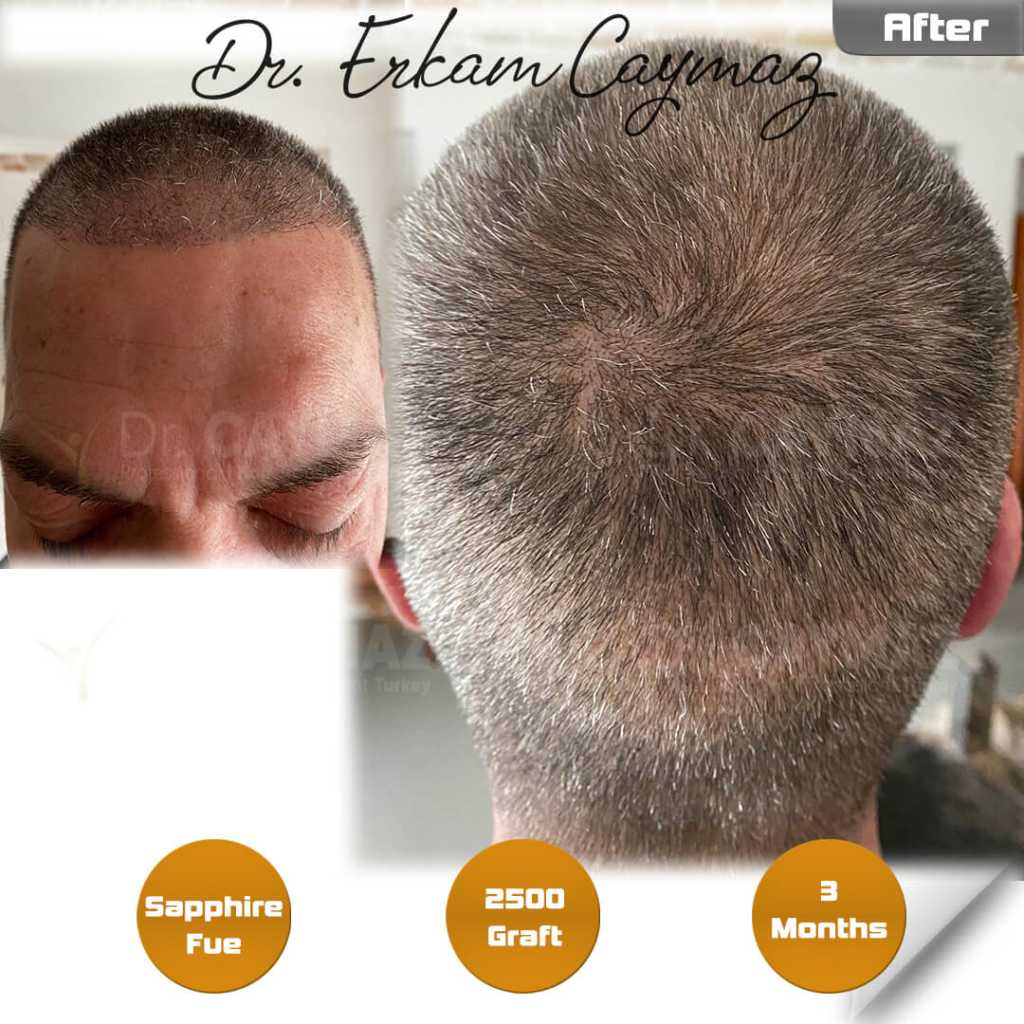
In FUE, individual follicular units (groups of 1-4 hairs) are extracted directly from the donor area using a micro-punch tool, typically ranging from 0.7mm to 1.0mm in diameter. Each extraction creates a tiny, circular incision. When these micro-incisions heal, they form small, punctate (dot-like) scars. Because these dots are scattered across a wider donor area and are so small, they are often difficult to detect, especially if your hair is kept even slightly longer than a buzz cut.
- Healing Process: The small FUE wounds heal by secondary intention, meaning they close naturally without sutures. A small crust forms, which typically falls off within 7-10 days, revealing a pinkish dot that fades over several months to a white, flat scar.
- Scar Pattern: Dispersed, non-linear dot scars.
- Visibility: Generally very low, particularly if the hair is not shaved completely down. Over-harvesting in a small area can make FUE scars more noticeable.
DHI (Direct Hair Implantation) Scarring
DHI is a modified form of FUE. The extraction process is identical to FUE, using the same micro-punch tools to harvest individual follicular units. Therefore, the scarring pattern in the donor area for DHI is the same as FUE: tiny, scattered dot scars. The primary difference in DHI lies in the implantation phase, where a Choi Implanter Pen is used to create recipient sites and implant grafts simultaneously, often allowing for higher density and unshaven procedures in certain cases.
- Donor Scarring: Identical to FUE – tiny, scattered dot scars.
- Recipient Area Scarring: Minimal to none, as the Choi pen creates very small incisions.
At Hair Upload Clinic, we utilise both Sapphire FUE and DHI techniques. For Sapphire FUE, Dr. Erkam personally performs the crucial channel opening using sapphire blades, ensuring precision and minimal trauma, which contributes to excellent healing and minimal scarring in the recipient area. Graft extraction and implantation are handled by our expert surgical technicians under Dr. Erkam’s direct supervision, adhering to the highest standards for graft viability and donor preservation.
FUT (Follicular Unit Transplantation) Scarring
FUT, sometimes referred to as ‘strip surgery’, involves excising a linear strip of skin from the donor area, typically at the back of the head. After the strip is removed, the edges of the scalp are sutured together. This closure creates a single, linear scar.
- Healing Process: The incision is closed with sutures, which are usually removed 10-14 days post-op. The scar initially appears red and raised, gradually flattening and fading to a thin, white line over several months to a year.
- Scar Pattern: A single, linear scar across the back of the head.
- Visibility: More noticeable than FUE scars, especially if hair is cut short. The width of the scar can vary depending on scalp laxity, surgical technique, and individual healing.
Key Comparison of Hair Transplant Scar Characteristics
To help you understand the differences more clearly, here is a comparison of scar characteristics between FUE/DHI and FUT:
| Feature | FUE / DHI Scar Characteristics | FUT Scar Characteristics |
|---|---|---|
| Scar Type | Tiny, scattered dots (punctate) | Single, linear strip |
| Size & Shape | 0.7-1.0mm circular dots | Varies (typically 1-3mm wide, several inches long) |
| Location | Dispersed across a wider donor area | Horizontal line across the back of the head |
| Visibility with Short Hair | Low; often imperceptible with a short fade | Moderate to high; visible if hair is cut short |
| Healing Time | Donor area heals within 7-10 days (crusts fall off) | Sutures removed in 10-14 days; scar maturation takes months |
| Donor Area Hair Growth | Hair can grow between dot scars, allowing for camouflage | No hair grows directly on the linear scar tissue |
Risks, Limits, and Aftercare for Scar Management
While modern hair transplant techniques aim to minimise scarring, it’s important to understand that no surgical procedure is entirely scar-free. However, with proper technique and diligent aftercare, scar visibility can be significantly reduced.
Potential Risks Related to Scarring
- Hypopigmentation or Hyperpigmentation: Scars may heal lighter or darker than the surrounding skin, making them more noticeable.
- Widened Scars (FUT): In some FUT cases, particularly with poor scalp laxity or excessive tension, the linear scar can stretch and become wider.
- Over-harvesting (FUE): If too many grafts are taken from a small area, the density in that region can be compromised, leading to a thinned-out appearance that highlights the dot scars. This is why determining the right number of grafts is crucial.
- Keloid or Hypertrophic Scars: Though rare, some individuals are genetically predisposed to forming raised, thickened scars.
- Donor Shock Loss: Temporary thinning around the donor area can occur, which may temporarily make existing scars more prominent.
Limits of Scarring
It’s crucial to have realistic expectations. While FUE scars are generally very discreet, they are permanent. The goal is to make them as unnoticeable as possible, not to eliminate them entirely. The 90-95% overall success rate and up to 98% graft survival rate at HU Clinic refer to hair growth, not the complete absence of scars.
Aftercare Timeline for Scar Healing
Proper aftercare is vital for optimal scar healing and minimising visibility:
- Days 1-7: Keep the donor area clean and moist as advised. Small crusts will form over the FUE dots or along the FUT incision. Avoid picking at scabs.
- Days 7-14: Most crusts from FUE will begin to fall off naturally. For FUT, sutures are typically removed around this time. The skin might appear pink or red.
- Weeks 2-4: The initial redness in the donor area will start to fade. You can gently massage the area if advised by your clinic, which can help with scar softening.
- Months 1-6: Scar maturation continues. FUE dots will become less noticeable, fading to a lighter colour. FUT scars will flatten and lighten, though full maturation can take up to a year or more.
- Long-term: Protect the donor area from excessive sun exposure, which can cause hyperpigmentation of new scars. Continue with any recommended scar creams or treatments.
Practical Clinic Notes for International Patients at Hair Upload Clinic
For international patients travelling to Istanbul, Hair Upload Clinic prioritises a seamless experience with a strong focus on scar minimisation and patient education. Our approach is designed to ensure you achieve the best possible aesthetic outcome with the least visible scarring.
Dr. Erkam’s Approach to Scar Minimisation
At Hair Upload Clinic, owner-surgeon Dr. Erkam meticulously plans each FUE or DHI procedure to ensure minimal donor scarring. His expertise involves:
- Precise Punch Selection: Using the smallest appropriate punch size (typically 0.7mm-1.0mm) for FUE/DHI extractions to create tiny, discreet dots.
- Even Graft Distribution: Avoiding over-harvesting from any single area of the donor region, ensuring an even density and preventing a thinned-out appearance that could highlight scars.
- Careful Angulation: Extracting grafts at the correct angle to minimise damage to surrounding follicles and promote optimal healing.
- Sapphire FUE Incisions: When performing Sapphire FUE, Dr. Erkam personally makes the recipient site incisions with sapphire blades. This creates extremely fine, precise channels that heal quickly and result in virtually imperceptible scarring in the transplanted area. For a deeper dive into our methods, consider reading our FUE vs DHI technique comparison.
Pre-operative Assessment and Education
Before your procedure, you’ll undergo a comprehensive consultation with Dr. Erkam. This includes:
- Donor Area Evaluation: Assessing your hair density, hair calibre, and scalp laxity to determine the best extraction strategy for minimal scarring.
- Discussion of Expectations: Clearly outlining what type of scarring to expect, how it will heal, and how it can be managed.
- Personalised Aftercare Plan: Providing detailed instructions for post-operative care, including how to clean the donor area and promote optimal healing for discreet scars.
We understand that travelling for a medical procedure can be daunting, but our team is here to support you every step of the way, ensuring your comfort and peace of mind. Our commitment to performing only 1-2 VIP operations per day allows for personalised attention and thorough care, which directly contributes to superior healing and aesthetic results, including minimal scar visibility.
Please remember that every patient’s healing process is unique. While we strive for the best possible outcomes, individual results may vary. Always consult with your physician for personalised medical advice.
Clinic insight: At Hair Upload Clinic (HUC), Dr. Erkam reviews donor reserve, hair calibre, and long-term hair-loss pattern before recommending FUE or DHI: the goal is a natural hairline, not maximum graft count in one session.
Frequently Asked Questions
How long is recovery for this topic: Hair transplant scar visibility: FUE dots vs strip scars?
Most patients return to desk work within a few days, but graft protection rules apply for the first 10–14 days.
Is local anaesthesia used at Hair Upload Clinic?
Yes. Procedures are performed under local anaesthesia; sedation is not promoted for routine hair transplant surgery.
Can Dr. Erkam assess my case before I travel?
Yes. International patients can share photos and medical history for a preliminary graft estimate before booking Istanbul dates.
What affects graft survival after surgery?
Donor quality, implant technique, aftercare, smoking, and following the clinic wash protocol all influence early graft retention.
Sources: ISHRS: International Society of Hair Restoration Surgery; American Academy of Dermatology: hair loss; PubMed: follicular unit extraction review; PubMed: hair restoration surgery outcomes.
Medical disclaimer: This page is for education only and does not replace a consultation with Dr. Erkam at Hair Upload Clinic (HUC). Individual assessment is required.
Written by : Elena Vasquez