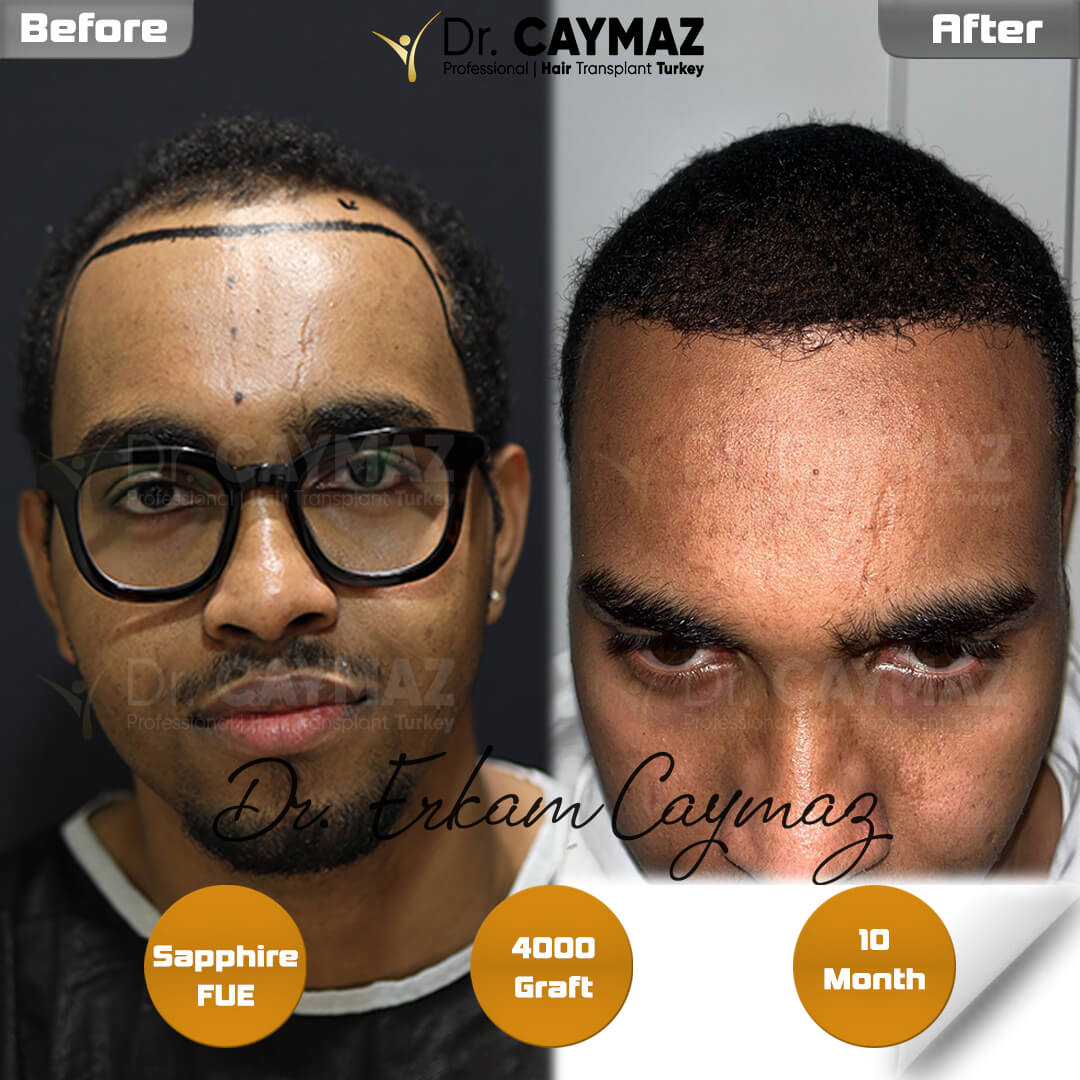
A second hair transplant is safe and effective only when your donor area still holds enough stable grafts to supply a meaningful session. At HU Clinic in Istanbul, Dr. Erkam measures donor density before recommending a touch-up, typically 12 months after the first procedure.
What is a Second Hair Transplant?
A second hair transplant, often called a touch-up or refinement, targets specific areas after an initial procedure. It aims to enhance density, improve an existing hairline, or cover new recession. The goal is a more complete, natural aesthetic, building on the first surgery’s foundation. Many patients visiting Hair Upload Clinic in Istanbul seek repair solutions for poorly executed initial transplants, shifting the focus from just adding density to meticulously rebuilding natural-looking hair.
Who is a Candidate for a Second Session?
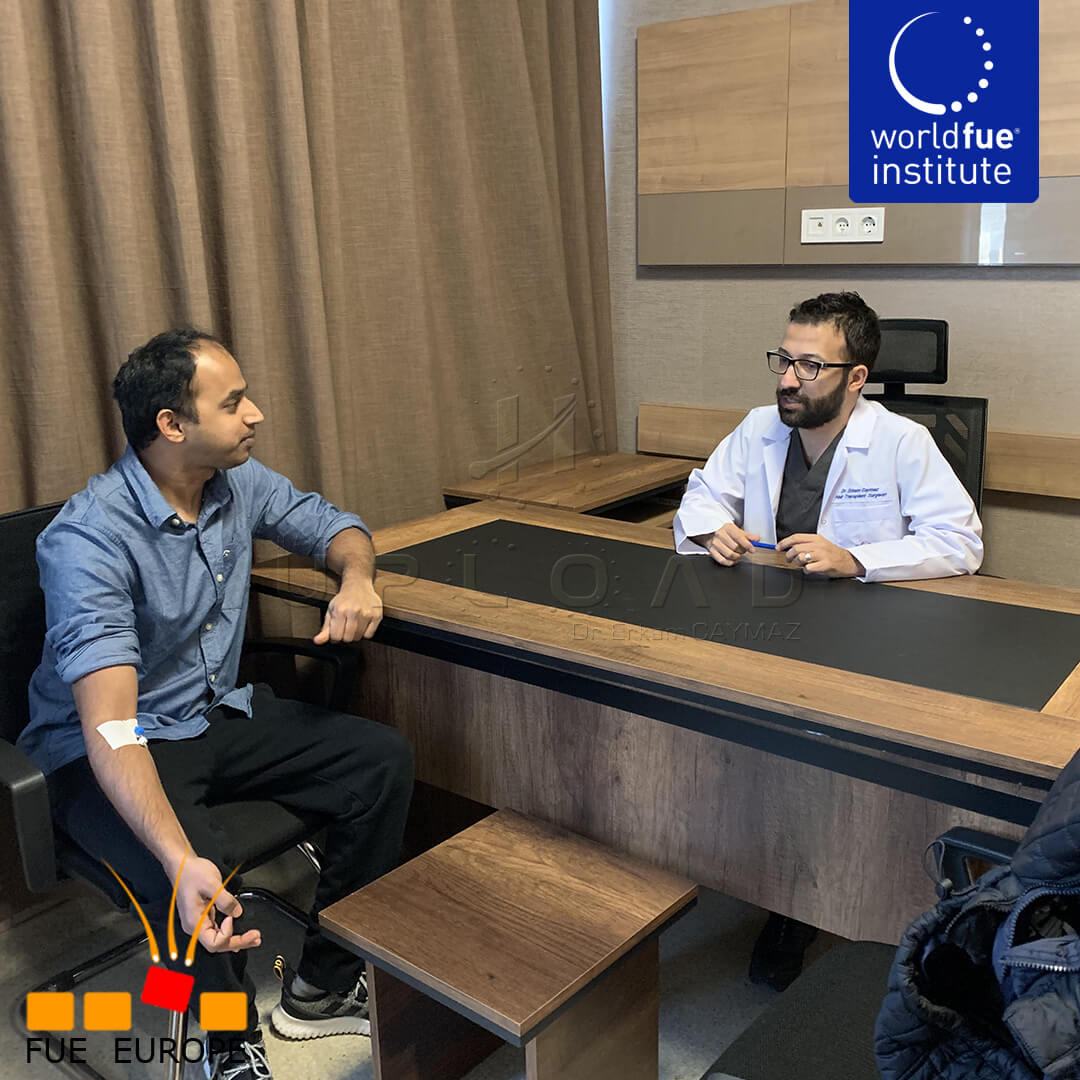
Candidacy for a second hair transplant relies on a rigorous clinical assessment. At Hair Upload Clinic, Dr. Erkam personally evaluates each factor to ensure a realistic and effective surgical plan.
- Timing of First Transplant: A minimum of 12 months must pass after your initial procedure. This allows transplanted grafts to fully mature and the scalp to heal, preventing premature assessment or over-grafting.
- Donor Density and Reserve: This is crucial. The ‘safe donor area’ has a finite supply (typically 70–90 follicular units/cm²). Dr. Erkam uses high-magnification trichoscopy to measure remaining density and follicle health. A prior extensive harvest means less reserve (often 1,000–2,500 grafts). The aim is a graft budget that preserves the donor area’s aesthetic integrity.
- Stability of Hair Loss: Ongoing, aggressive hair loss can compromise long-term results. Patients may need medical therapies (Finasteride, Minoxidil) to stabilise loss before considering further surgery, ensuring new hair integrates into a predictable environment.
- Scalp and Scarring Quality: Scalp tissue condition, especially from previous FUT or aggressive FUE (over-extraction), affects graft availability and survival. Scar tissue has reduced blood supply. Dr. Erkam examines scalp elasticity and health to predict graft viability.
Ideal candidates seek enhanced density in sparse areas, refinement of a high or abrupt hairline, or coverage for new hair loss years after their initial surgery. Our hairline design guide offers insights into these subtle, impactful refinements, recognising that a second session combines artistic correction with volume addition.
How Donor Depletion Limits the Plan
Donor depletion is the most significant constraint in planning a second hair transplant. The ‘safe donor area’ on the back and sides of the head contains a finite supply of DHT-resistant follicles, typically 5,000 to 7,000 follicular units lifetime. A substantial first procedure (e.g., 3,000–4,000 grafts) can consume over half of this budget.
At Hair Upload Clinic, we prioritise transparent graft accounting. Assessing true remaining donor capacity is more critical than chasing unrealistic graft numbers. Attempting a ‘mega-session’ when only 1,000–1,500 grafts are realistically available risks a visibly thinned, ‘moth-eaten’ donor area and lower graft survival from marginal zones. A strategically modest, meticulously placed session of 1,200 grafts to refine a hairline almost always yields a superior, natural result compared to an overly ambitious, thinly spread 2,800 grafts, which risks donor damage and an unsatisfactory aesthetic.
Understanding your donor area planning is crucial for a successful, sustainable outcome. Dr. Erkam’s approach always respects donor zone integrity, ensuring precise extraction with a long-term perspective.
Step-by-Step: How a Touch-Up Session Runs
A second procedure at Hair Upload Clinic follows a meticulous, staged approach, adapted for existing transplanted hair and reduced donor supply.
- Comprehensive Consultation and Graft Audit: Dr. Erkam conducts a detailed scalp examination using high-magnification trichoscopy to map donor density. He reviews prior records to calculate a precise, realistic graft budget, aligning expectations with achievable results.
- Hairline and Zone Refinement Design: The artistic plan integrates seamlessly with existing hair. This involves matching natural angle, direction, and density of surrounding follicles, ensuring new grafts blend invisibly and enhance overall appearance without a ‘second layer’ effect.
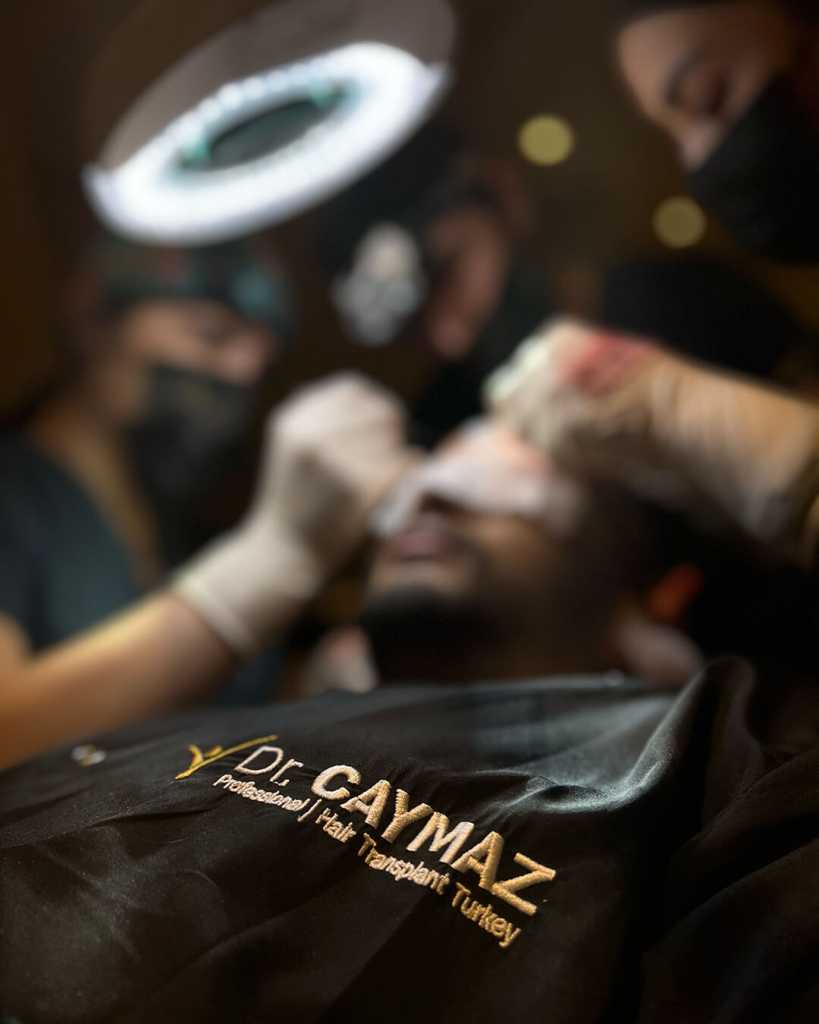
- Local Anaesthesia and Graft Harvesting: Local anaesthesia ensures comfort. Under Dr. Erkam’s direct supervision, expert surgical technicians carefully extract follicular units using advanced FUE techniques. They strategically target less impacted donor zones, focusing on even distribution to maintain aesthetic integrity and optimise graft quality.
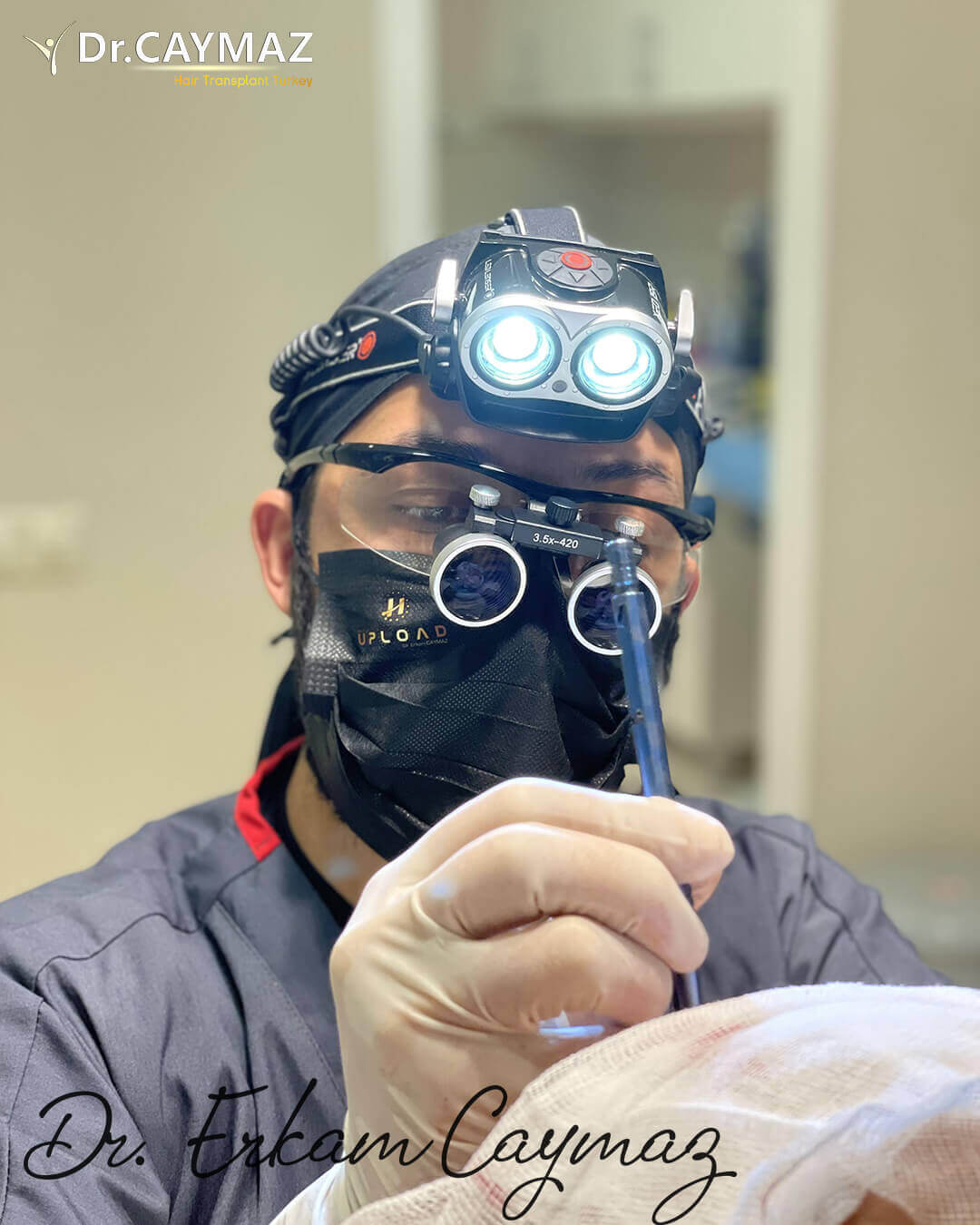
- Recipient Channel Opening by Dr. Erkam: Dr. Erkam personally opens every recipient channel using ultra-fine sapphire blades. This requires exceptional precision to navigate existing transplanted follicles without damage. Angle, depth, and direction are crucial for a natural outcome. For specific cases (e.g., unshaven work, dense packing), DHI (Direct Hair Implantation) with Choi implanter pens may be chosen over Sapphire FUE.
- Graft Implantation: Harvested grafts are meticulously placed into recipient sites by experienced surgical technicians, under Dr. Erkam’s continuous supervision. Each graft is handled with utmost care for viability and proper orientation. Post-procedure healing then follows a similar timeline to a primary transplant, with specific aftercare instructions for optimal graft survival.
For technique selection, our overview of Sapphire FUE versus DHI clarifies that no single technique is universally ‘better’; the optimal choice depends on individual factors, surgeon judgment, and your specific goals for the second session.
First Transplant vs. Second Transplant at a Glance
| Factor | First transplant | Second (touch-up) session |
|---|---|---|
| Typical graft count | 2,500–4,500 | 800–2,500, set by remaining reserve |
| Wait time before surgery | Once loss is stable | Minimum 12 months after first session |
| Primary goal | Establish coverage and hairline | Density, blending, hairline refinement |
| Donor consideration | Full safe zone available | Reduced supply, spacing between old scars |
| Main planning risk | Underestimating future loss | Over-harvesting a depleted donor area |
| Result maturity | 9–12 months | 9–12 months, sometimes faster for small zones |
Risks and Limits Specific to Repeat Surgery
While often successful, a second hair transplant carries unique considerations. The primary risk is further donor depletion. Each session permanently reduces the available grafts, and over-harvesting can lead to visible thinning or ‘moth-eaten’ patches in the donor area, which are difficult to conceal. Scarring from previous procedures, whether from FUT strips or dense FUE extractions, can also impact blood supply and lower graft survival rates in recipient areas. Also, the scalp has less elasticity after prior surgery, potentially affecting the ease of graft placement and overall healing. There’s also the challenge of integrating new grafts seamlessly with existing ones to avoid an unnatural, ‘pluggy’ or multi-layered appearance. Realistic expectations are vital; a second session typically refines and enhances, rather than creating a completely new, dense head of hair from scratch, especially when donor resources are limited. Dr. Erkam always discusses these limitations transparently during consultation, ensuring patients have a clear understanding of achievable outcomes.
Recovery and Aftercare for a Second Hair Transplant
The recovery period following a second hair transplant largely mirrors that of a primary procedure, though individual healing can vary. Patients can expect some redness, swelling, and scabbing in both the donor and recipient areas, typically subsiding within 7-10 days. Shock loss, the temporary shedding of existing or newly transplanted hairs, can still occur and is a normal part of the process, with new growth typically beginning around 3-4 months post-op. Strict adherence to aftercare instructions is paramount for optimal graft survival. This includes gentle washing techniques, avoiding strenuous activity, direct sun exposure, and refraining from touching or picking the newly transplanted grafts. At HU Clinic, we provide detailed post-operative guidelines and support, ensuring you know exactly how to care for your scalp to achieve the best possible results. Initial results become visible at 6 months, with full maturity at 12-18 months.
Why Choose Hair Upload Clinic for Your Touch-Up?
Choosing Hair Upload Clinic in Istanbul for your second hair transplant means entrusting your outcome to a boutique clinic focused on quality, not volume. Unlike high-volume hair mills, we perform only 1-2 VIP operations per day, ensuring Dr. Erkam’s direct involvement in every critical stage. His 15+ years of experience and personal attention to hairline design and channel opening (using Sapphire FUE) are crucial for the precision required in refinement cases, where integrating new grafts with existing ones is paramount. Our expert surgical technicians, under Dr. Erkam’s constant supervision, handle graft extraction and implantation with meticulous care, preserving your finite donor reserve. This patient-centric approach minimises risks like over-harvesting and maximises the naturalness and longevity of your results, giving you confidence in your aesthetic outcome.
Frequently Asked Questions (FAQs)
- How many grafts can be harvested in a second hair transplant?
- Typically, a second session yields between 800 to 2,500 grafts. The exact number depends heavily on your remaining donor density and the extent of your previous harvest. Dr. Erkam will assess this precisely during your consultation.
- Is a second hair transplant more painful?
- No, the procedure uses local anaesthesia, just like the first transplant, ensuring a comfortable and pain-free experience during the surgery itself. Post-operative discomfort is generally mild and manageable with prescribed pain relief.
- How long does it take to see results from a touch-up?
- Similar to the first procedure, it takes 3-4 months for new growth to begin, with significant density visible around 6 months. Full and final results typically mature between 12 to 18 months after the second session.
- Can I get a third hair transplant?
- A third transplant is only considered if a sufficient donor reserve remains and your hair loss is stable. This is rare and requires an extremely careful assessment by Dr. Erkam to ensure the integrity of your donor area is not compromised.
- What is the success rate for a second hair transplant?
- At Hair Upload Clinic, we achieve an overall success rate of 90-95% for hair transplant procedures, with graft survival rates up to 98%. These rates apply to second sessions as well, provided donor viability and patient candidacy are optimal.
- How much does a second hair transplant cost?
- Pricing depends on the number of grafts and the complexity of the case. Generally, costs range from 2–4 Euro per graft. A precise quote is provided after Dr. Erkam’s personal consultation and graft assessment.
Sources:
- International Society of Hair Restoration Surgery (ISHRS) – Hair Restoration Basics
- American Academy of Dermatology Association (AAD) – Hair Transplant
- PubMed – Follicular unit extraction (FUE): a review
Medical Disclaimer: The information provided in this article is for general informational purposes only and does not constitute medical advice. Hair transplant surgery is a medical procedure, and individual results may vary. It is essential to consult with a qualified medical professional, like Dr. Erkam at Hair Upload Clinic, to discuss your specific condition, suitability for a second hair transplant, and potential risks or benefits.
Clinic insight: At HUC, Dr. Erkam reviews donor reserve, hair calibre, and long-term hair-loss pattern before recommending FUE or DHI: the goal is a natural hairline, not maximum graft count in one session.
Frequently Asked Questions
How long is recovery for this topic: Second hair transplant: when donor reserve allows a touch-up?
Most patients return to desk work within a few days, but graft protection rules apply for the first 10–14 days.
Is local anaesthesia used at Hair Upload Clinic?
Yes. Procedures are performed under local anaesthesia; sedation is not promoted for routine hair transplant surgery.
Can Dr. Erkam assess my case before I travel?
Yes. International patients can share photos and medical history for a preliminary graft estimate before booking Istanbul dates.
What affects graft survival after surgery?
Donor quality, implant technique, aftercare, smoking, and following the clinic wash protocol all influence early graft retention.
Sources: ISHRS patient resources; AAD: hair loss overview.
Medical disclaimer: This page is for education only and does not replace a consultation with Dr. Erkam at Hair Upload Clinic (HUC). Individual assessment is required.
Written by : Dr. Erkam C.