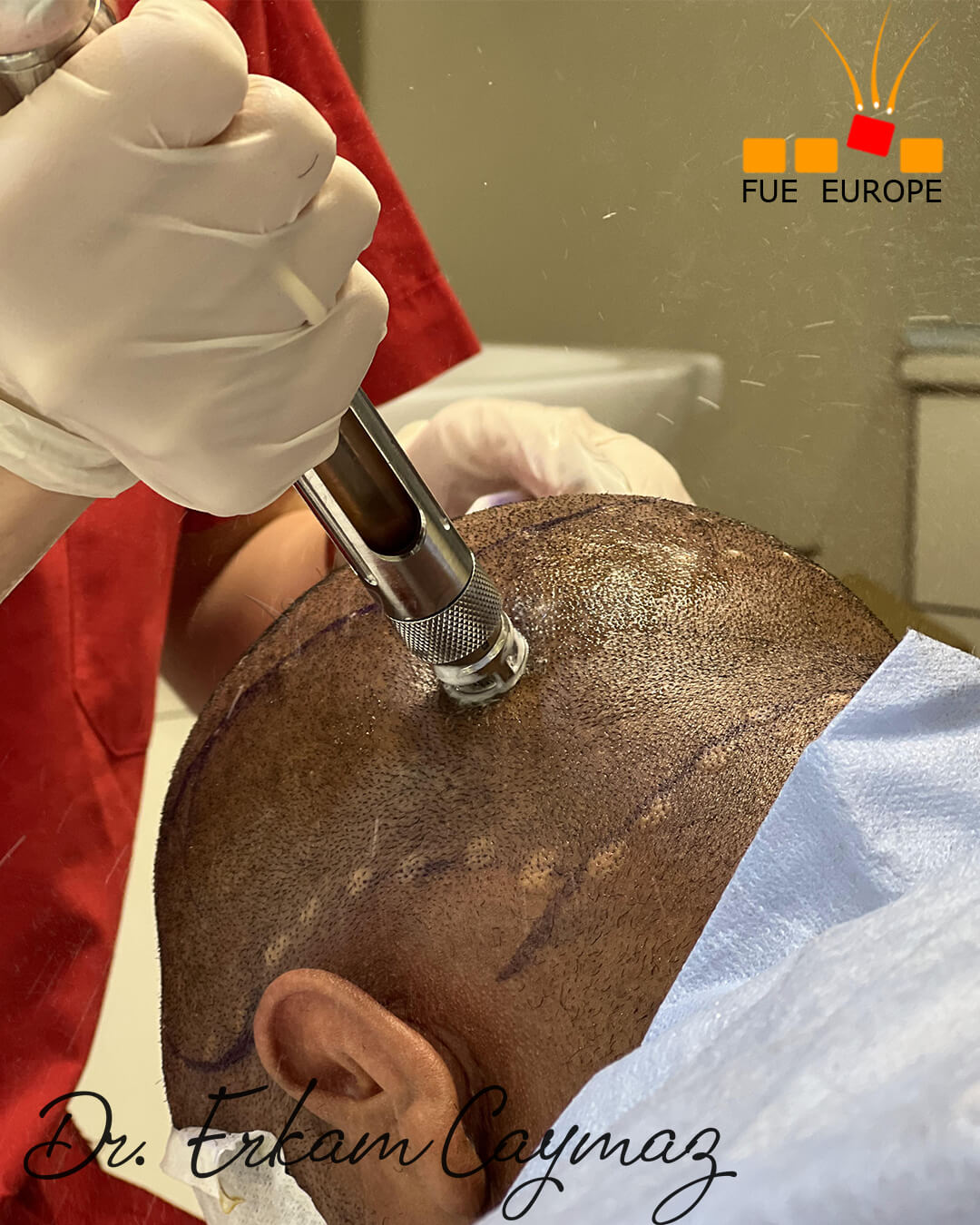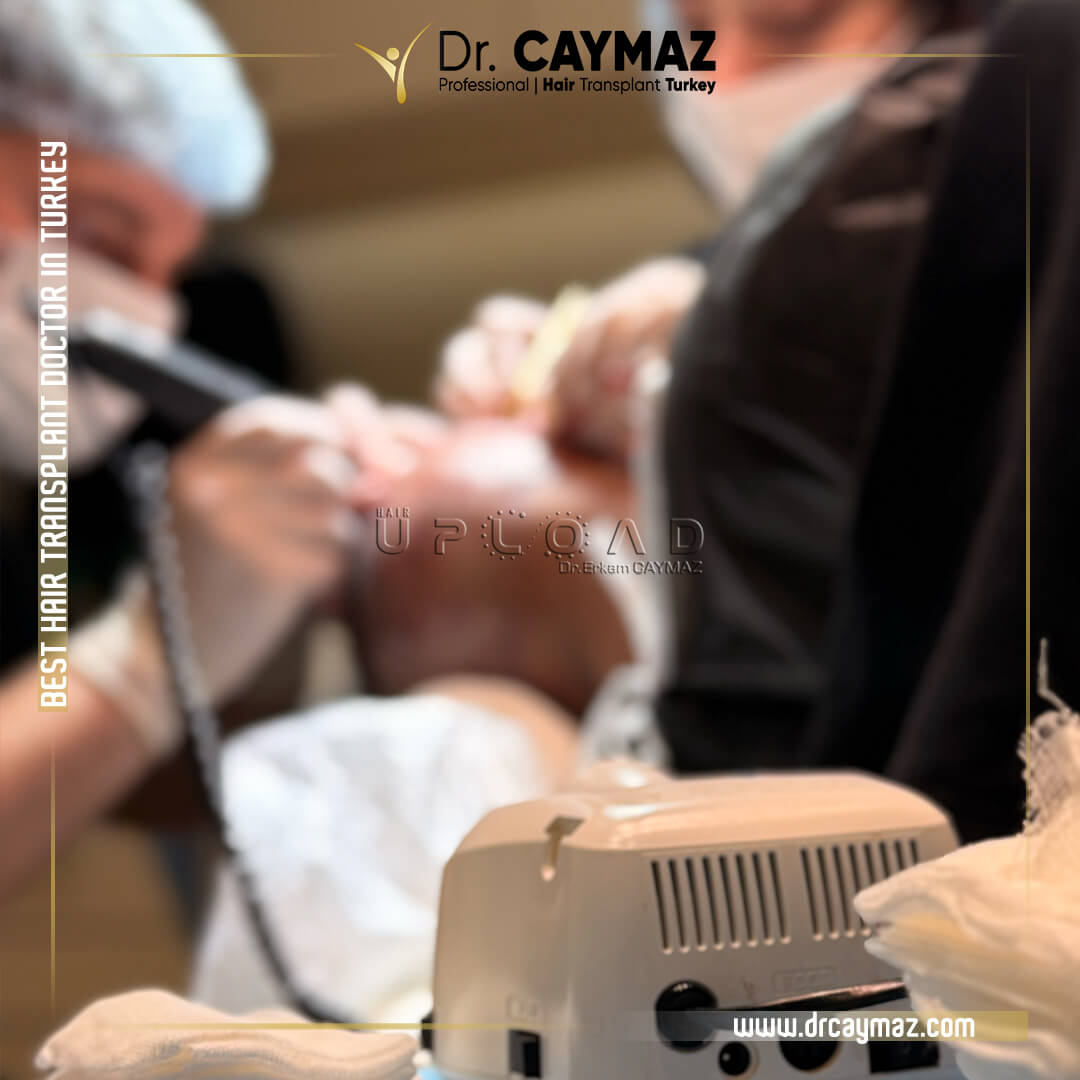
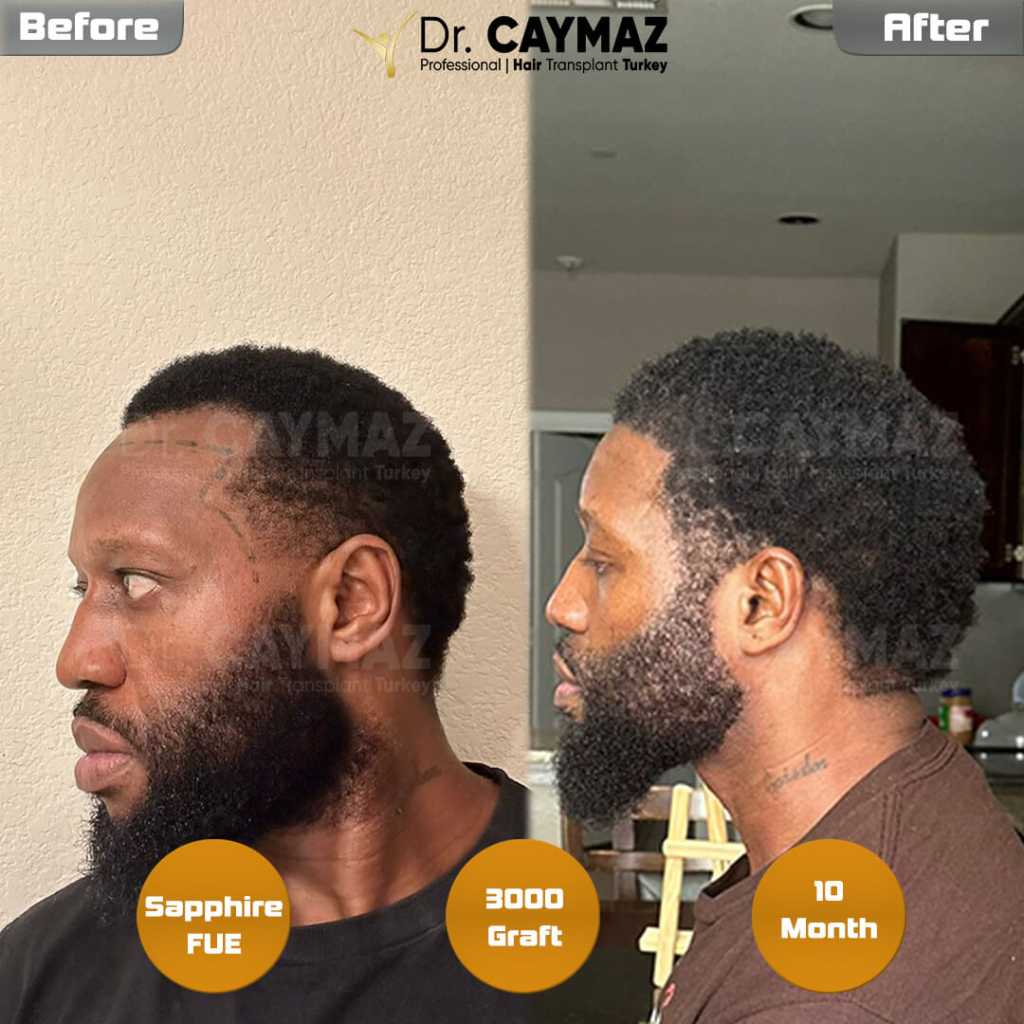
At Hair Upload Clinic in Istanbul, Dr. Erkam meticulously evaluates each patient’s donor capacity: typically aiming for 3,000–4,500 grafts per session for most men to protect long-term density and avoid over-harvesting.
The donor area, typically the back and sides of the scalp, holds the key to a successful hair transplant. These hairs are genetically resistant to balding and provide the source for transplantation to balding areas. However, this resource is finite. Effective donor area management involves more than simply extracting enough grafts; it centres on preserving the long-term health and aesthetic integrity of the donor zone itself. At Hair Upload Clinic in Istanbul, our approach is always conservative, prioritising the longevity of your results and the natural appearance of your donor area for years to come.
What Determines a Safe Extraction Limit?
Determining the safe number of grafts for a single session is a critical step in hair transplant planning. It’s a complex calculation based on several individual physiological factors, not a one-size-fits-all number. The primary determinants include:
- Donor Density: This refers to the number of follicular units per square centimetre (FU/cm²) in the permanent zone. A healthy male donor typically yields 80–100 follicular units per cm². Higher density allows for more grafts to be safely extracted without visible thinning.
- Scalp Laxity: The elasticity of the scalp plays a role, particularly in FUE. Good laxity allows for easier punch advancement and reduces trauma during extraction. While less critical for FUE than FUT, it still influences the overall ease and safety of the procedure.
- Surface Area of the Permanent Zone: The total area from which grafts can be harvested without risking shock loss or visible thinning. This is mapped precisely during your consultation.
- Hair Characteristics: The calibre (thickness) and curl of your hair can influence the visual density after extraction. Thicker, curlier hair offers better coverage, potentially allowing for a slightly higher extraction percentage while maintaining a natural look.
- Age and Future Hair Loss Progression: Younger patients or those with ongoing hair loss may require a more conservative approach to preserve donor grafts for potential future procedures.
At Hair Upload Clinic, we meticulously map these variables during the pre-operative consultation. This detailed assessment ensures that the surgical plan never exceeds what your donor area can sustain without visible thinning or compromising its long-term health. Pushing beyond this range risks a ‘moth-eaten’ appearance, permanent depletion, or in extreme cases, necrosis and poor healing.
Indications and Candidacy for Larger Sessions
Not every patient is a candidate for a mega-session (typically 3,000+ grafts in a single sitting). The following criteria guide Dr. Erkam’s decision on whether a larger, single-session harvest is appropriate:
- Donor Density ≥ 75 FU/cm²: Measured precisely by trichoscopy, this is a fundamental requirement.
- Good Scalp Laxity: Allowing for tension-free extraction and optimal healing.
- Norwood III–V Pattern: Patients with moderate to significant hair loss where the recipient area need aligns well with the available donor supply.
- Realistic Expectations: The patient understands that density restoration is relative, not absolute, and that donor preservation is paramount.
- Overall Health: Good general health, without conditions that could impair healing or increase surgical risks.
Conversely, patients with diffuse unpatterned alopecia (DUPA), very low donor density (< 60 FU/cm²), or advanced Norwood VI–VII patterns are usually advised to stage their procedure over two sessions, spaced 8–12 months apart. This conservative approach preserves donor integrity, allows for complete healing, and enables a reassessment of graft survival before committing the remaining reserve. Our focus is always on sustainable, natural results, which sometimes means a staged approach. You can learn more about our Sapphire FUE channel opening technique, which plays a role in recipient site density.
How Dr. Erkam Calculates the Harvest Plan at HU Clinic
Every surgical plan at HU Clinic follows a rigorous, step-by-step protocol designed by Dr. Erkam to protect the donor area and ensure optimal, natural-looking results:
- Trichoscopic Mapping: Dr. Erkam personally measures the density of follicular units in three key donor zones (occipital, parietal, temporal) using a high-resolution calibrated dermatoscope. This offers a precise ‘donor map’.
- Laxity Assessment: A manual pinch test and, where necessary, a tensiometer reading quantify the scalp’s elasticity, informing the extraction strategy.
- Recipient Demand Modelling: Based on your desired hairline design and density goals, the recipient area’s graft requirements are meticulously calculated. Our hairline design guide informs how many grafts each zone requires for a natural transition and age-appropriate outcome.
- Safety Margin Application: We apply a crucial safety margin, subtracting 15–20% from the theoretical maximum extractable grafts. This buffer accounts for potential shock loss in the donor area and the natural progression of future hair loss, ensuring the donor area never looks depleted.
- Session Cap: The final number of grafts to be harvested in a single session is capped at the lower of (a) the safety-margin figure or (b) 4,500 grafts for FUE / 3,500 for Sapphire FUE channel opening in a single day. This strict adherence to limits prevents over-harvesting.
This methodical and personalised approach ensures that your donor area retains a uniform and dense appearance, even if you choose to wear your hair short after the transplant. It’s evidence of our boutique philosophy of 1-2 VIP operations per day, allowing Dr. Erkam to dedicate sufficient time to each patient’s unique needs.
Key Comparison: Extraction Limits by Technique and Patient Profile
The choice of technique (FUE or DHI) and individual patient characteristics significantly influence the safe extraction limits. While Sapphire FUE is our preferred method due to its precision and minimal tissue trauma, the fundamental donor capacity remains dictated by the patient’s biology.
| Patient profile | Typical safe range (FUE) | Typical safe range (Sapphire FUE) | Staging recommended? |
|---|---|---|---|
| High density (> 90 FU/cm²), good laxity | 3,500–4,500 grafts | 3,000–4,000 grafts | No: single session often sufficient for significant coverage |
| Average density (75–90 FU/cm²), good laxity | 2,800–3,500 grafts | 2,500–3,200 grafts | Possibly: assess after 10–12 months; often suitable for single session |
| Low density (60–75 FU/cm²) or tight scalp | 2,000–2,800 grafts | 1,800–2,500 grafts | Yes: two sessions 8–12 months apart for optimal density |
| Diffuse Unpatterned Alopecia (DUPA) | Not a candidate for FUE/DHI | Not a candidate for FUE/DHI | N/A: medical therapy or alternative solutions considered first |
| Repair case (prior over-harvesting) | 1,000–2,000 grafts (very conservative) | 800–1,500 grafts (very conservative) | Yes: conservative, staged approach with focus on camouflage |
This table reflects real-world ranges observed at HUC over 15+ years and 10,000+ procedures. It’s crucial to remember that individual numbers always come from the precise trichoscopy map and Dr. Erkam’s clinical judgment, not generic averages. We never compromise donor integrity for a higher graft count.
Risks of Exceeding the Safe Limit and Long-Term Implications
Over-harvesting the donor area is a serious concern with largely irreversible consequences. It’s a common issue at high-volume ‘hair mills’ that prioritise quantity over quality. At Hair Upload Clinic, we strictly avoid this by adhering to our safety protocols. The predictable complications of exceeding safe limits include:
- Visible Donor Thinning: The most immediate and noticeable risk. The occipital and temporal zones can appear noticeably sparse, failing to camouflage the scalp, especially when hair is cut to a #1 or #2 guard length. This ‘moth-eaten’ look is a tell-tale sign of poor donor management.
- Reduced Future Options: A depleted donor bank means there are no remaining viable grafts for a second procedure if hair loss progresses in other areas, or if the patient desires further density. This limits your options for decades ahead.
- Prolonged Healing and Scarring: Dense punch placement, especially with larger punches, impairs vascular recovery in the donor area. This can lead to increased risk of follicular necrosis, persistent redness, and the formation of numerous hypopigmented (white) dots, which are more visible.
- Nerve Damage and Chronic Pain: Although rare with FUE, aggressive harvesting can potentially damage superficial nerves, leading to numbness or, in very rare cases, chronic neuropathic pain in the donor region.
These changes are largely irreversible. That is why Dr. Erkam prioritises your long-term aesthetic outcome and caps the session at the calculated safety margin, even if a patient requests more grafts. Our commitment is to sustainable, natural results.
Aftercare Timeline and Donor Recovery: Protecting Your Investment
Successful donor area recovery is as crucial as the extraction itself. When graft extraction adheres to safe limits, the donor area heals remarkably well, often becoming virtually undetectable within a few months. Adherence to our post-operative care instructions is paramount to achieving this optimal outcome and minimising any signs of the procedure:
- Days 1–3: Initial Healing Phase: Immediately after surgery, you’ll observe mild redness (erythema) and pinpoint crusting at each micro-punch site. It’s normal to experience slight tenderness, a feeling of tightness, or a mild tingling sensation in the donor area. We advise strict avoidance of touching or rubbing the area. Gentle saline sprays, as prescribed, help keep the area moist and clean.
- Days 4–10: Crust Shedding: The small crusts, which form over the extraction sites, will begin to shed naturally during this period. It’s vital not to pick or force these off. Daily gentle washing, using the specific shampoo and technique provided by our medical team, assists in their gradual removal. Tiny pink dots may remain where the grafts were extracted; this is a normal part of the healing process.
- Weeks 2–4: Visual Camouflage: As the crusts completely clear, the pink dots will gradually fade. More importantly, the surrounding existing hair in the donor zone will grow out, effectively camouflaging the treated area. Most patients report feeling comfortable enough to resume their normal social and professional activities by the end of this period, often wearing their hair slightly longer to aid concealment.
- Months 2–6: Full Remodelling and Density Restoration: Over the next few months, the donor area undergoes full collagen remodelling. The skin texture normalises, and the visual density of the donor area typically restores itself to a point where it looks undetectable, even when hair is cut to a shorter length. Any minor redness or sensitivity usually resolves completely.
- Beyond 6 Months: Long-Term Integrity: With proper care and conservative harvesting, your donor area should maintain its healthy appearance for years. It’s important to protect it from excessive sun exposure and continue a healthy hair care routine.
Patients who travel to Hair Upload Clinic Istanbul for surgery typically stay 3–4 nights, allowing for initial post-op checks and guidance. We provide a detailed post-operative care guide and are available for follow-up support to ensure you have all the information you need for a smooth and successful recovery. This careful attention to aftercare is integral to our commitment to your overall outcome.
Long-Term Donor Preservation: Ensuring Future Options
A critical aspect of responsible hair transplant surgery, particularly at a boutique clinic like Hair Upload Clinic, is ensuring the long-term viability of your donor area. Hair loss is often a progressive condition, and while a transplant addresses current balding, there’s a possibility of further thinning in untreated areas over time. Preserving donor integrity means you retain options for potential future procedures.
Dr. Erkam always approaches each patient’s case with a strategic mindset, viewing the donor area as a finite, precious resource. This is why:
- Conservative Harvesting is Key: By not over-harvesting in the initial session, we leave a healthy reserve of follicular units. This reserve is crucial for addressing any future hair loss progression or for enhancing density in areas that might require a touch-up years down the line.
- Staged Procedures: For patients with extensive hair loss (e.g., advanced Norwood V or VI) or those with slightly lower donor density, Dr. Erkam may recommend a staged approach. This offers two separate procedures, typically 8-12 months apart. This allows the donor area to fully recover, offers an opportunity to assess the survival rate of the first set of grafts, and ensures that the second harvest is planned from a healthy, regenerated donor field.
- Maximising Graft Survival: A healthy donor area, free from the trauma of over-extraction, contributes to a higher graft survival rate. When the surrounding tissue is preserved, blood supply to the remaining follicles is maintained, reducing the risk of shock loss and ensuring the long-term health of the entire donor zone. Our average graft survival rate of up to 98% is evidence of this careful approach.
Our commitment at HU Clinic is to provide you with a solution that looks excellent today and continues to serve you well for decades. This forward-thinking strategy differentiates a responsible, patient-focused clinic from high-volume operations that may inadvertently compromise your long-term aesthetic outcomes by depleting your donor supply.
Medical Disclaimer
The information provided in this article is for general informational purposes only and does not constitute medical advice. It is essential to consult with a qualified medical professional, such as Dr. Erkam at Hair Upload Clinic, for any health concerns or before making any decisions related to your medical care or treatment. Individual results may vary.
Why Hair Upload Clinic Prioritises Donor Health
At Hair Upload Clinic in Istanbul, our philosophy is rooted in precision, patient safety, and delivering results that stand the test of time. Donor area management is a cornerstone of this approach. We understand that while the desire for density is strong, compromising the donor area’s integrity can lead to irreversible aesthetic and psychological distress.
Dr. Erkam’s meticulous planning, conservative graft harvesting protocols, and commitment to a limited daily patient volume ensure that every procedure is executed with the highest standards of care. This focus allows us to protect your donor area, maximise your long-term options, and achieve a naturally dense appearance that enhances your confidence without revealing the signs of surgery.
If you’re considering a hair transplant, choosing a clinic that prioritises the health and longevity of your donor area is paramount. We invite you to contact Hair Upload Clinic for a personalised consultation to understand how we can help you achieve your hair restoration goals safely and effectively.
Clinic insight: At Hair Upload Clinic, Dr. Erkam reviews donor reserve, hair calibre, and long-term hair-loss pattern before recommending FUE or DHI: the goal is a natural hairline, not maximum graft count in one session.
Frequently Asked Questions
How many grafts can be safely extracted in one session?
At Hair Upload Clinic, Dr. Erkam typically aims for 3,000–4,500 grafts per session for most men, depending on individual donor density, scalp laxity, and hair characteristics. This ensures long-term donor health and avoids over-harvesting.
What are the risks if too many grafts are taken from the donor area?
Over-harvesting can lead to visible donor thinning (a ‘moth-eaten’ appearance), reduced options for future transplants, prolonged healing, scarring, and, in rare cases, nerve damage or chronic pain. Dr. Erkam strictly adheres to safety margins to prevent these issues.
How long does the donor area take to fully recover after a hair transplant?
Initial healing, with crust shedding, typically occurs within 10 days. Visual camouflage by existing hair is usually effective by 2–4 weeks. Full collagen remodelling and restoration of visual density generally takes 2–6 months, making the donor area virtually undetectable.
Can I have a second hair transplant from the same donor area?
Yes, if the donor area was managed conservatively during the first procedure. Dr. Erkam’s strategic approach ensures a healthy reserve of follicular units, allowing for potential future sessions to address progressive hair loss or enhance density, typically spaced 8-12 months apart.
What is Dr. Erkam’s approach to donor area management at Hair Upload Clinic?
Dr. Erkam employs a meticulous, personalised approach involving trichoscopic mapping, laxity assessment, and careful recipient demand modelling. He applies a crucial 15-20% safety margin and caps sessions at conservative limits (e.g., 4,500 FUE / 3,500 Sapphire FUE) to protect donor integrity and ensure sustainable, natural results.
References:
- International Society of Hair Restoration Surgery (ISHRS): Provides global education and standards for hair restoration.
- PubMed Central: Follicular Unit Extraction (FUE) Hair Transplant: A Review: Comprehensive review of FUE techniques and outcomes.
- American Academy of Dermatology Association (AAD): Hair transplant: What to expect: Patient-focused information on hair transplant procedures.
Medical disclaimer: This page is for education only and does not replace a consultation with Dr. Erkam at Hair Upload Clinic (HUC). Individual assessment is required.
Written by : Amara Okafor