Scalp micropigmentation (SMP) is a cosmetic tattooing technique that creates the look of shaved-hair density, while a hair transplant moves real, growing follicles. At Hair Upload Clinic in Istanbul, Dr. Erkam often evaluates SMP as an adjunct – not a replacement – for transplant patients.
Scalp Micropigmentation vs Hair Transplant: The Direct Clinical Answer
Scalp micropigmentation (SMP) and hair transplantation, while seemingly similar in their goal of addressing hair loss, operate on fundamentally different principles. A hair transplant, whether using Sapphire FUE or DHI techniques, involves relocating living hair follicles from a robust donor area into thinning or bald zones. These transplanted follicles continue to grow naturally, allowing the new hair to be cut, styled, and treated just like your existing hair.
SMP, in contrast, is a highly specialised form of cosmetic tattooing. It involves depositing microscopic pigment dots into the upper layer of the scalp’s dermis. The aim is to mimic the appearance of short, shaved hair stubble or to create a shadow effect that reduces the contrast between existing hair and the scalp, thereby giving the illusion of greater density. Neither technique makes the other obsolete; in fact, for many patients, combining them yields a significantly more natural and aesthetically pleasing result than either treatment could achieve on its own.
At HU Clinic in Istanbul, we approach SMP as an important adjunct therapy, much like PRP sessions. It’s a tool designed to refine and enhance the foundational work of a hair transplant, or to serve as a stand-alone option for individuals who may not be ideal surgical candidates. It’s crucial to understand this distinction, as patients often arrive with the misconception that SMP will actually thicken their hair. It won’t. Its power lies in creating a compelling perception of density, particularly under short hair or a closely shaved aesthetic, and recognising this honest limit is key to successful outcomes.
What Each Treatment Actually Is
Hair Transplantation: The Growth Solution
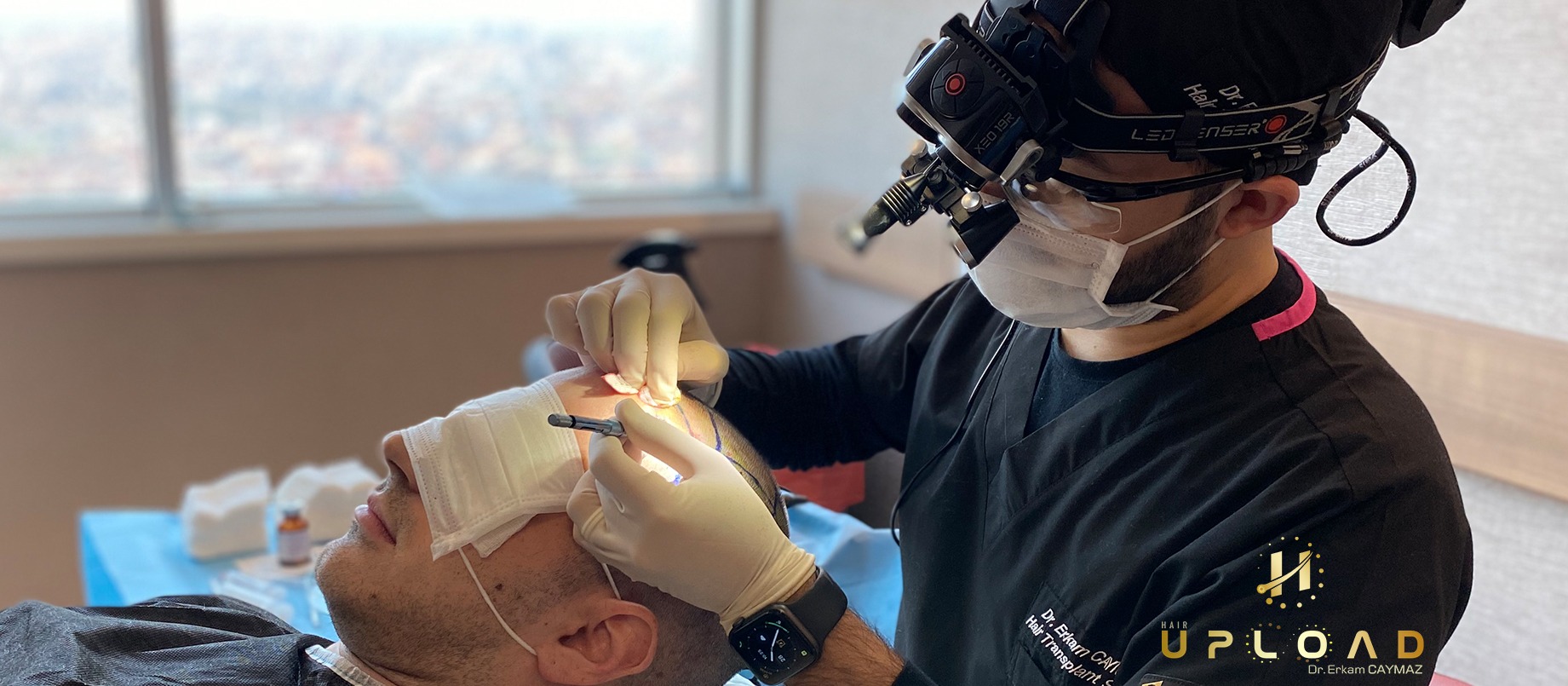
At Hair Upload Clinic, our preferred technique is Sapphire FUE (Follicular Unit Excision). This advanced method involves extracting individual hair grafts from the donor area, typically the back and sides of the scalp, and implanting them into the recipient sites using ultra-fine sapphire blades. These blades allow for incredibly precise channel opening, which is vital for directing the angle and density of the new hair, ensuring a natural-looking outcome. The transplanted grafts retain their genetic resistance to DHT (dihydrotestosterone), the hormone primarily responsible for androgenetic hair loss, meaning the new hair is typically permanent and will continue to grow for many years.
DHI (Direct Hair Implantation) follows the same biological principle but utilises a specialised implanter pen for graft placement. This can be particularly useful for specific cases, such as unshaven transplants or when working to achieve very fine density in existing hair. Dr. Erkam personally handles the planning, hairline design, and channel opening for all Sapphire FUE procedures, ensuring meticulous attention to detail at every critical stage. Many international patients consider our clinic and review guides on best hair transplant clinics when planning their journey to Istanbul.
Scalp Micropigmentation: The Density Illusion
SMP is a non-surgical procedure with no biological component. A skilled practitioner uses a microneedle, significantly finer than those used for traditional tattooing, to implant thousands of tiny, medical-grade pigment dots into the scalp. These dots are carefully matched to the patient’s natural hair colour and skin tone. Placed at a controlled depth, typically between 1.5 to 2 millimetres, and layered over two to four sessions, these dots create a remarkably realistic impression of natural hair stubble or a denser hair canopy.
The pigment used in SMP is specifically formulated to prevent the common colour changes seen in regular tattoos. However, because the immune system gradually clears these microscopic particles, SMP pigment does fade over three to five years. This fading necessitates periodic touch-up sessions to maintain the desired aesthetic, making it an ongoing commitment rather than a one-time fix.
Indications and Candidacy: Who Benefits Most?
Deciding between a hair transplant, SMP, or a combination requires a thorough understanding of your specific hair loss pattern, donor hair characteristics, and aesthetic goals. Dr. Erkam’s assessment at Hair Upload Clinic focuses on a realistic outcome, tailored to your individual needs.
Broadly, patients fall into these categories:
- Hair Transplant Candidates: These are individuals with a stable and sufficient donor hair supply, realistic expectations for their recipient area, and a clear understanding of their hair loss progression. Surgery is the only viable option for adding real, growing hair that can be styled and maintained. This often includes men and women with androgenetic alopecia, those seeking to restore a receding hairline, or individuals looking to increase density in specific areas.
- SMP-Only Candidates: This group includes patients with very advanced hair loss and a depleted donor supply, making them unsuitable for surgery. It also covers individuals who are medically unable to undergo surgery, those who prefer a permanent shaved-head aesthetic without the need for daily shaving, or people who cannot commit to the recovery time associated with a surgical procedure. SMP can also be an excellent option for diffuse thinning, where overall hair density is reduced but not entirely absent.
- Combination Candidates: This is often the largest and most nuanced group. It includes patients whose donor supply is limited, restricting the number of grafts available for transplantation. It also covers individuals with fine or low-contrast hair, where transplanted density alone might still appear somewhat thin, or those needing scar camouflage after older strip surgeries (FUT). Patients whose hairline requires strong framing but whose crown cannot be fully covered with available grafts due to donor limitations also benefit significantly from combining the two techniques.
During your initial assessment at Hair Upload Clinic, Dr. Erkam meticulously maps your donor capacity against the size and extent of your balding area. If the calculated graft numbers cannot realistically deliver comprehensive visual coverage, that is precisely when an SMP adjunct enters the conversation. This prevents over-harvesting the donor zone, which is a finite resource that may be needed for future sessions or simply to maintain donor area integrity.
How Combination Therapy Works in Practice
The sequencing of treatments is a critical surgical decision. Getting it wrong can complicate results and compromise outcomes. The standard and most effective order at HU Clinic is:
- Transplant First: Hair is transplanted, typically using Sapphire FUE, allowing the new grafts to settle and grow over 9 to 12 months. This period is crucial for the transplanted hair to mature and for any post-transplant shock loss to resolve.
- Assess the Matured Result: Once the growth has fully established, usually around the 9-12 month mark, the true coverage and density achieved by the transplant become apparent. At this point, Dr. Erkam can precisely determine any remaining visual gaps or areas that could benefit from enhanced density. Sometimes, the transplant alone provides sufficient density, rendering SMP unnecessary. It’s vital not to commit to pigment before this assessment.
- SMP to Enhance and Fill Gaps: If needed, SMP is then carefully applied between and around the transplanted hairs. This strategic placement lowers scalp contrast, making the existing and newly grown hairs appear thicker and denser. For scar tissue, SMP works wonders by softening the harsh contrast between the scar and the surrounding healthy skin, significantly improving its appearance.
- Refine and Touch Up: As SMP pigment naturally fades over time, planned refresher sessions every few years are essential to maintain the consistent illusion of density as your hair continues to age and potentially thin further in non-transplanted areas.
While the reverse order (SMP before surgery) is occasionally considered to help patients visualise a shaved aesthetic, pigment placed before a transplant can complicate channel planning, recipient-site visibility, and even the healing process. For these reasons, we generally prefer to operate on unmarked skin to ensure the highest precision and best surgical outcome.
Key Comparison
| Feature | Hair Transplant (Sapphire FUE / DHI) | Scalp Micropigmentation |
|---|---|---|
| What it adds | Real, growing hair from donor follicles | Pigment dots that mimic hair density |
| Results timeline | 9–12 months to final growth | 2–4 sessions; visible after first |
| Longevity | Transplanted hair typically permanent; further loss may need sessions | Fades; touch-ups every 3–5 years |
| Invasiveness | Surgical day procedure under local anaesthesia | Non-surgical tattooing, local topical numbing |
| Best adjunct role | Foundation: hairline, coverage, structure | Density illusion, scar camouflage, crown blending |
| Limits | Bounded by donor supply | Does not grow; weaker under longer hair |
Risks, Limits, and Aftercare
Hair transplant risks, including infection, poor graft growth, or temporary shock loss, are meticulously managed through Hair Upload Clinic’s stringent surgical techniques and comprehensive follow-up protocols. Our overall success rates in properly selected patients run between 90–95%, with graft survival rates reaching up to 98% under favourable conditions. It’s important to understand that no clinic can offer a high success rates, but our results speak for themselves.
SMP carries its own distinct risk profile. Potential issues can include pigment migration, which can lead to a blurred or unnatural appearance; bluish colour shifts if low-quality pigments are used; uneven dot sizing; and, though rare, allergic reactions. The most significant practical risk with SMP is patient disappointment stemming from mismatched expectations, particularly if the treatment is applied with the aim of creating density under longer hair, where it reads less convincingly than under a closely cut style.
After a hair transplant, the first 10 days are critical for graft protection. Patients must adhere to specific sleeping positions, follow a precise washing protocol, and avoid direct sun exposure. SMP aftercare is generally simpler but equally strict in the first week: no sweating, no direct shaving of the treated zone for approximately five days, and diligent sunscreen application thereafter to slow fading. When combining the two treatments, SMP is always scheduled many months apart from surgery. This ensures that inflammation or healing from one procedure never compromises the delicate processes of the other, optimising both safety and aesthetic outcome.
Practical Notes for International Patients
Patients travelling to Istanbul for hair restoration surgery often inquire about bundling SMP into the same trip. While this might occasionally be feasible for very small scar-camouflage zones, full combination therapy is almost always better planned in two distinct phases. The initial visit is for surgery, followed by a period of 9-12 months for growth and healing. The SMP assessment can then occur at a follow-up visit or, more practically, with a trusted local practitioner in your home country after month nine. Because SMP is layered over multiple sessions and requires long-term touch-ups, having a skilled pigment artist accessible in your home country is crucial for ongoing maintenance, and we factor this into your personalised treatment plan.
Budgeting for these procedures also differs significantly. Hair transplant pricing at Hair Upload Clinic reflects our boutique VIP model, where we limit ourselves to 1–2 operations per day. This allows Dr. Erkam to personally oversee every critical stage, including planning, hairline design, and channel opening. Our pricing typically ranges from 2–4 Euro per graft, depending on complexity. SMP, conversely, is priced per session and per area, meaning maintenance costs will recur every few years. It’s essential to understand both cost curves before making a decision.
The single most common mistake we encounter from international patients is undergoing SMP elsewhere before a proper consultation at HU Clinic. This can result in dots being placed too large, too dark, or across zones that would have been far better served by real hair grafts. While reversal with laser treatment is possible, it is costly, time-consuming, and adds unnecessary complexity. Therefore, a comprehensive donor evaluation and surgical assessment, as detailed in our donor area planning guide, should always precede any pigment application. If you’re weighing these two powerful options, a personal consultation with Dr. Erkam is the honest and safest starting point.
Disclaimer: This article is for educational purposes only and does not replace individual medical assessment or advice. Whether SMP, hair transplant surgery, or a combination of both is suitable for you depends entirely on your specific diagnosis, donor supply, and hair loss progression. Every treatment plan at HU Clinic begins with a thorough personal consultation to ensure the best possible outcome.
Clinic insight: At Hair Upload Clinic Istanbul, Dr. Erkam decides SMP vs transplant sequencing only after mapping donor supply against the balding area: in his experience, patients with fine, low-contrast hair gain the most from combining transplanted structure with SMP density illusion.
Frequently Asked Questions
Can I get scalp micropigmentation instead of a hair transplant?
Yes, if you’re not a surgical candidate, have very advanced loss with limited donor supply, or prefer a permanently shaved look. But SMP doesn’t add growing hair, so it can’t replicate the styling and coverage a transplant provides in suitable candidates.
Can SMP and a hair transplant be done at the same time?
Not usually. We transplant first, wait 9–12 months for final growth, then place SMP into any remaining visual gaps. Doing SMP first can interfere with surgical planning and recipient-site visibility.
Does SMP damage transplanted hair follicles?
When performed correctly at the right depth and after full recovery, SMP doesn’t harm follicles. The pigment sits in the upper dermis, and an experienced practitioner avoids overworking areas with recent grafts.
How long does the SMP density illusion last?
Most SMP fades noticeably within 3–5 years as the body clears pigment particles. Touch-up sessions refresh the result, so plan for ongoing maintenance rather than a one-time fix.
Is SMP good for covering transplant scars?
Yes, scar camouflage is one of SMP’s strongest uses. Pigment blended into linear strip scars or wider FUE extraction sites reduces contrast with surrounding skin, often dramatically.
Which should I choose if my donor area is weak?
A weak or depleted donor area often points to combination therapy: transplant the critical zones like the hairline first, then use SMP to create the density illusion in areas grafts can’t cover. Dr. Erkam assesses this balance case by case.
Sources: International Society of Hair Restoration Surgery (ISHRS); American Academy of Dermatology: Hair Loss Treatment; PubMed: Scalp micropigmentation review; PubMed: Follicular unit excision outcomes
Medical disclaimer: This page is for education only and does not replace a consultation with Dr. Erkam at Hair Upload Clinic (HUC). Individual assessment is required.
Written by : Dr. Erkam C.